
Unbiased headlines. Facts, not spin.
Every story is an unbiased news briefing written from 110+ sources across the spectrum — sources linked so you can verify it yourself.
 defense
Major Story (7/10)
July 1, 2026 at 09:21 AM
defense
Major Story (7/10)
July 1, 2026 at 09:21 AM
Europe's Defense Spending Doubled Since 2019. Delivering Actual Weapons Is a Different Problem.
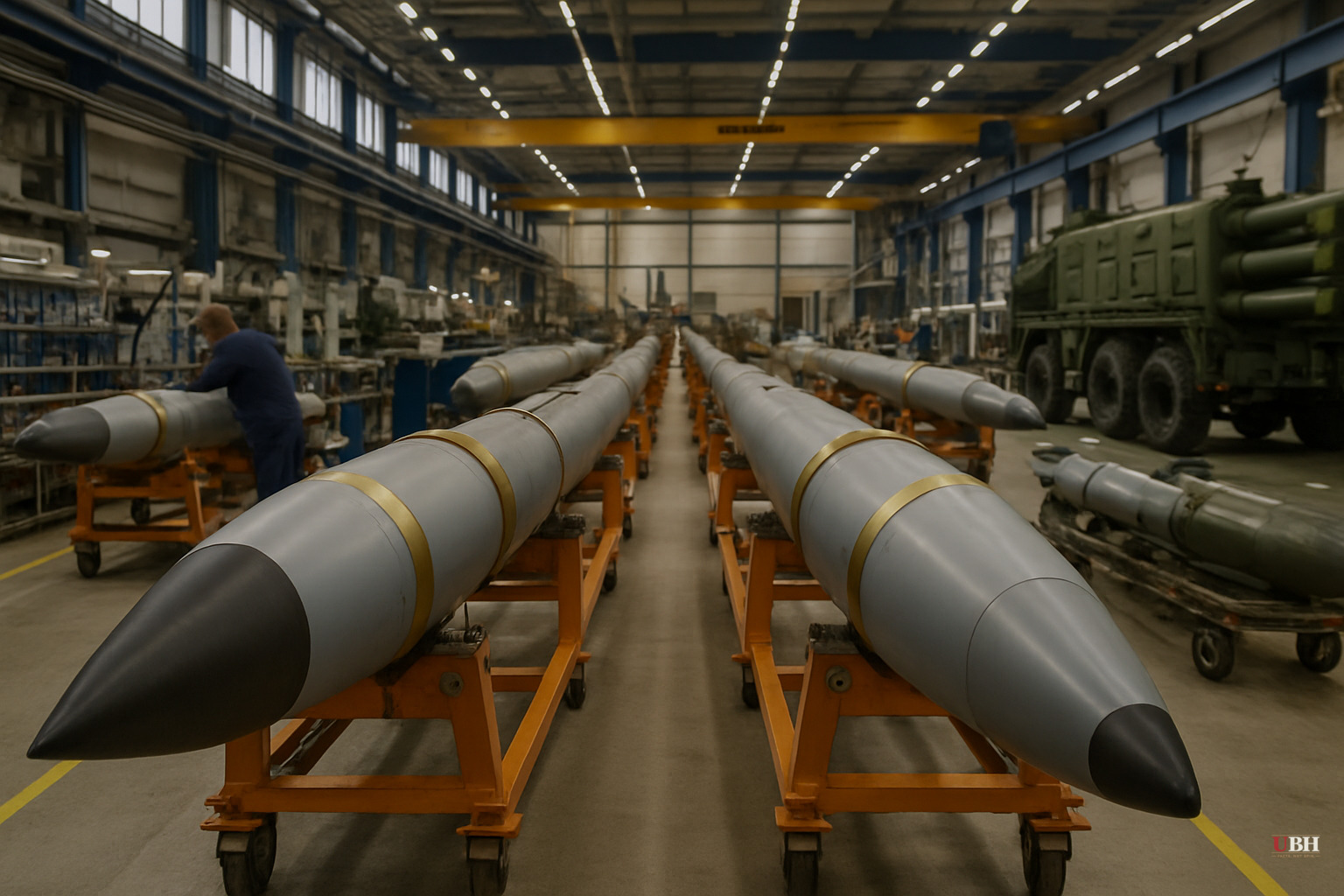
The Money Is There. The Factories Are Not.
European governments have been writing big checks for defense since Russia's 2022 invasion of Ukraine. According to McKinsey, European NATO core defense spending has doubled since 2019 and is on a trajectory to reach approximately 800 billion euros ($912 billion) annually by the end of the decade — enough to meet NATO's new benchmark of 3.5% of GDP per member nation.
The problem is the gap between budgets and bullets.
Procurement delays, fractured national purchasing programs, labor shortages, and supply chains that were never built for wartime production are slowing delivery. Defense companies including Rheinmetall, BAE Systems, Leonardo, Thales, and Saab have surging order books. Whether those orders become delivered weapons at scale is the question investors and defense ministers are now asking, according to CNBC.
The Execution Problem
Decades of low defense spending after the Cold War — what McKinsey senior partner Hugues Lavandier called the "peace dividend" era — left Europe's defense industrial base undersized and under-invested. Rebuilding it is not a simple function of spending more money.
Skilled manufacturing labor is scarce. Supply chains for key components are strained. And European nations have historically run separate, incompatible procurement programs rather than pooling demand, which inflates cost and fragments industrial capacity.
Germany's F126 frigate program has faced significant cost and schedule pressures, a concrete example of how procurement ambition can collide with execution reality.
Lavandier told CNBC the market is in a "price discovery moment." Order backlogs were the first signal investors used to gauge growth. Now the harder question is which companies can actually convert those backlogs into production, revenue, and margins.
Washington Is Watching
The pressure from the U.S. is no longer rhetorical. Earlier this month, Defense Secretary Pete Hegseth announced a review of American troop deployments in Europe and warned that allies falling short on spending commitments could face consequences. That review is expected to last up to six months, according to CNBC.
The message is clear enough: the implicit American security guarantee that underwrote decades of European underinvestment is no longer unconditional.
"There is no question that the evolving U.S. geopolitical stance has been a real moment of truth," Lavandier said.
The Bull Case Still Exists
The skeptics could be wrong on timing without being wrong on direction. Venture capital is flowing into European defense technology — drones, autonomous systems, and other emerging capabilities that do not require the same years-long production ramp as conventional hardware. These lighter-footprint technologies may fill capability gaps faster than traditional procurement cycles.
Rheinmetall and peers have also announced significant factory expansions. Order books at major European primes are at historic highs. If the industrial constraints loosen over the next two to three years, the spending surge could still produce real capability gains, just not on the political timelines being promised.
The strongest version of the optimist argument is that Europe's defense industry has never been given this kind of sustained, committed demand signal before, and that supply chains do respond to sustained demand. The concern is that governments are spending now against a threat that is present now, not three years from now.
What the NATO Summit Will Actually Test
Leaders at the upcoming NATO summit, scheduled for next week, are expected to review progress since last year's meeting and set a roadmap for turning spending commitments into, in NATO's own framing, "concrete results."
The communiqués will almost certainly be positive. NATO summits produce optimistic language by design. The harder audit will come in the months after: how many platforms are actually delivered, how many production lines are actually online, and whether the Hegseth review produces any concrete changes to U.S. force posture in Europe.
Germany's F126 program difficulties are a useful baseline. If a country that has dramatically increased its defense budget can still see a major naval program run into serious trouble mid-stream, the distance between European defense ambition and European defense capability remains very real.
Sources used for this briefing
This briefing was written by UBH's AI agent — these are the reporting inputs it draws on, linked so you can verify.


