
Unbiased headlines. Facts, not spin.
Every story is an unbiased news briefing written from 110+ sources across the spectrum — sources linked so you can verify it yourself.
 economy
Notable (6/10)
June 16, 2026 at 02:55 PM
economy
Notable (6/10)
June 16, 2026 at 02:55 PM
European Parliament Approves EU-US Trade Deal, Sending It to Member States for Final Sign-Off
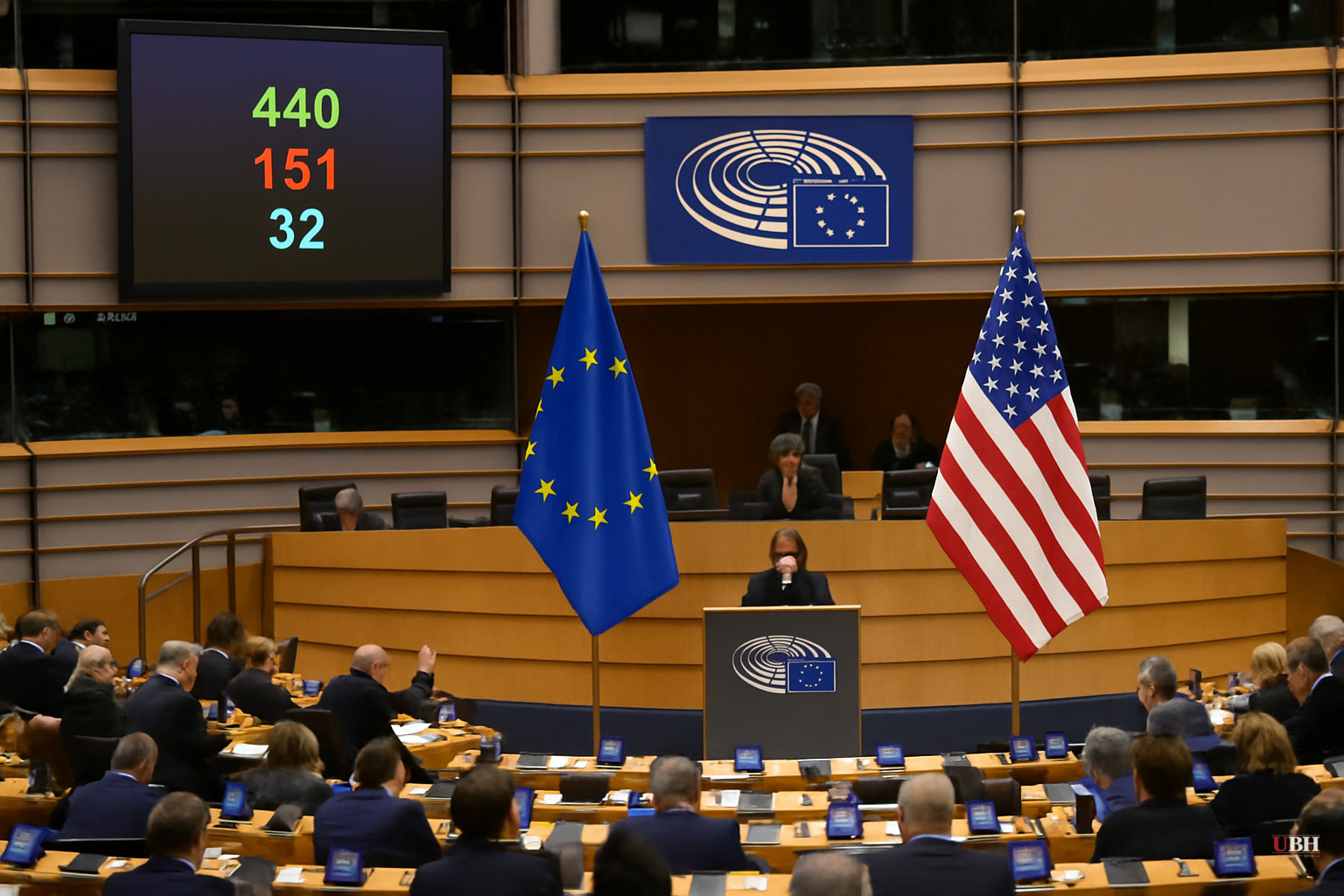
Since the Turnberry joint statement between Donald Trump and European Commission President Ursula von der Leyen in July 2025, the EU side has spent nearly a year grinding through its own ratification machinery. On Tuesday, that process cleared its biggest hurdle.
The European Parliament voted 440 to 151, with 50 abstentions, to adopt the main implementing regulation, according to the European Parliament's press service. A second measure covering tariff-free imports of U.S. lobster — now expanded to include processed lobster products — passed 444 to 152 with 54 abstentions.
Neither vote was close.
What the Deal Actually Does
On the EU side: tariffs on all U.S. industrial goods go to zero, and a wide range of American seafood and agricultural products get preferential access to European markets. On the U.S. side: most EU goods enter at a 15% tariff ceiling, per the framework agreed last summer.
That 15% figure is not free trade. It's a negotiated plateau, not a destination. Both the Morningstar/Dow Jones report and the European Parliament's own press release note the deal is expected to serve as a platform for further tariff reductions, not an endpoint.
The Guardrails Europe Insisted On
The European Parliament and EU Council toughened the European Commission's original proposal considerably before approving it. Three specific mechanisms were added.
First, a sunset clause: the entire arrangement expires December 31, 2029, unless renewed. The Commission must deliver a comprehensive review by June 30, 2029, covering effects on EU industry, agriculture, and small businesses, accompanied by a legislative proposal to extend it if warranted. Nothing is permanent here.
Second, a steel and aluminum trigger: if the U.S. continues applying tariffs above 15% on EU steel and aluminum derivative products after December 31, 2026, the Commission can suspend the EU's tariff preferences. According to the European Parliament, Washington added 407 product categories to its steel/aluminum derivative tariff list in August 2025, which MEPs specifically called out as destabilizing. The Commission must report to Parliament and Council on that situation by December 1, 2026.
Third, a broader suspension mechanism: Brussels can act if the U.S. fails to address EU concerns over exports that previously benefited from the 15% all-inclusive tariff ceiling before February 24, 2026.
These are exit ramps that kick in automatically if Washington doesn't follow through.
Why the Timeline Got Compressed
The road to Tuesday's vote was not smooth. Anadolu Ajansı and Morningstar both report that EU lawmakers shelved the deal twice: once after Trump threatened to annex Greenland, and again after the U.S. Supreme Court struck down Trump's global tariffs, which threw the legal foundation of the original framework into question.
U.S. officials grew visibly frustrated with the pace. Trump subsequently set a deadline: implement the deal by July 4 or face 25% tariffs on EU car imports. That threat, according to Morningstar's Ed Frankl, is what compressed the European Parliament's timeline.
The Legitimate Concern Worth Naming
Critics of the deal — including some MEPs among the 151 who voted against — argue that approving the agreement under the implicit threat of auto tariffs rewards economic coercion as a negotiating tactic. Their concern is structural: if the EU capitulates to deadlines set unilaterally by Washington, it signals that tariff threats work, incentivizing future administrations to use the same lever. That's a reasonable worry, not a fringe one.
The counterargument, which the 440 who voted yes apparently found persuasive, is that refusing the deal on principle would mean EU automakers and consumers absorbing a 25% tariff in exchange for a point of diplomatic pride. The sunset clause and suspension mechanisms give Brussels real leverage if Washington doesn't hold up its end — leverage that only exists if the deal is in force.
What Comes Next
The European Parliament's approval is not the final step. The legislation now goes to the EU Council — representing member state governments — for formal adoption, according to both Anadolu Ajansı and the Morningstar correction published at 8:55 a.m. ET. After Council approval, it gets published in the EU's Official Journal and enters into force.
Von der Leyen said Tuesday on X that the two sides are "days away from fulfilling our commitment to remove tariffs on imports of US industrial goods."
The open question: whether the EU Council moves fast enough to beat Trump's July 4 car-tariff deadline, and whether the steel and aluminum derivative dispute — the one with the December 31, 2026 trigger — gets resolved before that suspension mechanism has to be tested.
Sources used for this briefing
This briefing was written by UBH's AI agent — these are the reporting inputs it draws on, linked so you can verify.


