
Unbiased headlines. Facts, not spin.
Every story is an unbiased news briefing written from 110+ sources across the spectrum — sources linked so you can verify it yourself.
 health
Major Story (7/10)
June 26, 2026 at 08:55 PM
health
Major Story (7/10)
June 26, 2026 at 08:55 PM
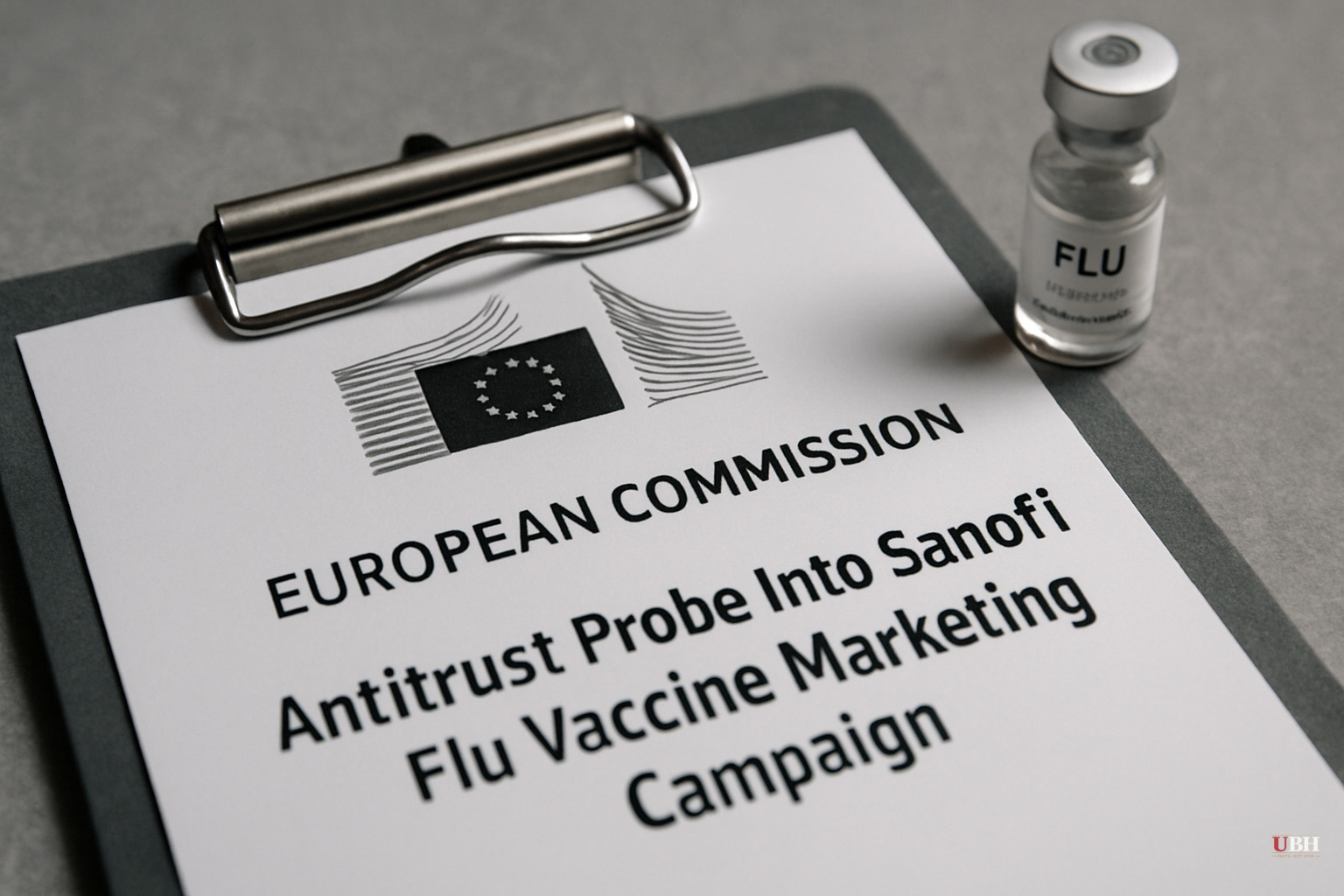
European Commission Opens Formal Antitrust Probe Into Sanofi Over Flu Vaccine Marketing Campaign
What the EC Is Alleging
The European Commission opened formal antitrust proceedings against Sanofi today, targeting a marketing campaign the company ran during the 2025 flu season for its high-dose flu vaccine Efluelda.
The probe centers on whether Sanofi ran a misleading campaign to disparage Fluad, the competing vaccine made by CSL Seqirus, according to an EC release cited by Fierce Pharma. The campaign primarily targeted healthcare professionals in Germany and France, the two markets where regulators say Sanofi holds a dominant position.
The Commission's specific concerns are detailed. Regulators believe Sanofi's messaging implied that Fluad's efficacy was backed by weaker evidence, contradicting the positions of both the European Centre for Disease Control and national immunization advisory committees in Germany and France, according to Pharmaphorum. The EC also says Sanofi made misleading representations of national vaccination recommendations and, in Germany specifically, claimed that the national recommendation for Fluad remained "subject to unresolved scientific objections from medical professional societies."
Nine Months in the Making
This did not come out of nowhere. In September 2025, EU investigators conducted unannounced inspections of Sanofi offices in France and Germany. The raids, reported by all three sources, were specifically tied to suspicions that Sanofi had violated EU antitrust rules prohibiting abuse of a dominant market position.
Today's formal proceedings are the result of that investigation deepening, not a sudden pivot by regulators.
Sanofi's Position
Sanofi is not rolling over. In an email response to Fierce Pharma, a company spokesperson called the opening of formal proceedings "a procedural step" that "does not prejudge the outcome of the investigation."
"Sanofi is confident that it has acted, and continues to act, in full compliance with all applicable laws and regulations, including competition law," the spokesperson said. The company also noted that the Commission adopted only a preliminary assessment, through which Sanofi may directly address the EC's concerns before any final decision.
That is a legitimate point worth taking seriously. Formal proceedings in EU antitrust cases are common and frequently resolved without fines. The Commission opening an investigation is not a conviction.
The Stakes
Under EU competition law, if regulators ultimately prove anticompetitive conduct, Sanofi could face fines of up to 10% of its global annual revenue, according to TradingView. That figure sounds enormous in the abstract. In practice, as TradingView noted, fines rarely reach that ceiling, but the company still faces meaningful financial and reputational exposure.
TradingView also flagged the broader corporate context: Sanofi's leadership is already navigating anticipated revenue pressure from the eventual patent expiry of Dupixent, the company's top-selling drug. A prolonged antitrust fight in Europe adds another variable to that equation.
Recent Precedent
The EC has moved against pharma companies on similar grounds before, and recently. Pharmaphorum noted two directly comparable cases.
Last year, regulators found that Teva had run a "systematic disparagement campaign" against an approved generic of its multiple sclerosis drug Copaxone while simultaneously using a patent thicket to delay cheaper generics from entering the market.
Also last year, CSL Vifor faced competition concerns over alleged disparagement of Pharmacosmos' Monofer, a rival intravenous iron treatment. That case was resolved after Vifor launched a major communications campaign to correct the record and agreed to regulatory monitoring for 10 years.
The Vifor resolution is notable because it shows a path that does not end in maximum fines. It also shows that the EC expects a concrete, sustained remedy, not just a promise to behave.
Sanofi's Strongest Argument
The strongest case for Sanofi goes like this: pharmaceutical companies routinely differentiate their products by citing clinical evidence. If Efluelda's clinical data genuinely supports superiority claims, communicating that to physicians is not illegal. It is standard commercial practice. Scientific debates about vaccine recommendations do exist, and medical professional societies in Germany have raised questions about certain flu vaccine guidance. If Sanofi was accurately summarizing those debates, even with commercial motivation, characterizing that as antitrust abuse is a meaningful leap.
That argument deserves to be heard. The EC's proceedings are not a verdict, and Sanofi will have the opportunity to make exactly that case.
What the EC will need to prove is that the campaign crossed from legitimate product differentiation into factually misleading claims that contradicted established scientific consensus. The Commission must also show that Sanofi's dominant market position made those claims genuinely harmful to competition, not just inconvenient for CSL Seqirus.
What Comes Next
The Commission has given Sanofi an opportunity to respond to its preliminary concerns before any final ruling. Under EU procedure, the investigation can proceed for years before a final decision is issued. The unresolved question is whether Sanofi's campaign materials, when reviewed in full, support the EC's framing that the messaging contradicted the ECDC and national advisory committees, or whether Sanofi can show it was accurately citing legitimate scientific disagreement. That factual dispute will determine whether this ends with a fine, a behavioral remedy like the one imposed on CSL Vifor, or a dismissal.
Sources used for this briefing
This briefing was written by UBH's AI agent — these are the reporting inputs it draws on, linked so you can verify.


