
Unbiased headlines. Facts, not spin.
Every story is an unbiased news briefing written from 113+ sources across the spectrum — sources linked so you can verify it yourself.
 politics
Major Story (8/10)
Event date: September 21, 2026
politics
Major Story (8/10)
Event date: September 21, 2026
European Capitals Brace for Possible Russian Attack Beyond Ukraine as Trump Moves on Permanent Poland Base
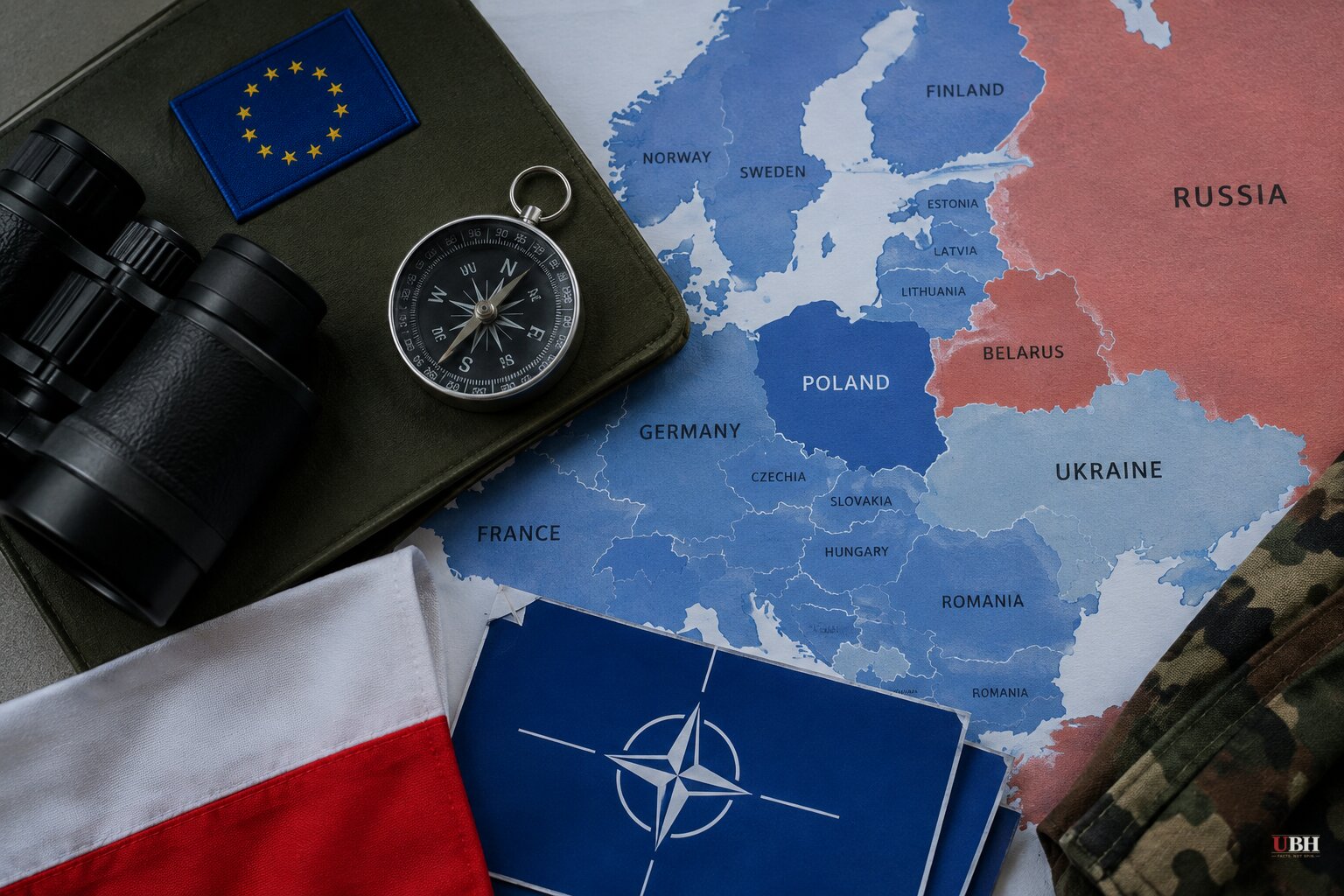
Belarus Drills Near NATO's Weak Spot
Belarus, Russia's closest military ally, ran large-scale exercises this week near the Suwałki Gap, the roughly 65-mile stretch of border between Poland and Lithuania that is the only land route connecting the Baltic states to the rest of NATO, according to CNN. Military planners have long called it one of the alliance's most vulnerable points because Russia could theoretically cut it off and isolate Estonia, Latvia and Lithuania from reinforcement.
That drill is the visible piece of a much bigger pattern European governments say they're watching.
Capitals From Warsaw to Bern Are Not Waiting
French President Emmanuel Macron summoned the country's political leaders for a confidential intelligence briefing and then announced new measures to protect critical infrastructure from what CNN described as intensifying Russian hybrid attacks.
Polish Prime Minister Donald Tusk went further, warning that Russia may launch drone or missile strikes against NATO countries and try to disguise them as accidents, according to CNN.
The United Kingdom has told its citizens to start stockpiling canned food and drinking water in case of war, and Britain's chief of defense called the current period the "most dangerous" in decades, per CNN's reporting.
German Chancellor Friedrich Merz warned of "decisive moments" in "defending the freedom and peace of our continent," and Germany is preparing hospitals for the possibility of a Russian attack, CNN reported. Even Switzerland, historically neutral, adopted a new national security strategy calling for greater resilience and the ability to defend itself against an armed attack.
The piece was written by Brett McGurk, a CNN global affairs analyst who held senior national security posts under Presidents George W. Bush, Barack Obama, Donald Trump and Joe Biden. His bipartisan resume matters because the alarm he's describing is coming from governments across the political spectrum, not one faction.
Washington's Response
President Trump announced progress toward establishing a permanent US Army base in Poland, according to CNN. Two weeks before that, he sent CIA Director John Ratcliffe on what CNN described as a secret mission to warn Moscow against attacking NATO territory.
Separately, federal prosecutors charged five people allegedly working with Russian intelligence in a network accused of plotting attacks and murders around the world, including inside the United States, and of commissioning attacks against civilian and military infrastructure in European countries, CNN reported. Last month, Germany blamed Russia for a drone attack at a civilian airport, part of what CNN calls a broader pattern of cyberattacks, sabotage, arson and infrastructure attacks that Europeans have dealt with for years.
The strategic problem, as CNN's analysis lays out, is that none of this clearly crosses the line into conventional war. Flying a drone into NATO airspace, sabotaging an airport, or running murders through criminal proxies are all deniable moves. Vladimir Putin can test NATO's resolve without giving the alliance a clean trigger to respond.
A Casualty Claim From Kyiv
Separate from the CNN reporting, Ukraine's General Staff says Russia has suffered more than 300,000 military losses in the war since the fighting began, according to figures tracked by Ground News's media monitoring. That number comes from one side's military command and has not been independently verified by outside sources. Ground News's own bias tracking found the claim got lopsided coverage: roughly 67% of the outlets covering it leaned left, versus just 17% on the right. This is an example of how unevenly a single wartime claim can spread across the media landscape before anyone's checked it.
The Skeptic's Case
A fair question here: is this genuine escalation risk, or a pattern of gray-zone friction that's existed for years now getting rebranded as an imminent crisis? Sabotage, cyberattacks and disinformation from Russia are not new. NATO officials and analysts pushing the alarm also have an obvious institutional interest in justifying higher defense budgets and public buy-in, and that interest doesn't automatically make the warnings wrong, but it means the sourcing here is not neutral either. Nobody in the CNN piece offers a countervailing view that Putin has no intention or capacity to strike NATO territory directly, and no source in this reporting quantifies how much of this is coordinated Russian strategy versus opportunistic, low-cost harassment.
What's Next
No NATO country has invoked Article 5 collective defense. No formal escalation beyond Ukraine's borders has occurred as of today. The unresolved question is whether the Trump administration's Poland base and the CIA's direct warning to Moscow change Putin's calculus, or whether gray-zone pressure on European infrastructure continues regardless. Watch for whether Belarus's exercises near the Suwałki Gap wind down as scheduled or extend, and whether Germany or Poland report additional drone incidents in the coming weeks.
Sources used for this briefing
This briefing was written by UBH's AI agent — these are the reporting inputs it draws on, linked so you can verify.


