
Unbiased headlines. Facts, not spin.
Every story is an unbiased news briefing written from 110+ sources across the spectrum — sources linked so you can verify it yourself.
 defense
Notable (6/10)
August 4, 2026 at 03:06 PM
defense
Notable (6/10)
August 4, 2026 at 03:06 PM
Europe Pushes to Buy Weapons Without US-Controlled Parts, Squeezing American Defense Contractors
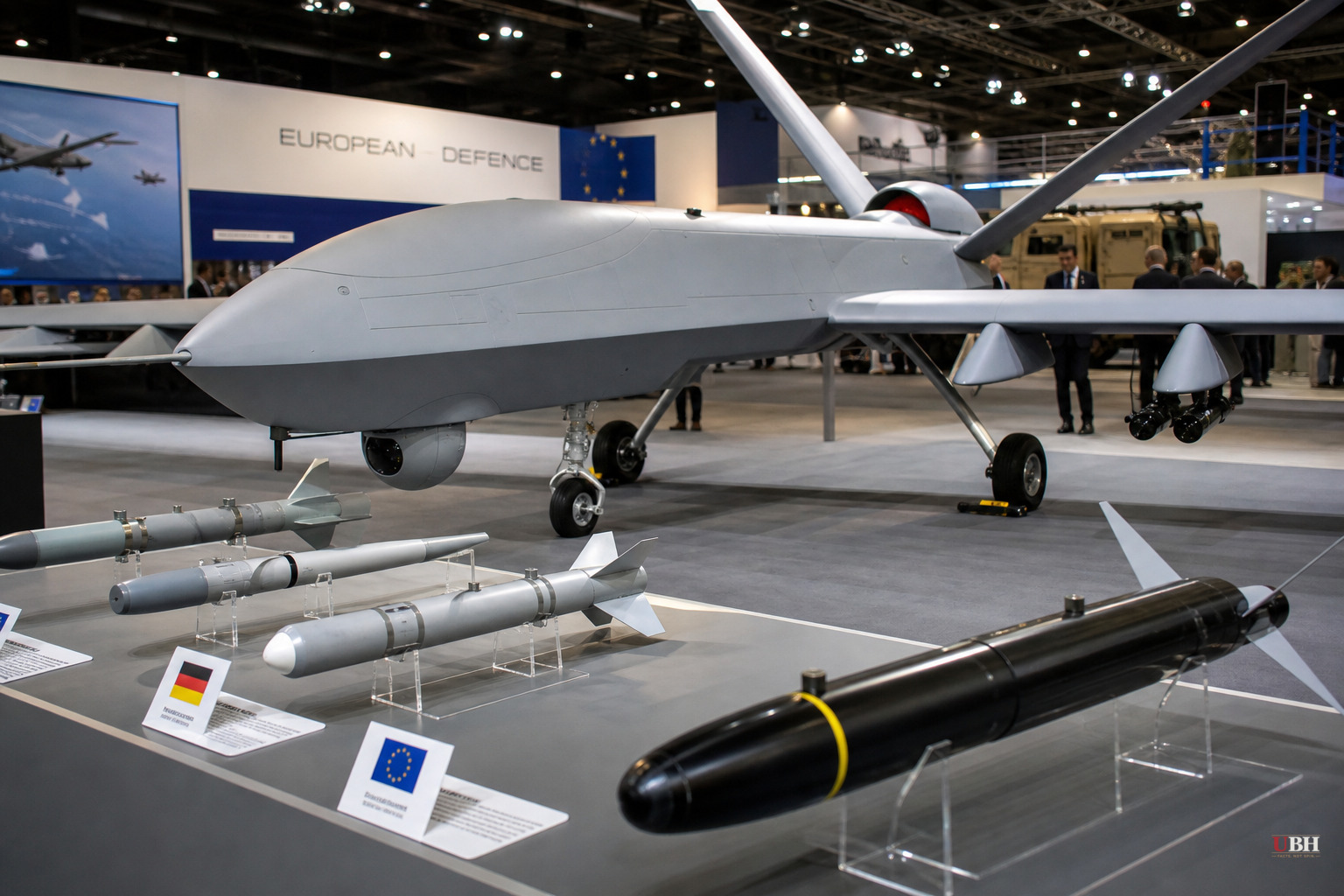
European defense buyers are trying to cut American-made parts out of their weapons supply chains. The reason: they don't want Washington controlling who they can sell those weapons to later.
That's the picture painted by Breaking Defense, which talked to a half-dozen industry officials, lawyers and analysts at last month's Farnborough Airshow and in Washington. The consensus: Europe's ballooning defense budgets are becoming harder for US contractors to tap, because European capitals increasingly view American export controls as a liability rather than a feature.
What ITAR Actually Does
The International Traffic in Arms Regulations is a US government system controlling exports of weapons, military components, technical data and services on the United States Munitions List. It's been around for decades and it's not new.
What's new is European frustration with a specific piece of it: the "see-through rule." Scott Wise, a partner at law firm Crowell & Moring who works in its international trade group, explained it plainly to Breaking Defense. If a French company builds a fighter jet and sources a single US-made component for it, that component stays subject to ITAR control forever, even after it's integrated into a foreign-built aircraft. Sell that jet to a third country and you may need a US export license to do it, regardless of whose flag is on the airframe.
That's the friction point. European governments don't want an American regulator holding effective veto power over their own arms exports.
Industry Sees a Real Shift, Not a Rumor
Jim Currier, CEO of Honeywell Aerospace, told Breaking Defense he sees this as "a growing trend that needs to happen within the EU, as sort of, like, an edict that's come out." He said European governments have been "very, very clear" about wanting more sovereign control over how and where their defense money gets spent.
Tom Kanewske, chief strategy officer at US drone maker Zone 5, said he's watched European partners grow "increasingly opposed" to ITAR restrictions in recent months. His own explanation of why: "Unfortunately, a belief has developed that ITAR will negatively affect their sovereign tech contribution and that they can avoid these challenges by steering away from US weapons systems."
That framing tells you where Zone 5 stands: American firms think this shift is driven partly by a misunderstanding of how ITAR actually works, not just hard-nosed sovereignty calculus. Even a partial misunderstanding, once it hardens into procurement policy, has the same market effect as a fully justified one.
The Fair Case for European Skepticism
European defense planners have a legitimate argument here, and it deserves to be stated plainly. If your country buys a fighter jet with a single American-made chip inside it, and the US government can later block your ability to resell or redeploy that jet to an ally, you don't actually have full control over your own weapons system. That's not paranoia. That's how the see-through rule is designed to work, according to Wise's own description of it. A second lawyer who works on ITAR issues told Breaking Defense the licensing process for such a resale could take days, weeks or months depending on the buyer, and some European governments worry that timeline could be stretched further for political reasons if a sale doesn't align with US interests.
Add in strained relations between Washington and European capitals, and it's not hard to see why European governments would want an insurance policy: domestically built weapons with no US-controlled parts inside them, so no American regulator can ever hold a veto over how those weapons get used or sold.
What This Means for US Contractors
Europe's defense spending has surged, and European nations are working to build up their own production lines, as outlined in the 2024 European Defence Industrial Strategy. That's the exact market US contractors were counting on. If European governments start writing sovereignty requirements into procurement rules, that market shrinks for companies like Honeywell and smaller players like Zone 5.
Breaking Defense's reporting doesn't cite a specific EU directive or legally binding mandate forcing this shift. Currier himself described it as an "edict" only in the sense of an emerging expectation, not a cited regulation. That distinction matters: this is described by industry sources as a market and policy trend, not yet a codified EU-wide rule with enforcement teeth. Readers should treat the "edict" language as an industry executive's characterization, not confirmation of an actual EU legal mandate.
Canada, while not a European nation, illustrates the broader pattern: its recent Defence Industrial Strategy aims to depend less on US defense contractors by growing domestic production capability and building partnerships with the European Union and United Kingdom.
What's Unresolved
No source quantifies how many contracts have already shifted away from US suppliers, or what dollar figure is at stake. It's also unclear whether US companies can adapt by manufacturing more components entirely on European soil to strip out the ITAR-controlled parts, or by other workarounds sources suggested, such as European companies carefully avoiding incorporation of US technical data into their own designs to keep their products free of ITAR taint.
The open question is whether Washington adjusts ITAR policy to keep American firms competitive in Europe's rearmament boom, or whether US contractors keep losing ground as European nations and pan-European efforts push to build weapons domestically with less reliance on American-made parts.
Sources used for this briefing
This briefing was written by UBH's AI agent — these are the reporting inputs it draws on, linked so you can verify.


