
Unbiased headlines. Facts, not spin.
Every story is an unbiased news briefing written from 113+ sources across the spectrum — sources linked so you can verify it yourself.
 politics
Major Story (8/10)
Event date: September 25, 2026
politics
Major Story (8/10)
Event date: September 25, 2026
EU Weighs Suspending Asylum Rights After Ceuta Crisis Leaves Thousands Stranded in Spain
A border breach that won't end
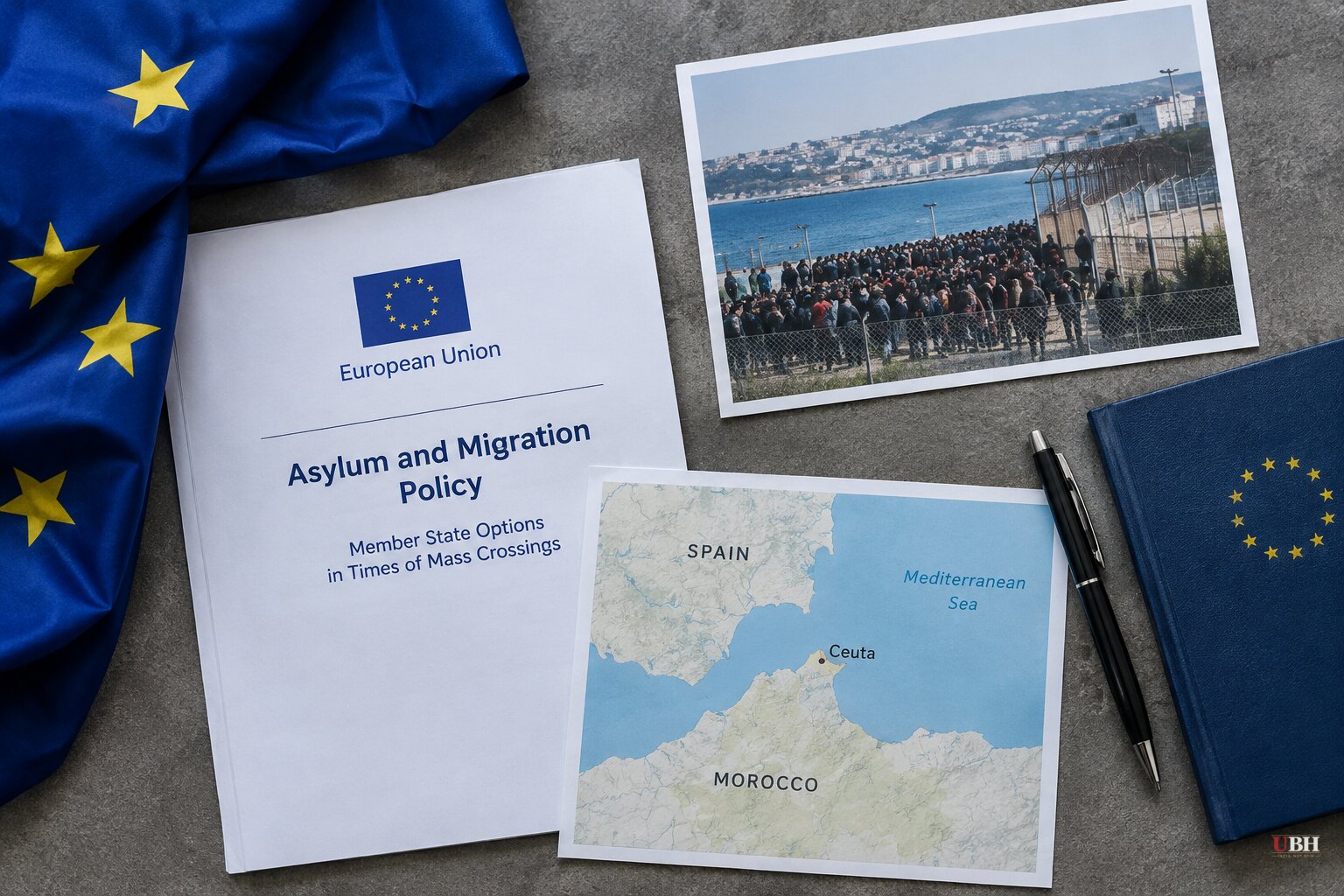
On July 30 and 31, 2026, a mass crossing from Morocco into the Spanish exclave of Ceuta overwhelmed one of the European Union's only two land borders with Africa. Estimates of how many people crossed vary by source: Spain's official government estimate is about 72,000, according to the Epoch Times, while Euronews cited 82,000 and Streamline Feed put the single-day figure at roughly 80,000. Breitbart described it as an "invasion" of upwards of 70,000 migrants.
The death toll is also reported inconsistently. Streamline Feed reported at least nine deaths during the initial breach, while EurActiv, republished by Eurasia Review, put the toll from the crossing at more than 100. Neither figure has been reconciled in the available reporting.
Spain deployed military units to the exclave on July 30 to restore order. Nearly two months later, the crisis is far from resolved.
Who's actually still there
How many migrants remain in Ceuta depends on who you ask. Prime Minister Pedro Sánchez has put the number at 5,000, according to Eurasia Review. Some of his own ministers say 10,000. Ceuta's regional president, Juan Vivas, told reporters on September 11 that his administration's own estimate was closer to 13,000, calling the city "a pressure cooker," per the Epoch Times.
Spain's Ministry of Migration expects at least 6,000 migrants to still be in Ceuta at the start of 2027, according to reporting by Spanish paper ABC cited by Breitbart. That same reporting says Madrid is preparing to expand accommodation capacity to house up to 10,000 people within the exclave, in addition to roughly 2,000 beds already set aside for minors. Eurasia Review put the number of registered unaccompanied minors entitled to stay under Spanish law at more than 2,300.
More than 7,500 migrants have returned to Morocco voluntarily since early August, according to Spain's Territorial Policy Minister Ángel Víctor Torres, as reported by Eurasia Review.
Spain and Morocco trade blame
Morocco's Foreign Minister Nasser Bourita told journalists this past Thursday, on the sidelines of the UN General Assembly in New York, that Spain, not Rabat, is why thousands of migrants and minors haven't been sent back. "If illegal immigrants have not been returned, if minors have not been returned, the question should not be put to Morocco, but to Spain," Bourita said, according to Eurasia Review.
Spain's Foreign Minister José Manuel Albares pushed back, saying Morocco had promised cooperation and that Spain remains "committed to maintaining a good relationship" with Rabat. Spanish judges, prosecutors and police unions have separately accused Morocco of failing to cooperate on returns, a dispute that echoes the 2021 Ceuta crisis, when most unaccompanied minors also ended up staying in Spain long-term.
Italy and Spain still checking each other's borders
The diplomatic fallout has bled into the Schengen zone itself. Italy and Spain, both normally open-border EU states, have kept reciprocal border controls running since August. On September 15, Italy extended its checks on arrivals from Spain through October 1, citing what Interior Minister Matteo Piantedosi's department called "high risks to internal security" and a "potential threat from terrorist infiltration," according to the Epoch Times. Spain matched the move, checking passengers from Italy through October 8.
Strain at home
Ceuta's healthcare workers' union, Cemsatse, called a strike for September 24 over what it says is an overwhelmed medical system, Breitbart reported. Spanish Health Minister Mónica García has denied the migrant surge brought the health system "to the brink of collapse" and, per Breitbart, previously called it "xenophobic" to suggest migrants had brought disease into the city.
The asylum suspension proposal
The political response at the EU level is now the most consequential piece of this story. Commission President Ursula von der Leyen proposed in her State of the Union address earlier this month to create an emergency framework that could let member states suspend the right to asylum during mass-arrival events, according to Euronews. A Commission official told Euronews there's no timeline yet for a formal proposal.
The idea has precedent at the national level. Greece suspended asylum processing for three months for sea arrivals from Libya in July 2025. Poland has banned asylum claims from Belarus border crossings since March 2025, according to Streamline Feed. Doing this EU-wide would go further than the bloc's own Migration and Asylum Pact, which took effect June 12, 2026, and already fast-tracks claims from migrants deemed to come from "safe" countries.
Critics say this crosses a legal line the EU pact didn't. The UNHCR told Euronews that "even at times of migratory pressure, States must ensure that people seeking asylum have access to asylum procedures," warning that blanket pushbacks would violate the international principle of non-refoulement, the rule against returning people to places where they face torture or death. Italian MEP Cecilia Strada called it "dismantling another piece of EU values." The European Court of Human Rights has previously ruled against Greece, Lithuania and Poland for similar pushback practices.
That concern is a real one worth taking seriously. Individual asylum screening exists precisely so that a genuine refugee fleeing persecution isn't lumped in with someone crossing for economic reasons. A framework that skips that screening during a crisis risks doing exactly what UNHCR warns about.
But the counter-argument from capitals that back von der Leyen's idea is just as concrete. Ceuta absorbed a population surge of more than 10 percent in a single weekend, its hospitals are strained enough that unionized nurses walked out, and Spain's own government can't agree internally on how many migrants are even in the city. A system with no mechanism for handling an 80,000-person breach in 48 hours has a real design gap.
What happens next
Migration ministers from 18 European countries are set to take up the asylum-suspension question today at a conference in Munich, according to Euronews. Von der Leyen has said any emergency mechanism would only apply "under a strictly defined set of criteria" and be "time-limited." No formal legislative text has been published, and the Commission has given no date for one. Until it does, the fight over how many migrants are actually still in Ceuta and who is responsible for sending them home remains unresolved between Madrid and Rabat.
Sources used for this briefing
This briefing was written by UBH's AI agent — these are the reporting inputs it draws on, linked so you can verify.


