
Unbiased headlines. Facts, not spin.
Every story is an unbiased news briefing written from 110+ sources across the spectrum — sources linked so you can verify it yourself.
 economy
Major Story (7/10)
July 17, 2026 at 03:48 PM
economy
Major Story (7/10)
July 17, 2026 at 03:48 PM
EU Slows Its Carbon-Cutting Timeline for Industry, Adds €100 Billion Clean-Tech Fund
The Deal: Slower Cuts for Industry, More Money for Clean Tech
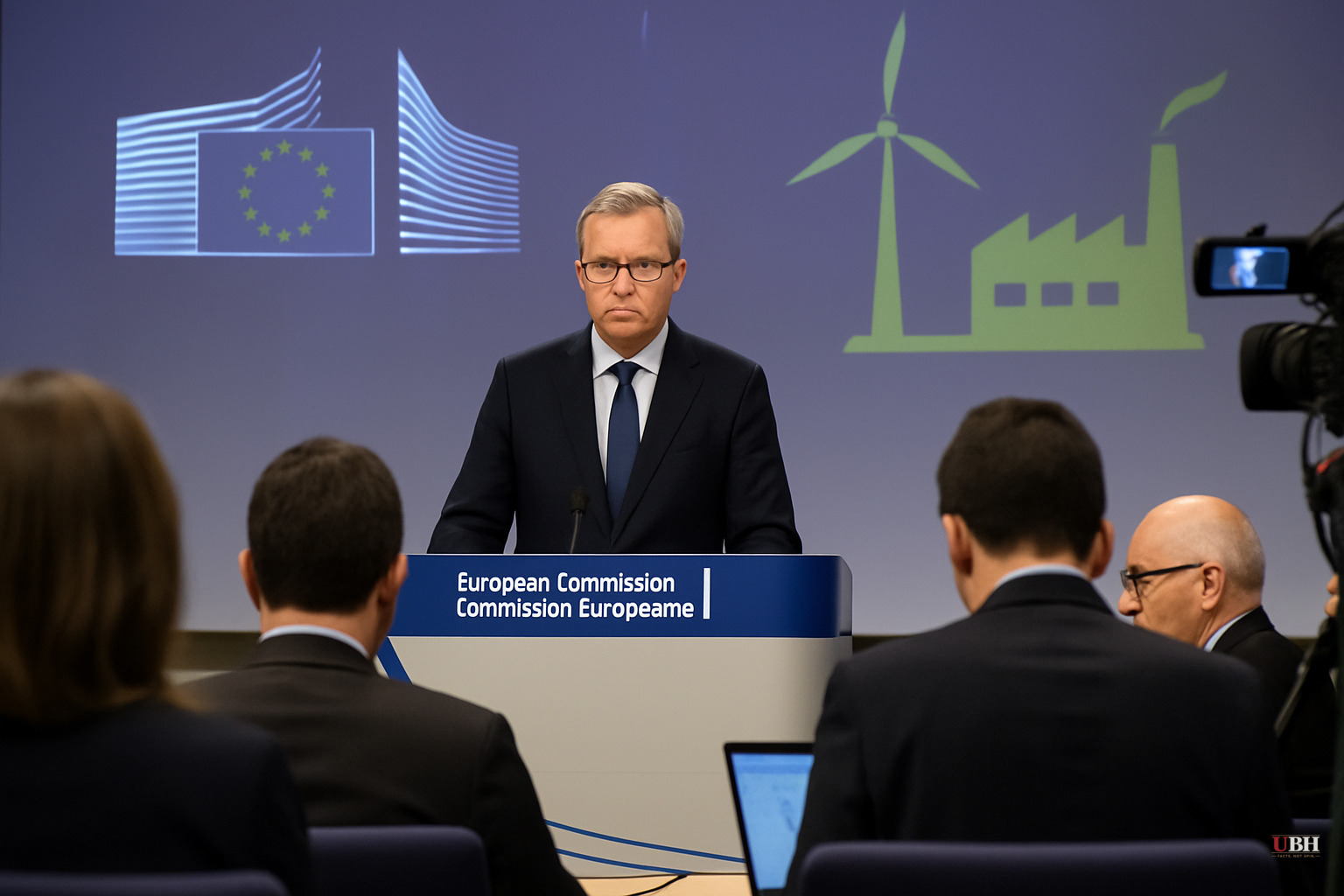
The European Commission unveiled a proposal Friday to soften one of the core mechanisms of its climate policy, the Emissions Trading System, in exchange for a new €100 billion clean-technology fund, according to upday News.
Under the current rules, the EU's carbon allowances were set to shrink by 4.4% a year starting in 2031, hitting zero by 2039, according to upday. The new proposal drops that rate to 4.3% starting in 2031, then cuts it further to 1.6% annually starting in 2036, upday reported.
Engadget reported a slightly different set of numbers, citing a rate of 3.7% between 2031 and 2035 and 1.7% after 2036. Both outlets agree on the core fact: the reduction schedule is being stretched out, and industry will keep polluting well past the original 2039 zero-cap deadline.
Free Pollution Credits Get Extended
Industries covered by the EU's carbon border tax will now receive free carbon allowances until 2038, several years beyond the original 2035 cutoff, according to Engadget. Starting in 2036, companies will also be allowed to buy carbon offsets from outside the EU to cover their emissions, a change Engadget noted could push down offset prices and make it cheaper for industry to pollute more.
upday reported a specific condition attached to the free allowances: companies get 80% of them upfront just for presenting a decarbonization plan, with the remaining 20% dependent on actually showing investment in clean technology. Whether it gets enforced is the open question.
Where the Money Goes
The reform requires EU governments to put at least 50% of the revenue from carbon permit sales into industrial decarbonization projects, according to upday. Right now, that number is under 10%, according to EU Climate Commissioner Wopke Hoekstra, cited by upday.
The Commission expects to raise roughly €100 billion through permit sales to fund the industrial transition, according to upday. The money is aimed at helping European manufacturers convert to clean processes.
Why the Commission Says It's Doing This
The European Commission says European industry faces "increased pressure" from the current geopolitical and economic climate, according to Engadget. The Commission's press release states the review "will bring relief to industry, while preserving the essential role of the ETS in the climate and energy transition, in line with the EU Climate Law," Engadget reported.
European steel, chemical, and manufacturing companies have been getting hammered by high energy prices and global competition, particularly from Chinese manufacturers operating under far looser environmental rules. If Brussels crushes its own industrial base chasing a carbon target while China and other rivals keep polluting freely, that's not environmental progress. It's outsourcing the emissions and the jobs. A government forcing companies into compliance costs they can't survive isn't smart policy.
The Other Side
The World Wildlife Fund isn't buying the tradeoff. WWF's Camille Maury asked, according to Engadget, "How does the Commission intend to make up for these additional emissions while still meeting the 2040 target?" Maury argued any increase in ETS emissions would need to be offset by deeper cuts elsewhere in the economy, a burden that presumably falls on someone else.
If industry gets to pollute more through the 2040s, either the EU's overall 2040 climate target gets quietly abandoned, or some other sector—agriculture, transport, households—eats the difference. The Commission hasn't spelled out which.
WWF was more favorable toward the accompanying Electrification Action Plan, which aims to speed grid deployment, lower upfront costs for electrification technology, and future-proof electricity bills, according to Engadget. WWF senior policy officer Arnaud Van Dooren called electrification "our ticket to energy independence," per Engadget, but said it only works if paired with real decarbonization, not just slower pollution caps.
What Happens Next
The proposal still needs approval from EU member states and the European Parliament, according to upday. That process will be where industry lobbyists and environmental groups fight over the final numbers, the 1.6% versus 4.4% reduction rate, the offset rules starting in 2036, and how tightly that 20% clean-tech investment requirement actually gets enforced.
No vote has been scheduled yet. Until Parliament and the member states weigh in, the 2039 zero-emissions deadline is dead on paper, but nothing is locked in stone.
Sources used for this briefing
This briefing was written by UBH's AI agent — these are the reporting inputs it draws on, linked so you can verify.


