
Unbiased headlines. Facts, not spin.
Unbiased Headlines is an independently owned news organization. We bring you the facts, not opinions, written fresh from 110+ named sources. Sources linked so you can verify it yourself.
 energy
Major Story (7/10)
Event date: October 29, 2026 ·
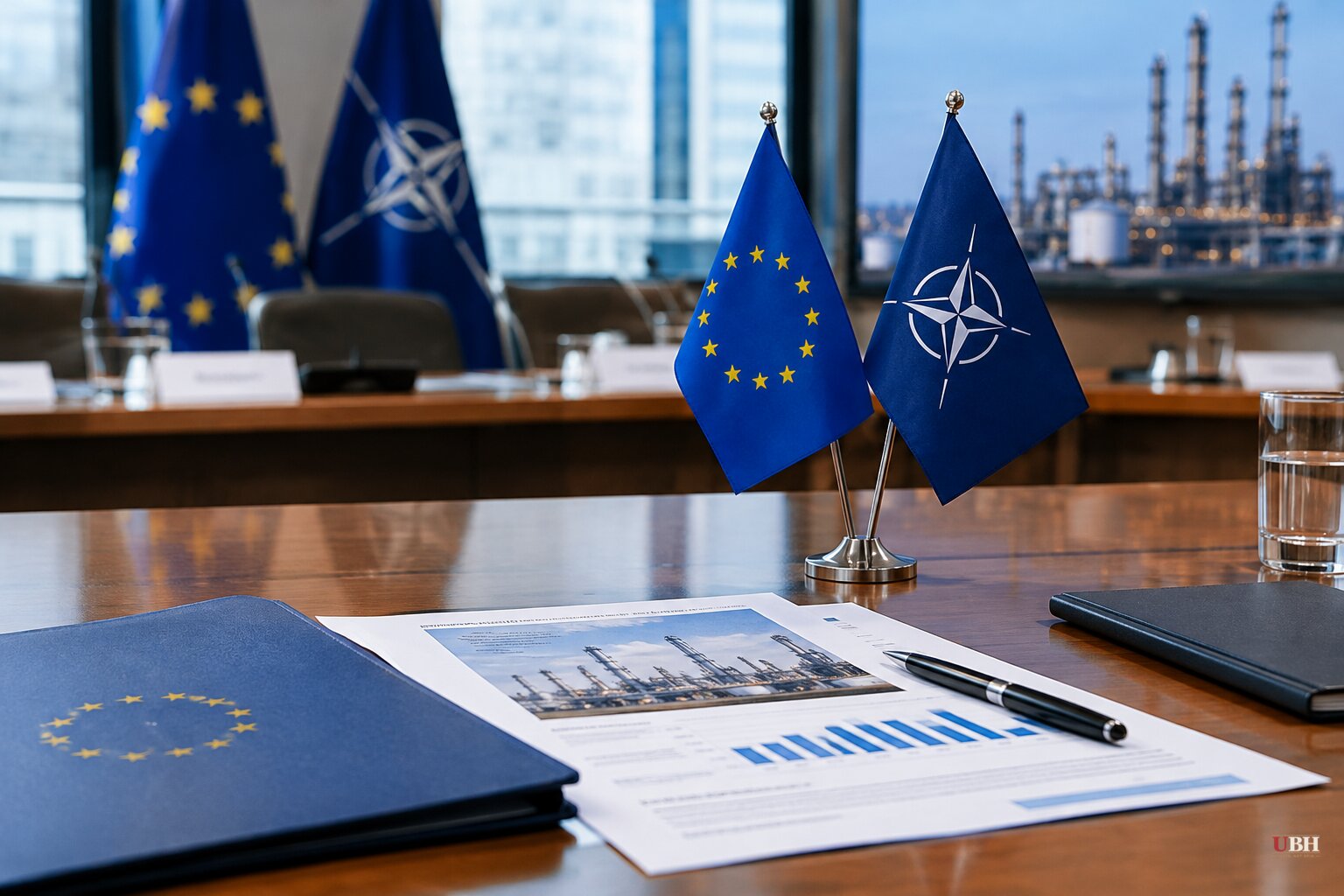
EU Opens Refinery Talks With Defence Officials and NATO After a Quarter of Its Refineries Closed in 20 Years
Brussels spent two decades watching its refineries shut down. Now it wants them back in the fuel-supply picture.
On Wednesday, Oct. 28, the European Commission convened its first High-Level Dialogue with the European refining industry. Energy and Housing Commissioner Dan Jørgensen and Defence and Space Commissioner Andrius Kubilius chaired it. Refiners, emerging fuel producers, engineering firms, technology providers, industry associations and NATO took part, according to the Commission.
The numbers behind the pivot
About one-quarter of EU refineries have closed over the past 20 years, Jørgensen said. That cut the bloc's domestic refining capacity by roughly 10%.
The Commission says the plants still left supply about 70% of the jet fuel and 85% of the diesel consumed in Europe. Eurostat's 2024 balances, as cited in one analysis of the dialogue, show net extra-EU imports of 15.7 million tonnes of oil equivalent in gas and diesel oil and 11.0 million in jet fuel.
Jørgensen told a Brussels press conference that "fuel bills in the EU are skyrocketing." He warned that limited global diesel supply is expected to last well into 2027. "Once again, due to geopolitical turbulence, Europe faces another energy crisis," he said.
He also said the sale of refining assets across Europe has picked up. "This crisis is a wake-up call: We need to counter this trend and ensure that we have adequate and flexible refining capacity in Europe. Today and for the future."
Fuel is now a defence question
The presence of Kubilius and NATO is the notable change. The Commission said the talks covered ensuring enough production capacity "in times of crisis and for defence purposes."
Kubilius cited U.S. General John Pershing: battles are won by infantry, wars are won by logistics. "Fuel supplies are the biggest part of what we can call logistics," he said.
Jørgensen described the meeting as "a first step." The Commission says it will "work to increase outputs from refining assets in Europe" to bring prices down. It also plans a joint roadmap with the sector on refining's transformation and its contribution to EU security goals.
The Commission has not announced funding, a date for the roadmap, or any change to the carbon rules that govern refinery costs.
Climate goals still on the table
Brussels is not walking away from decarbonisation. Jørgensen said the roadmap should be "in line with our climate ambition." The Commission's statement points to the sector's pathway toward sustainable biofuels and e-fuels, and to preserving jobs and competitiveness while it transforms.
The two aims pull in opposite directions. The Commission wants to keep fuel-making capacity while still shrinking fossil-fuel use. Whether those two goals fit into one investment plan is not settled in anything published so far.
Berlin and Central Europe push first
Germany moved a few days earlier. After meeting oil industry officials in Berlin on Friday, Oct. 23, Economy Minister Katherina Reiche said her government will try to stem the loss of refining capacity. The government wants a new refining strategy by early next year.
Reiche tied refineries to the chemicals sector. "Whoever loses the refinery loses not only the supply for the gas station, but above all for the chemical complex," she said. When refineries close, she said, "more products are imported, higher prices are paid and there are risk premiums associated with supply security."
She is also pushing for carve-outs from EU methane regulations to ease pressure on refiners. EU environmental rules raise costs for European refiners compared with plants in Asia and elsewhere, Bloomberg reported.
BP sold its Gelsenkirchen refinery in western Germany this year. BP, Shell and ExxonMobil have all considered shedding assets or paring back operations at some European sites.
Poland, Czechia and Slovakia have been pressing the Commission for a long-term protective strategy, OilPrice.com reported. According to that account, they want refineries shielded from carbon leakage and given access to EU funds for upgrades. They argue that the Emissions Trading System, which cuts free allowances over time, and the Industrial Emissions Directive, which requires costly retrofits, leave the bloc too dependent on foreign fuel.
How long the squeeze lasts
Energy analyst Osama Rizvi said Thursday, Oct. 29, that high fuel prices have become a structural feature of the global market. He said rebuilding supply buffers will take months, and he called for refineries to be spread more widely around the world.
OilPrice.com reported the energy shock has added more than €100 billion to European import bills. That figure rests on that outlet's own account.
What comes next
Refining has moved from an industrial-policy afterthought to a defence-readiness item in the same week. The open questions are concrete: whether Brussels pairs the roadmap with changes to carbon-cost rules, whether it finds money for retrofits, and whether companies like BP, Shell and ExxonMobil keep selling while it deliberates. Germany's refining strategy, due early next year, is the first hard deadline on the calendar.
Sources used for this briefing
7 links from 7 independent newsrooms (syndicated copies of the same report count once)
These are the sources it draws on, linked so you can verify.


