
Unbiased headlines. Facts, not spin.
Unbiased Headlines is an independently owned news organization. We bring you the facts, not opinions, written fresh from 110+ named sources. Sources linked so you can verify it yourself.
 energy
Major Story (7/10)
DOT Approves $8.2 Billion Offshore Texas LNG Port and Proposes First LNG Safety Rule Overhaul in 20 Years
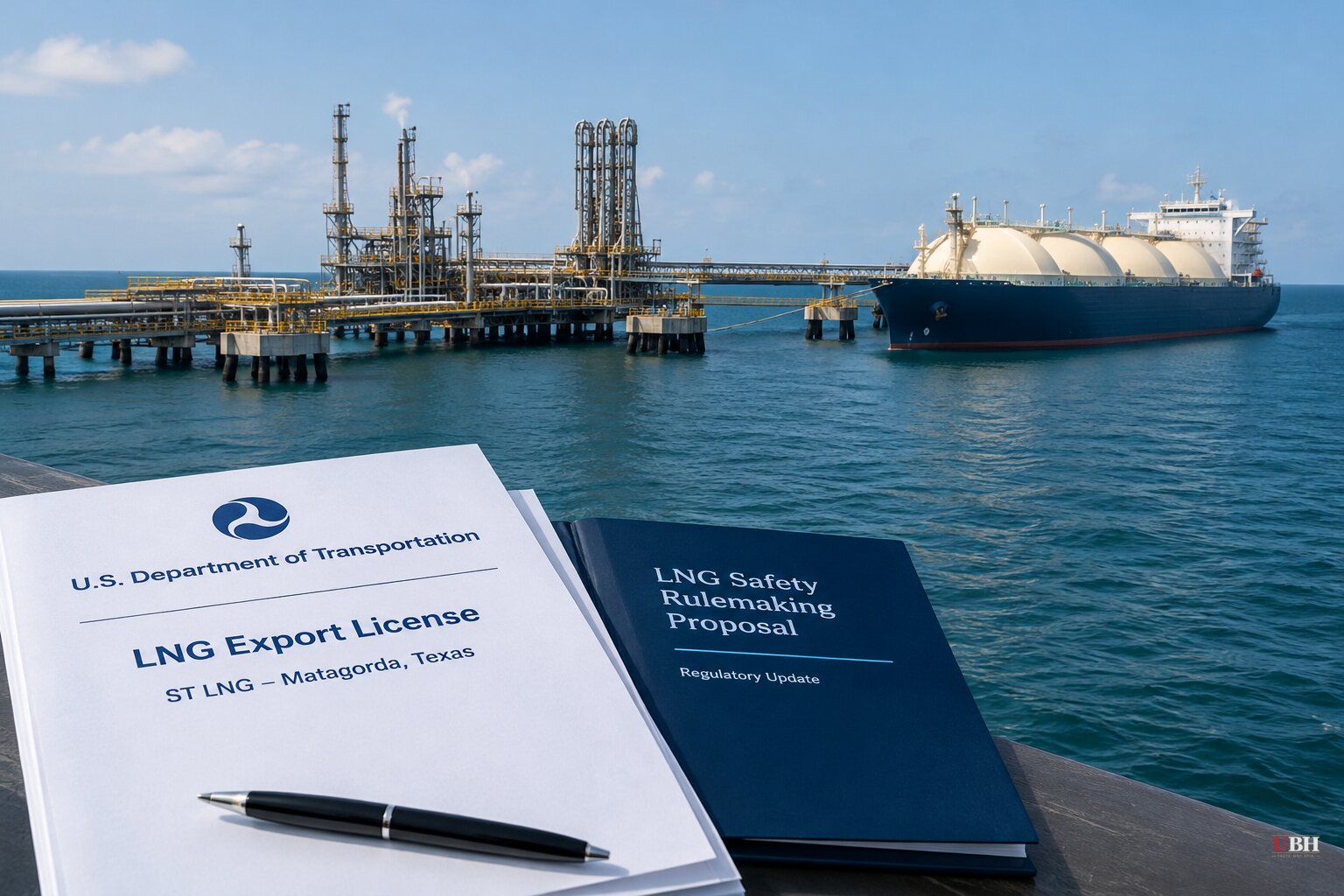
The Trump administration cleared a major new U.S. LNG export project and proposed rewriting the federal rulebook for LNG facilities this week. Both announcements came Wednesday, Oct. 28, from Transportation Secretary Sean Duffy at the Sea Power Summit at Port Houston.
The approvals land as U.S. exporters head into a period of rapid expansion, and as the question shifts from whether America can build terminals to whether the world will buy enough gas to fill them.
The ST LNG license
The Maritime Administration (MARAD) approved the deepwater port license for ST LNG, LLC, a facility about 10.4 miles off Matagorda, Texas. The Department of Transportation puts the price tag at $8.2 billion.
Construction is expected to start in 2027, with service beginning in 2029. The project would add up to 8.4 million metric tons of LNG export capacity per year. DOT says it could support 2,000 construction jobs and up to 855 permanent positions.
Rep. Randy Weber (R-Pearland), whose district includes seven ports and three LNG terminals, said through his office that the project would expand U.S. LNG export capacity by 7 to 9 percent.
Unlike a conventional onshore terminal, ST LNG would process and load gas offshore.
A faster review, by DOT's math
The speed is part of the story. MARAD finished the project's Final Environmental Impact Statement in 410 days. DOT says that is roughly 3.7 years faster than the historical average, a 70% cut in review time, and the fastest deepwater port license review in more than two decades.
The approval is an early test of a January 2026 decision that moved deepwater port licensing from the Coast Guard to MARAD. MARAD now leads environmental review and licensing. The Coast Guard keeps maritime safety, security, vessel traffic, facility design and operational oversight.
MARAD Administrator Stephen Carmel called ST LNG the agency's third deepwater port approval under President Trump. He said it "proves we can accelerate the safe development of crucial energy infrastructure that will strengthen our supply chains and drive down energy prices." The price claim is Carmel's. No source has quantified an effect on consumer energy costs.
Duffy framed it as a jobs story. "By slashing red tape and modernizing our licensing processes, the Trump Administration is delivering a massive economic boom for the people of Texas," he said.
The safety-rule proposal
The Pipeline and Hazardous Materials Safety Administration (PHMSA) published a notice of proposed rulemaking to update LNG facility standards for the first time in more than 20 years. The proposal would incorporate the 2026 edition of the National Fire Protection Association's Standard 59A, which covers design, construction, operation and maintenance of LNG facilities.
The change would let operators adopt pipe-in-pipe systems, single-walled ASME containers and membrane storage tanks. Federal officials estimate that would save about $100 million a year.
PHMSA Administrator Paul Roberti said U.S. regulations "are the gold standard" but that regulators "have let those regulations stagnate, relying on an outdated version of an industry standard from more than twenty years ago." He argued the update "enhances safety by streamlining regulatory requirements and incentivising the deployment of cutting-edge technologies."
That safety claim comes from the regulators proposing the rule. The proposal is not final and must go through the federal rulemaking process before it takes effect.
Capacity is racing ahead
The U.S. Energy Information Administration says U.S. LNG exports hit a record 15.1 billion cubic feet per day in 2025. It forecasts an average of 17.4 Bcf/d this year and 18.6 Bcf/d in 2027. EIA expects export capacity in 2031 to be nearly double the end-2025 level.
The U.S. has been the world's largest LNG exporter since 2023. Cheniere shipped the first large-scale Lower 48 cargo from Sabine Pass in 2016.
Europe has been the anchor customer. It took 69% of U.S. LNG exports in 2022, up from 34% in 2021 after Russia's invasion of Ukraine, and about 68% through most of 2025, according to EIA trade-flow data. Many U.S. contracts are tied to Henry Hub gas prices and give buyers more flexibility to redirect cargoes than some traditional supply deals. This year's Middle East conflict disrupted Gulf LNG flows and showed the value of that flexibility.
The demand question
Analysis published by OilPrice.com calls this the industry's biggest test. For years the issue was whether America could build enough export infrastructure. With capacity set to nearly double, the bigger issue is whether global demand grows fast enough to keep terminals "well utilized and economically attractive."
ST LNG illustrates that timing. Its 2029 start date falls in the middle of the build-out EIA describes, and the administration's approvals are aimed squarely at adding supply. Whether buyers materialize for all of it is not something DOT's announcements address.
Next up: the PHMSA proposal moves through the rulemaking process, and ST LNG is slated to begin construction in 2027.
Neither announcement has been challenged by a named critic in the public record so far, and the job and savings figures are all government or congressional-office estimates.
Sources used for this briefing
6 links from 4 independent newsrooms (syndicated copies of the same report count once)
These are the sources it draws on, linked so you can verify.


