
Unbiased headlines. Facts, not spin.
Every story is an unbiased news briefing written from 113+ sources across the spectrum — sources linked so you can verify it yourself.
 tech
Notable (6/10)
September 24, 2026 at 12:51 PM
tech
Notable (6/10)
September 24, 2026 at 12:51 PM
EU Financial Regulators Warn Quantum Computers Could Break Encryption Before Anyone Can Use Them Commercially
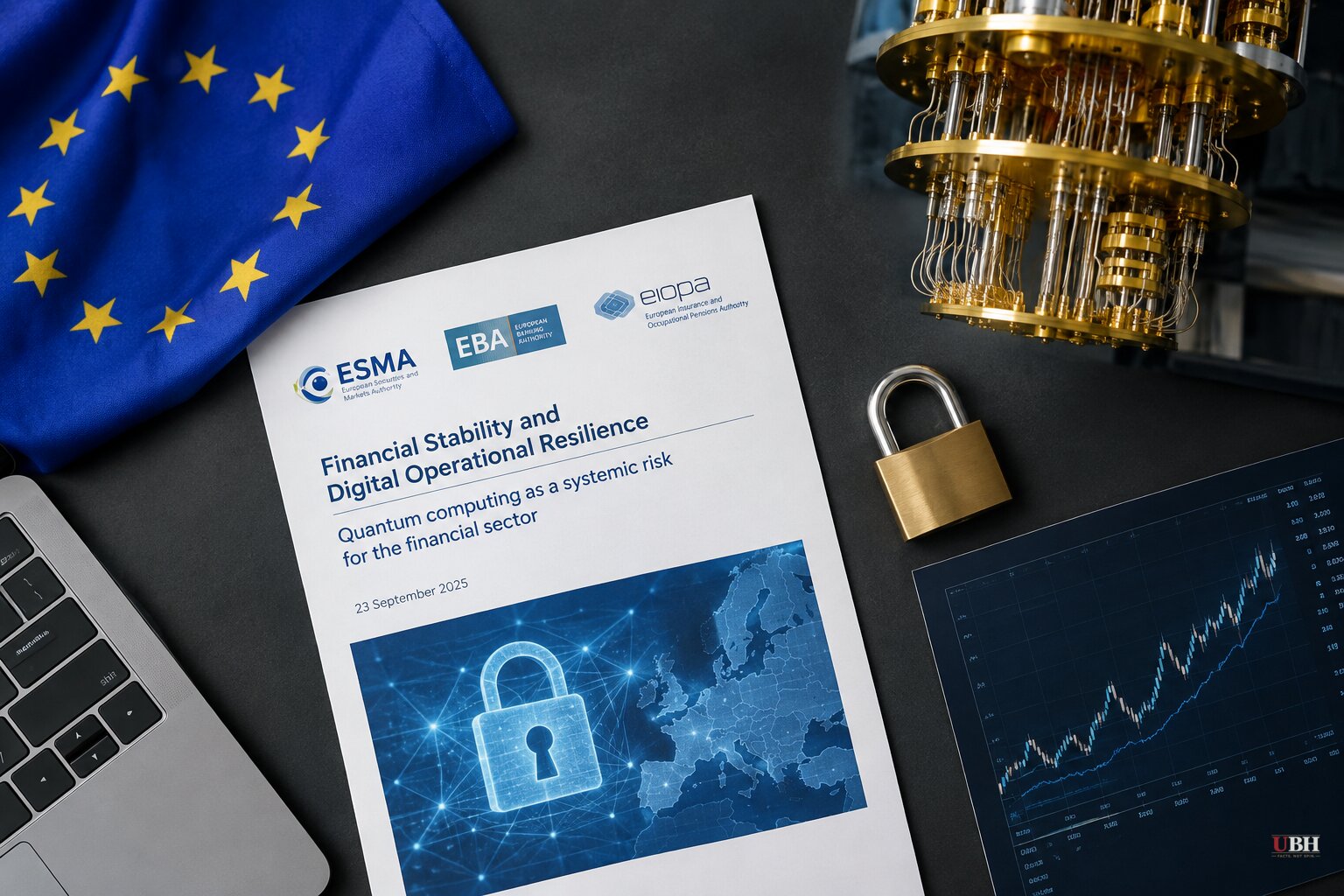
The European Union's three top financial regulators added quantum computing to their official list of systemic risks on Wednesday, September 23, warning that so-called "Q-Day" could arrive before quantum computers are even good for anything else.
The Joint Committee of the European Banking Authority, European Securities and Markets Authority and European Insurance and Occupational Pensions Authority made the call in their Autumn 2026 Risk and Vulnerabilities report. The core line: an advanced quantum computer could break the cryptography securing banking systems, government databases and blockchains, and that threat "could materialize earlier than any viable commercial application."
A machine might be able to crack encryption years before it can do anything you'd actually pay for.
The real threat isn't tomorrow, it's today
The report's sharpest warning isn't about some future hack. It's about data being stolen right now and sitting in a drawer somewhere, waiting.
Regulators call it "harvest now, decrypt later." Adversaries intercept encrypted traffic today, store it, and wait for quantum hardware to mature enough to crack it open. Anything with a shelf life past 2030 or so is already exposed, according to the report.
For Bitcoin, Glassnode found in May that 6.04 million BTC, roughly 30.2% of all bitcoin in existence and worth more than $469 billion at the time, sits in addresses with public keys already visible on-chain. Those coins could be targeted without the owner ever making a transaction. Separately, Cryptoquant put the vulnerable figure at roughly 6.9 million BTC worth about $586 billion, a different estimate from a different source and not directly reconcilable with Glassnode's number, but both point the same direction: a huge chunk of Bitcoin's supply, much of it old Satoshi-era coin sitting in legacy pay-to-public-key addresses, is sitting exposed.
Newer wallets that hide the public key behind a cryptographic hash are less at risk for now. But bitcoin can't just push a security patch like a bank does. Moving to quantum-resistant signatures would require network-wide consensus, and anyone holding exposed coins would need to move them before an attack becomes possible, not after.
Brussels' clock is already ticking
The EU's NIS Cooperation Group has a three-phase roadmap. Member states must finish initial planning, risk assessments and cryptographic inventories by December 31, 2026, which is three months out. High-risk infrastructure, energy grids, financial networks, defense communications, has until 2030. Everything else gets until 2035.
The EU's Digital Operational Resilience Act already requires financial firms to adopt "state-of-the-art cryptography against new threats." The bloc has also poured more than –11 billion into quantum technologies and leads the world in quantum research publications, according to Crypto Briefing, though it still trails the U.S. and China on private-sector quantum investment. The EU is also building EuroQCI, a quantum-safe communications backbone combining fiber links and satellites for government and critical-infrastructure traffic.
How fast is quantum actually moving
IBM has said usable quantum computing could be four years or less away, according to KuCoin. Recent research from Google has pushed some estimates for viable quantum attacks on encryption forward to as early as 2029, per Crypto Briefing. Other estimates for a Bitcoin-breaking Q-Day run from 2030 to 2032 or later, per Decrypt.
Nobody, including the EU's own regulators, claims a quantum computer capable of breaking Bitcoin's cryptography exists today. KuCoin's reporting is explicit on this: the EU warning does not assert that such a machine currently exists. The urgency is about closing a gap before it opens, not responding to an active break-in.
Industry isn't waiting to find out who's right. Coinbase, Ethereum, XRP's network and El Salvador are already working on post-quantum defenses ahead of 2028-2029 internal targets, according to CoinGape. Leo Fan, founder of the zero-knowledge computing firm Cysic, told Bitcoin.com News that Bitcoin, Ethereum and Solana all need signature upgrades, and that proof-of-stake networks have to fix validator signatures too. "Post-quantum signature standards already exist, so deployment can begin now," Fan said. "Migrating entire networks is a multi-year project, not a switch to flip when quantum attacks arrive."
What's unresolved
No regulator or exchange has proposed a binding answer for the hardest question: what happens to the millions of exposed, dormant bitcoin sitting in old wallets whose owners are unreachable, dead, or simply gone. Freezing that coin, moving it, or leaving it exposed are all live options in the bitcoin community with no consensus behind any of them. The EU's own December 2026 planning deadline will force European banks and insurers to answer the easier version of that question first: where does their vulnerable encryption actually live. Whether that inventory gets built on time, three months from now, is the first real test of whether Brussels' 2030 deadline is realistic or aspirational.
Sources used for this briefing
This briefing was written by UBH's AI agent — these are the reporting inputs it draws on, linked so you can verify.


