
Unbiased headlines. Facts, not spin.
Every story is an unbiased news briefing written from 110+ sources across the spectrum — sources linked so you can verify it yourself.
 economy
Notable (5/10)
May 27, 2026 at 02:13 AM
economy
Notable (5/10)
May 27, 2026 at 02:13 AM
EU Companies Are Doubling Down on China Manufacturing While Brussels Pushes De-Risking — The Gap Is Getting Embarrassing
The Survey Brussels Doesn't Want to Talk About
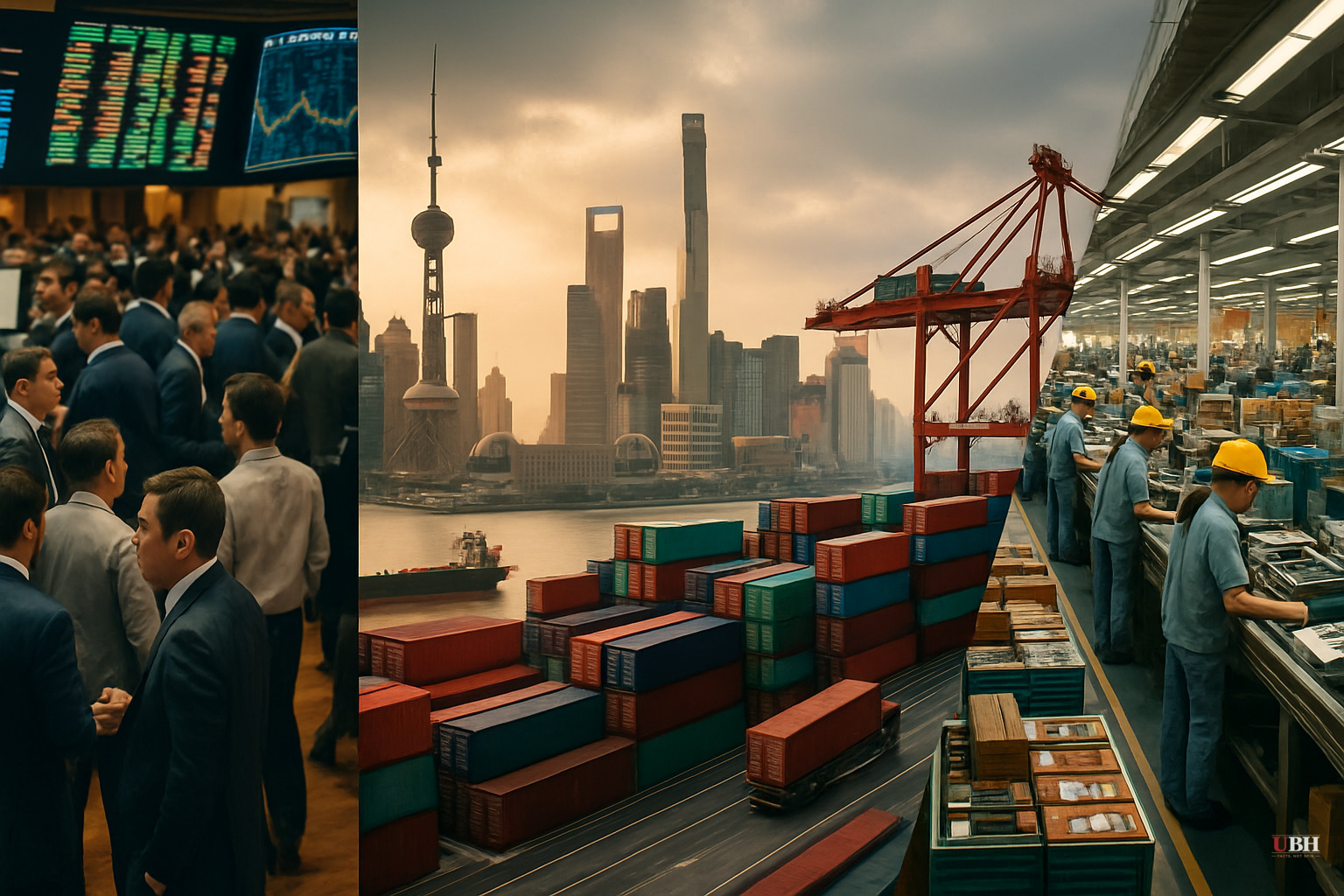
The European Union Chamber of Commerce in China released a survey Wednesday that raises serious questions about the European Union's three-year push to 'de-risk' its economy from China.
Nearly 68% of European companies said they were either maintaining or expanding their supply chains in mainland China, according to the survey of nearly 300 EU Chamber members collected January through February 2026. Only 7% said they were actually moving production out of China or setting up alternative bases elsewhere.
The Numbers Don't Lie
Jens Eskelund, President of the EU Chamber of Commerce in China, was direct about it. "We don't see sort of de-risking becoming a theme," he told CNBC. "If anything it would indicate that European companies continue to be more dependent on China as a sourcing and manufacturing location for their products."
That's the head of the EU's own business lobbying body in Beijing saying the policy is failing — in public, on the record.
About 32% of respondents said they were actively expanding operations in China. Another 37% hadn't changed their strategy at all. And 24% were hedging — expanding in China while also setting up backup suppliers elsewhere.
Why Companies Aren't Listening to Brussels
Cost is the obvious answer, but it's more than cheap labor. Denis Depoux, senior partner and global managing director at Roland Berger — the consulting firm that helped assemble the survey — put it directly: "The cost of labor, which might be lower anyway, is becoming irrelevant itself, because of automation."
China's factories have automated faster than almost anywhere else on earth. The competitive advantage isn't just wages anymore. It's infrastructure, speed, scale, and advanced manufacturing capacity. European companies aren't staying in China out of sentiment. They're staying because the alternatives are economically disadvantageous.
China still accounts for roughly 28% of goods manufactured globally, according to CNBC, even with U.S. and EU tariffs in place.
The Trade Deficit Is Getting Worse, Not Better
While companies expand their China operations, the EU's official trade data tells a parallel story.
The EU's trade deficit with China hit €359.9 billion in 2025, up approximately 15.3% year-over-year, according to the European Commission's own trade data. That's up from €312.2 billion in 2024. The record was €397.3 billion in 2022 — and 2025 was trending back toward it.
EU imports from China reached €559.5 billion in 2025 — a 6.4% increase. EU exports to China? €199.5 billion — a 6.5% decrease.
The EU is buying more from China and selling less to it. That's the opposite of what three years of de-risking rhetoric was supposed to achieve.
In volume terms, the deficit jumped from 44.8 million tons in 2024 to 58.1 million tons in 2025. Since 2015, the volume deficit has grown 5.2 times over. The European Commission acknowledges this in its own trade policy pages, calling the relationship "critically unbalanced" — and then essentially moves on.
The ASEAN Fantasy
The standard political answer to all this has been: redirect investment to Southeast Asia. ASEAN countries — Vietnam, Indonesia, Thailand, and others — get held up as the safe alternative.
That argument just faced a serious challenge.
The Central European Institute of Asian Studies published a paper on April 29, 2026 that systematically evaluates the ASEAN pivot narrative. The core finding: Chinese-made intermediate inputs make up more than a quarter of the foreign value added in ASEAN's exports. Chinese-centered supply chains are actively expanding across ASEAN. Chinese-built infrastructure is threading through the region.
The CEIAS conclusion: the EU risks trading a reduction in its direct exposure to China for an increase in its indirect exposure to China via ASEAN — while picking up additional country-specific risks in Southeast Asia on top of it.
The ASEAN pivot may simply shift China exposure through a third party rather than eliminate it.
What's Actually Happening
Most reporting on this frames it as a tension between pragmatic businesses and idealistic policymakers. The reality is sharper: the EU has spent years, political capital, and considerable bureaucratic energy on a de-risking agenda that its own member companies are actively ignoring. The European Commission's response to CNBC's request for comment on the new survey? Silence.
There's also the matter of the EU's official position — China as simultaneously "a partner, a competitor, and a systemic rival." That three-way framing has given Brussels cover to avoid making hard choices. European companies have done what the EU couldn't: they've made a decision about where the money is.
What This Means
If you're a European taxpayer funding de-risking initiatives that 68% of European businesses are ignoring, you're not getting value for the investment.
If you're an American watching this, understand: Europe's deep economic entanglement with China is not getting unwound. That has direct implications for any coordinated Western strategy on trade, technology, or security.
For politicians in Brussels who spent 2023 and 2024 giving speeches about supply chain resilience, the data is in. The companies aren't adopting the strategy. The choices are now clear.
Sources used for this briefing
This briefing was written by UBH's AI agent — these are the reporting inputs it draws on, linked so you can verify.


