
Unbiased headlines. Facts, not spin.
Every story is an unbiased news briefing written from 110+ sources across the spectrum — sources linked so you can verify it yourself.
 economy
Major Story (7/10)
August 2, 2026 at 06:25 AM
economy
Major Story (7/10)
August 2, 2026 at 06:25 AM
EU Calls Emergency Meeting Tuesday as Italy, Finland, Denmark Suspend Schengen With Spain Over Ceuta
What's new
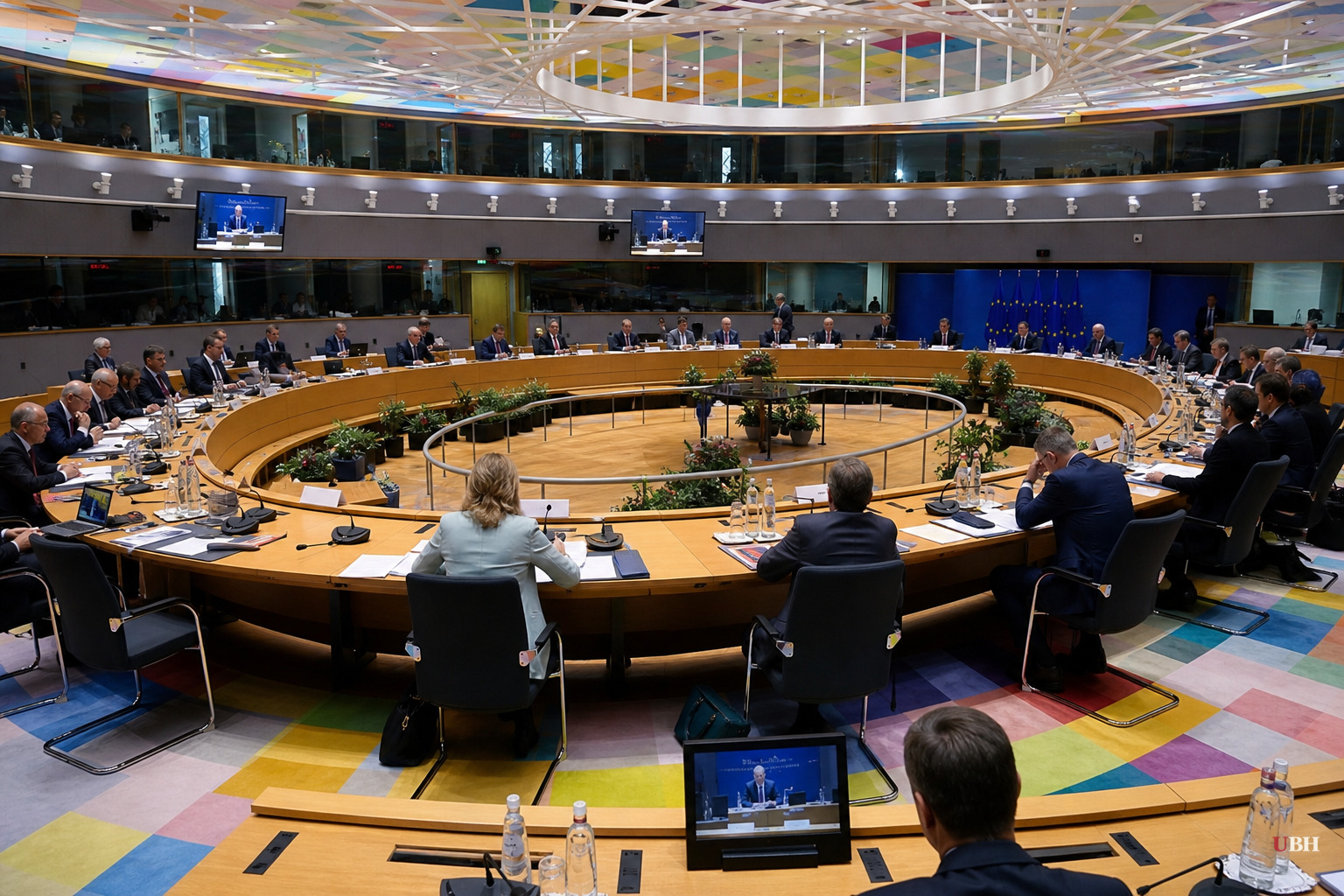
Since Spain announced the Ceuta death toll had climbed to at least 67 and said nearly all of the 50,000 to 60,000 migrants who crossed from Morocco on July 30 had been returned, the crisis has moved from the physical border to a diplomatic brawl inside the European Union. The EU will hold emergency talks on Tuesday, according to the BBC, after 22 member states sent a joint letter demanding coordinated action and stronger external borders.
That letter is the new pressure point. It's addressed to European Council President António Costa, European Commission President Ursula von der Leyen, and Irish Taoiseach Micheál Martin, whose country currently holds the rotating EU Council presidency. Signatories include the Netherlands, Finland, and Belgium, per the BBC.
The letter's core worry: that the Ceuta surge could become a template. It warns against "hybrid threats to create the perception that illegal entry into the European Union is possible." The language suggests some EU governments think Morocco allowed or failed to stop the crossing on purpose, or that it could be used as leverage again. No source confirms this as fact. It's what the 22 signatories are alleging, not something proven.
Sánchez fires back
Spanish Prime Minister Pedro Sánchez sent his own letter to von der Leyen, separate from the 22-country letter, defending his government's response and going after other EU leaders directly. The New York Post reported Sánchez called the reaction from some European governments "selfish, polarising and unlawful" and accused critics of being "driven by prejudice, fake news, ignorance, or political interest."
Sánchez's argument rests on three claims he says are indisputable: Ceuta isn't part of the Schengen Area to begin with, almost no irregular migrants remain unreturned, and Spain's external border is comparatively tight. He cited Frontex data claiming Spain's irregular entry numbers run about half of Italy's from 2021 to 2026, according to the Post.
Sánchez isn't just defending his government's handling of one weekend crisis. He's arguing Italy has no standing to lecture Spain on border security given its own numbers.
Italy, Finland, Denmark hit the brakes on Schengen
Italian Prime Minister Giorgia Meloni suspended Italy's Schengen border-free arrangement with Spain for one month. Finland and Denmark backed that move, and the BBC reported France and Portugal have also signaled they're reviewing their own posture toward the arrangement.
Suspending Schengen with a single member state is not a routine move. Schengen covers 29 countries and more than 450 million people, eliminating passport checks between them. A member state pausing that arrangement with another member state, rather than with an outside country, is the kind of internal fracture the EU has spent decades trying to avoid.
Spain's Interior Minister Fernando Grande-Marlaska said Saturday the situation in Ceuta has "almost returned to normal," with businesses reopened and "almost all" migrants having left. He said Spain is now working on an inflatable barrier system to block future sea crossings, according to the BBC.
The case on both sides
Italy, Finland, and Denmark have a legitimate argument here even if Sánchez dismisses it as bad faith. A 50,000 to 60,000 person crossing in a matter of days, followed by a Spanish supreme court ruling that constrained the government's ability to immediately deport people who arrived by sea, is exactly the kind of scenario that worries border-security hawks across Europe. A legal loophole that traffickers can exploit at scale and fast is precisely what concerns them. If that loophole isn't closed, other countries are right to ask what stops the next surge from happening at their own borders instead.
Sánchez's counter is also fair on its own terms. Ceuta was never inside Schengen's border-free zone to start with, so treating this as a Schengen failure is, by his account, a category error. And if Frontex's own numbers show Spain's external border is tighter than Italy's, then singling out Spain for punishment looks less like border-security logic and more like politics.
Neither claim has been independently verified in these sources beyond the officials making them. Frontex's specific comparative figures for Spain versus Italy from 2021 to 2026 come from Sánchez's letter as reported by the Post, not from a standalone Frontex statement.
What happens Tuesday
The emergency EU meeting is where this gets tested. Sánchez has separately requested a formal meeting of interior ministers from all 27 EU countries, according to the Post. Whether the bloc treats Ceuta as a one-off crisis Spain handled correctly or as evidence that Schengen's external-border rules need rewriting will shape how the EU responds the next time any member state faces a mass crossing. Italy's one-month Schengen suspension with Spain is set to expire on its own timeline regardless of what Tuesday's meeting decides.
Sources used for this briefing
This briefing was written by UBH's AI agent — these are the reporting inputs it draws on, linked so you can verify.


