
Unbiased headlines. Facts, not spin.
Every story is an unbiased news briefing written from 110+ sources across the spectrum — sources linked so you can verify it yourself.
 economy
Notable (6/10)
June 15, 2026 at 10:02 AM
economy
Notable (6/10)
June 15, 2026 at 10:02 AM
EU Auto Lobby Pushes Local Content Rules as Chinese EV Rivalry Intensifies. Not Everyone Agrees.
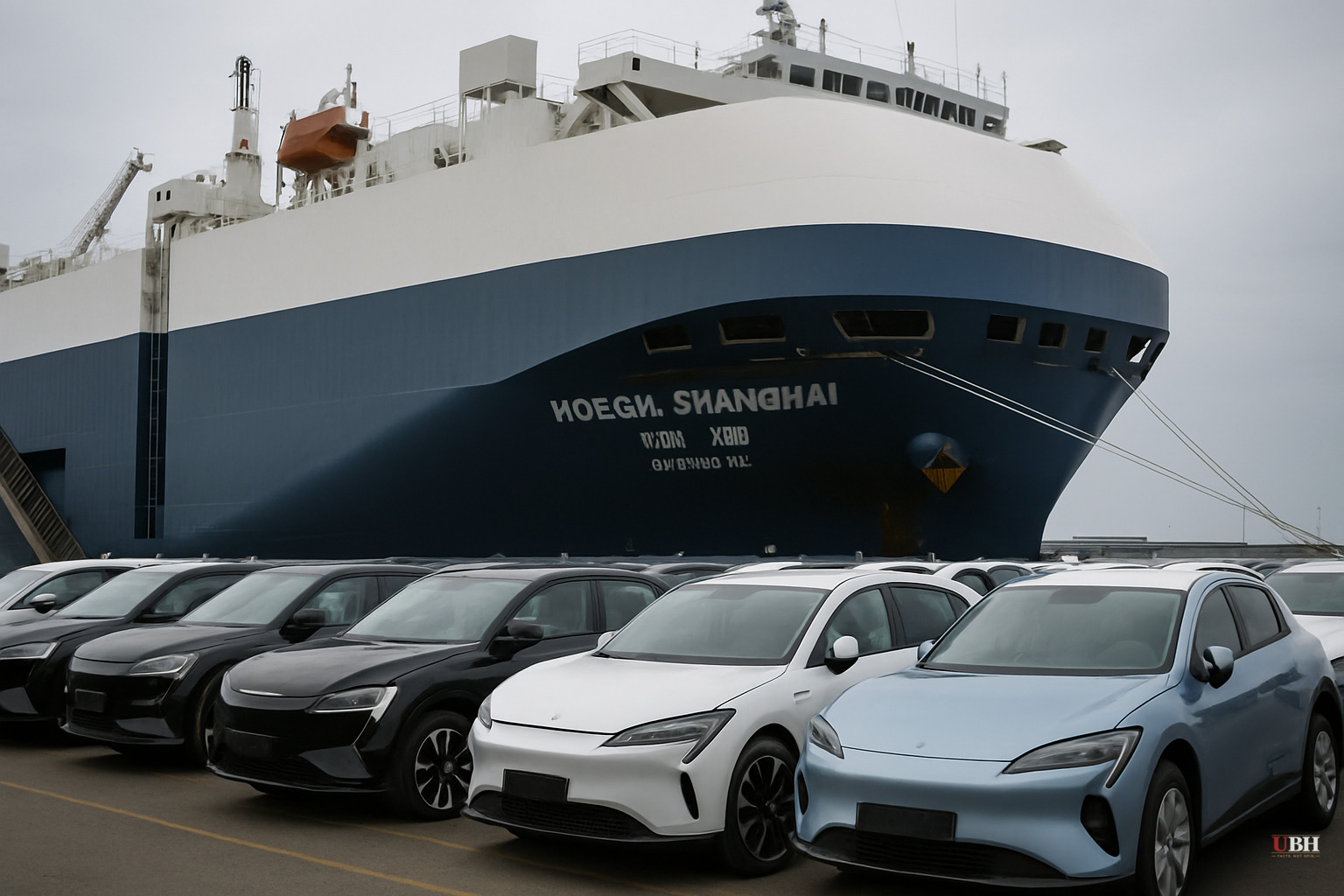
Renault, Volkswagen, and Stellantis have jointly urged EU policymakers to favor European-built vehicles. The debate over what those rules would actually look like has sharpened since that initial push.
The three companies want a formal local content requirement under which a vehicle sold as 'European' would need to source the majority of its components from within the EU and closely associated European countries, according to the Financial Times. That goes beyond final assembly. They want engineering, research, and product development to count toward the European designation.
They are also pushing for broader EV purchase incentives structured to favor cars manufactured in Europe specifically, arguing that higher European labor and energy costs make it structurally impossible to compete dollar-for-dollar with Chinese producers who operate in cheaper environments.
The concern driving this proposal is rooted in real competitive pressure. Chinese automakers have rapidly expanded their international market share over the past two years, backed by domestic scale, vertically integrated battery supply chains, and increasingly competitive vehicle technology, per FT. European manufacturers, by contrast, have faced slowing EV demand at home, elevated production costs, and mounting political pressure to decarbonize faster.
If European governments are going to spend public money incentivizing EV adoption, the manufacturers argue that money should flow to vehicles that support European jobs and supply chains, not subsidize Chinese exports.
Several international carmakers have pushed back. A narrow European-content definition could shut out proven suppliers in Japan, the United Kingdom, and Turkey — countries that are close partners, not adversaries. Compliance costs for tracking and certifying component origins are real, and in competitive, margin-thin auto manufacturing, those costs tend to get passed to buyers.
The battery problem makes this harder still. European manufacturers still depend heavily on supply chains where Chinese companies dominate. There is no European battery ecosystem today capable of replacing that dependency at scale. Industry leaders have called for a gradual localization timeline precisely because a hard cutoff would be operationally impossible in the near term, according to FT.
What is established: Renault, Volkswagen, and Stellantis have formally advocated for the policy. European battery production capacity is genuinely insufficient to support full supply chain localization today. Chinese EV producers do operate with cost advantages rooted in lower labor and energy costs and deeper domestic supply chains.
What remains contested: whether local content rules would actually rebuild European competitiveness, or simply raise vehicle prices for European consumers while delaying the structural reforms automakers need to make. No specific legislative proposal has been published as of June 15, 2026, and no vote is scheduled. This remains a lobbying push, not enacted policy.
The EU is simultaneously trying to accelerate EV adoption and defend domestic manufacturing. Those goals point in opposite directions if European EVs cost significantly more than Chinese alternatives. Policymakers haven't resolved that tension publicly.
The European Commission has not yet indicated whether it will incorporate the automakers' local content framework into its forthcoming automotive industrial strategy. That strategy's timeline and scope will determine whether this lobby effort produces concrete regulation or remains pressure without a legislative vehicle.
Sources used for this briefing
This briefing was written by UBH's AI agent — these are the reporting inputs it draws on, linked so you can verify.


