
Original briefings. Zero spin.
Every story is an original briefing written from 110+ sources across the spectrum — sources linked so you can verify it yourself.
 defense
Major Story (7/10)
August 24, 2026 at 08:25 AM
defense
Major Story (7/10)
August 24, 2026 at 08:25 AM
EU Approves 6.1 Billion Euros More for Ukraine Air Defense, Timed to Independence Day
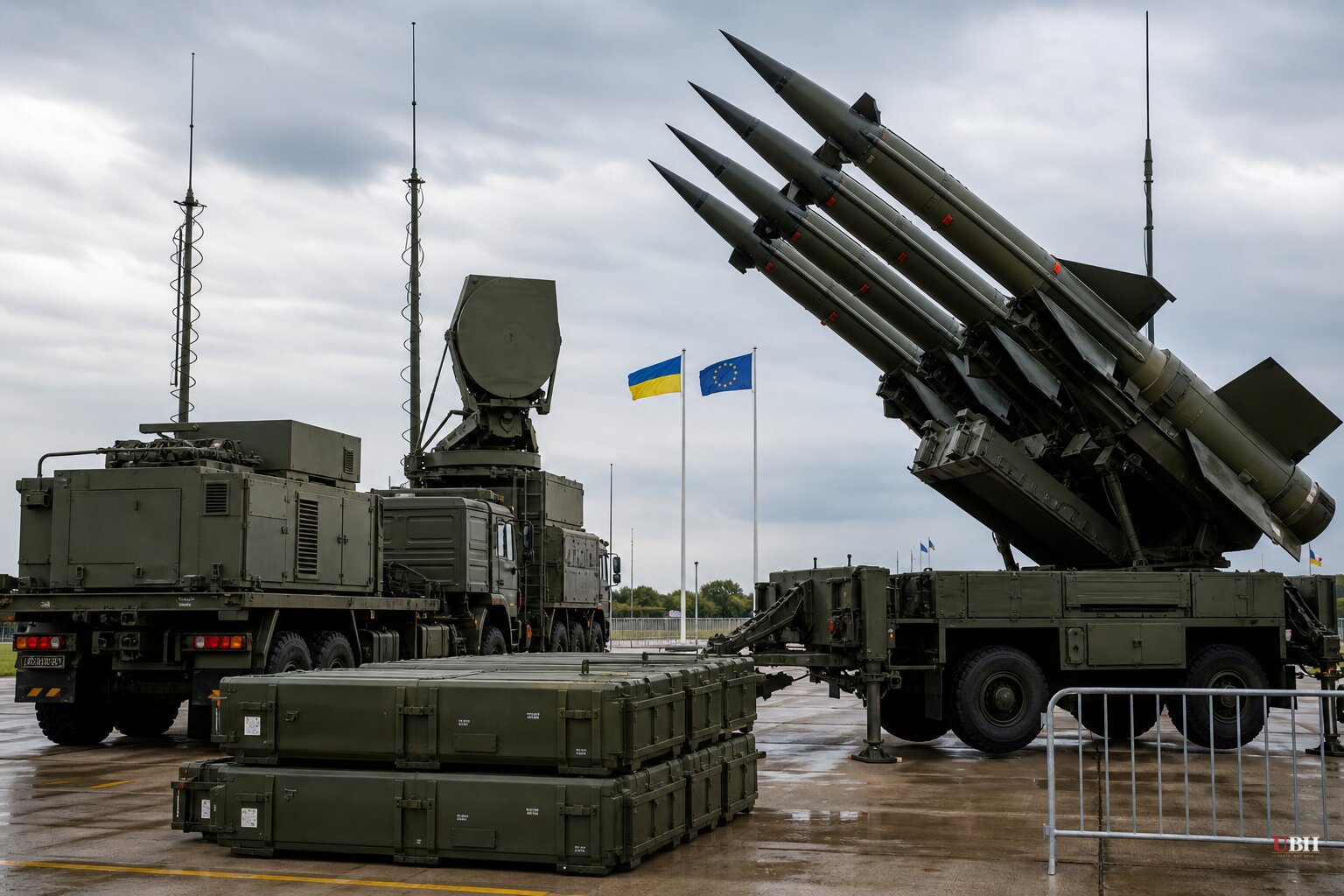
The European Commission approved 6.1 billion euros, about 7.1 billion dollars, in new defense procurement for Ukraine on August 24, according to the Commission's own press release. The timing wasn't an accident. Commission President Ursula von der Leyen tied it directly to Ukraine's Independence Day, saying "Europe shows our support is unfaltering and concrete."
The money buys air and missile defense systems, missiles, ammunition and radars, according to the European Commission's press service as reported by European Pravda. It comes out of the larger 90 billion euro Ukraine Support Loan the EU finalized in April, which covers roughly two-thirds of Kyiv's defense and budget needs through the end of 2027.
Where the Money Actually Comes From
This isn't new cash from EU taxpayers. It's part of a loan structure, with 60 billion euros of the total 90 billion earmarked for defense products and 28.3 billion of that ringfenced specifically for 2026, according to Defence Industry's reporting. With this latest 6.1 billion approval, Ukraine has now been allocated around 22 billion of that 28.3 billion pot, the Kyiv Independent reported.
Most of the purchases have to come from EU defense companies. Under the loan's rules, 65% of a product's component value generally has to originate in the EU, Ukraine, or Norway, or Kyiv needs an exemption. Ukraine already got one such exemption approved in April for Chinese-manufactured drone components, according to the Kyiv Independent.
Separately, the EU has also been funneling interest earned on frozen Russian central bank assets to Ukraine. The Epoch Times reported that on August 3 the bloc transferred $1.62 billion in such interest, the fifth transfer of its kind, bringing the total interest generated to $9.23 billion. Von der Leyen said Moscow "must pay for the destruction it has caused" and that the EU is "using the proceeds from the immobilised Russian assets to make sure it does."
Russian Foreign Minister Sergey Lavrov called the arrangement an assault on international financial norms, saying in June that freezing assets and then handing over the profits "is a very serious matter from the standpoint of the West's attempts to convince everyone that the world order they created... remains relevant." That's Moscow's contested framing of a policy the EU insists is legal because the underlying assets stay frozen, not seized outright. Whether that legal distinction holds up long-term is a live argument among sanctions lawyers, not a settled fact.
Why Air Defense, Specifically
Defence Industry reported that Ukraine recorded 376 missile strikes in July alone, and the Commission specifically cited Russia's increased use of ballistic missiles and jet-powered drones as the reason for the push. Von der Leyen said the EU is "stepping up to help Ukraine protect its people and defend its skies" as Russia intensifies attacks.
The Kyiv Independent's reporting adds a detail the other sources leave out: the European bloc has become Kyiv's leading military supplier largely because the Trump administration ended nearly all U.S. defense aid to Ukraine. Europe isn't just supplementing U.S. support anymore, it's substituting for it.
Two of Ukraine's nine submitted "product schedules," essentially shopping lists, remain unapproved because they involve buying U.S.-made Patriot missiles, which requires a separate exemption from EU member states since Patriots don't meet the 65%-EU-content rule. There's no confirmed date for when that gets resolved, though a senior EU official told the Kyiv Independent it's expected "in the coming weeks."
The Hungary Fight That Almost Blocked All of It
None of this money would be moving without a separate political fight getting resolved first. Breitbart reported that the underlying 90 billion euro loan was held up for months by Hungarian Prime Minister Viktor Orbán, who argued the EU should be pushing for a peace settlement rather than deepening its involvement in the war. Orbán dropped his veto threat after Ukraine helped restore the Druzhba pipeline that supplies Hungary and Slovakia with Russian oil, Breitbart reported, citing French outlets Le Monde and Berliner.
Orbán's objection reflects a genuine policy disagreement. Pouring tens of billions more into a war with no clear endpoint, funded by loans EU taxpayers will eventually backstop, is not obviously a stronger path to peace than pressing for negotiations. Orbán also warned that fast-tracking Ukraine's EU membership could put the bloc on a collision course with Russia directly, and that Ukraine's own corruption problems make it a poor fit for normal accession rules. Those are substantive concerns, even if the Commission and most member states rejected them.
What Happens Next
The formal approval mechanics move through the European Commission reviewing individual contracts Ukraine signs with defense companies before releasing funds, according to Defence Industry. The Commission checks that purchases match plans already agreed with Ukraine and EU member states.
The unresolved question is the Patriot exemption. Until EU member states grant it, Ukraine can't use this loan money to buy the U.S. interceptors it says it needs most urgently, leaving a gap that European-made systems like the Franco-Italian SAMP/T are only partially filling.
Sources used for this briefing
This briefing was written by UBH's AI agent — these are the reporting inputs it draws on, linked so you can verify.


