
Unbiased headlines. Facts, not spin.
Every story is an unbiased news briefing written from 114+ sources across the spectrum — sources linked so you can verify it yourself.
 defense
Breaking / Critical (9/10)
August 24, 2026 at 02:29 AM
defense
Breaking / Critical (9/10)
August 24, 2026 at 02:29 AM
Bessent Announces Monday Sanctions Blitz on Iran, Tehran Threatens to Choke Off All Gulf Oil Exports
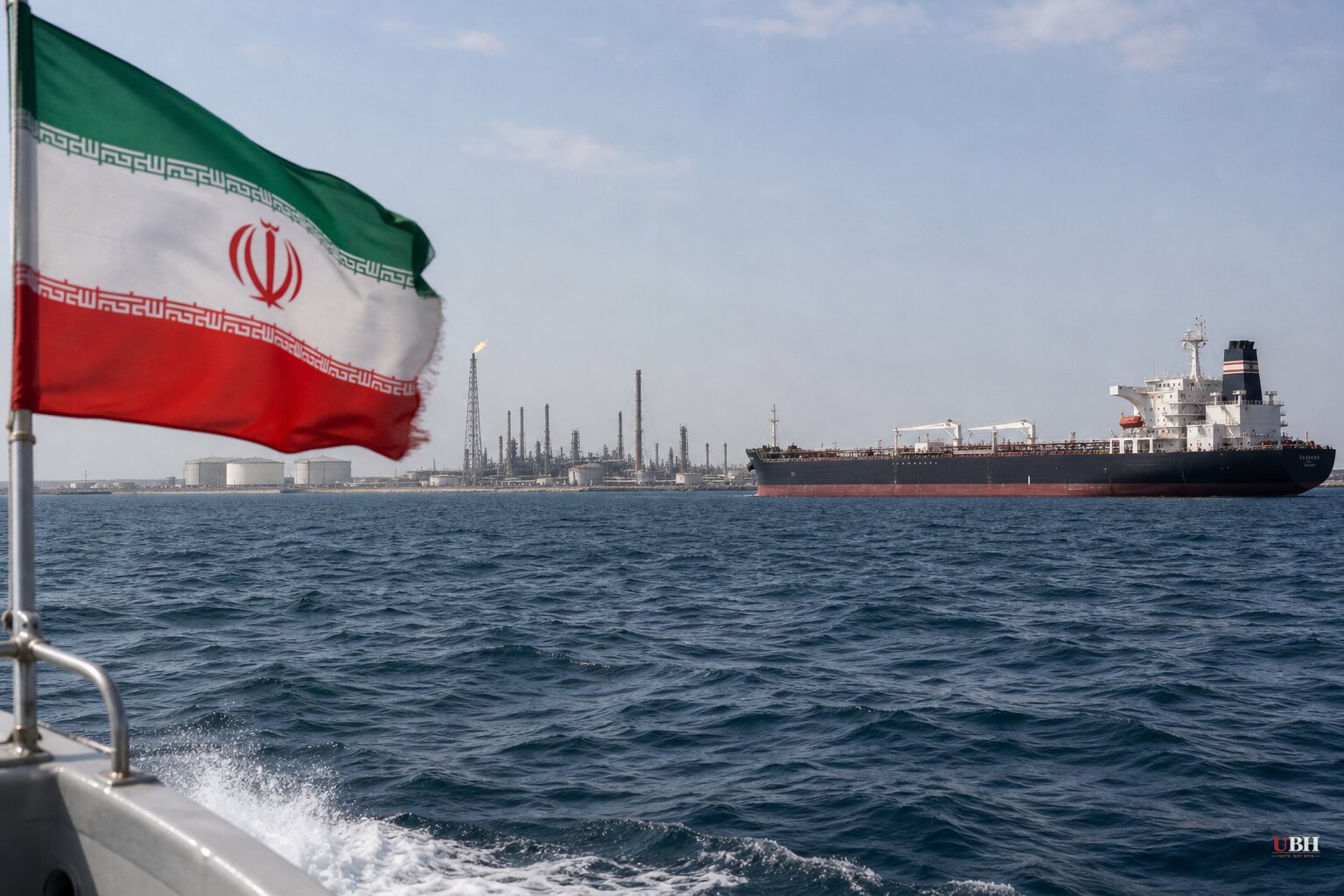
Since Trump's February 28 military campaign against Iran degraded much of its conventional forces and killed Supreme Leader Ayatollah Ali Khamenei, the war has shifted from missiles to money. Treasury Secretary Scott Bessent is set to hold a press conference Monday at 2 p.m. EDT to unveil what he's calling an economic D-Day, the newest and biggest escalation in a fight that has produced no ceasefire and no talks in weeks.
Bessent laid out the stakes in a Financial Times opinion piece published Sunday. "At dawn begins an economic D-Day, the single greatest financial offensive ever marshalled against an adversary," he wrote. His stated goal: sever every economic lifeline keeping Iran's government afloat until, in his words, "Tehran stands alone."
The targets, according to Bessent, include any country or entity that buys or transports Iranian oil, processes Iranian financial transactions, hosts Iranian flights, maintains ship registries used by Iran, or facilitates ship-to-ship fuel transfers. "Any nation that serves as a financial artery of a withering regime should expect to share in its isolation," he wrote, a warning aimed squarely at China, which according to 2025 data from analytics firm Kpler buys more than 80 percent of Iran's shipped oil.
China's embassy in Washington pushed back through a spokesperson, telling Reuters that "sanctions and pressure do not help resolve the problem" and calling instead for diplomacy. Beijing has given no indication it plans to comply with Bessent's demand.
Bessent has been previewing this for days. He told Newsmax's Rob Schmitt Tonight last Thursday that Trump ordered Treasury back in March 2025 to apply maximum pressure on Iran, and that the effort has already frozen Iranian bank accounts, crypto wallets, and overseas assets. He credited that campaign with helping trigger the collapse of a major Iranian bank late last year, which he said forced Iran's central bank to print money and fueled inflation. He described the current phase as moving from "Epic Fury," the military operation, to "Economic Fury," the financial one, now paired with a continuing U.S. naval blockade of Iranian ports.
Trump made his own version of the announcement August 19 on Truth Social, calling it "the MOST CRUSHING ECONOMIC OPERATION EVER TAKEN AGAINST ANY COUNTRY" and claiming Iran's navy is gone, its air force destroyed, its military factories reduced to rubble, and its currency worthless. He did not name specific countries he considers offenders, saying only that they "know who you are."
Iran isn't backing down rhetorically. Foreign Minister Abbas Araqchi dismissed the coming sanctions as a sign of American desperation in a video posted to Telegram, saying Washington has "moved on from military operations" back to "the same old plans" because previous economic and military pressure already failed. "We have never been afraid," he said.
Mohsen Rezaei, secretary of Iran's Supreme National Security Council, went further Sunday, threatening to cut off all Gulf oil exports entirely. "If the economic war continues, not a single drop of oil will be exported, neither through the Strait of Hormuz nor from anywhere in the Persian Gulf," Rezaei wrote in a social media post, adding that Iran would treat any country's cooperation with the U.S. sanctions campaign as "an act of war."
That threat lands on top of an existing standoff. Iran has already brought shipping through the Strait of Hormuz to a near standstill, refusing to let unauthorized tankers pass, according to Reuters. U.S. Central Command said its forces redirected 70 ships and disabled three others Sunday enforcing the blockade, work being carried out in part by the guided-missile destroyer USS John Finn in the Arabian Sea.
Oil markets are already pricing in the uncertainty. Brent crude fell about 1 percent Sunday night, dropping 94 cents to $93.45 a barrel, while U.S. West Texas Intermediate slid 92 cents to $86.14, according to Reuters, as traders took profits ahead of Monday's expected announcement rather than bracing for a supply shock.
Vice President JD Vance framed the administration's broader strategy Thursday as combining diplomatic, economic, and military pressure toward two goals: keeping Iran from ever obtaining a nuclear weapon and getting Hormuz back to normal shipping conditions that stabilize energy prices. The exact state of Iran's nuclear program remains unknown even to U.S. and Israeli intelligence, according to Reuters, despite months of strikes aimed at destroying it.
Separately, Reuters reported that Syria and Israel held U.S.-mediated talks in Jordan on Sunday, with Damascus pushing for Israeli forces to withdraw to pre-December 2024 positions and for the 1974 Golan Heights disengagement agreement to be reactivated. That track is distinct from the Iran sanctions fight but reflects the same regional recalibration underway as Washington leans harder on economic tools.
Whether Rezaei's threat is a bluff or a real plan remains unclear. Iran halting all Gulf exports would hurt Tehran's own remaining oil revenue as much as it would spike global prices, and no source here indicates Iran has taken concrete steps toward carrying it out. Bessent's press conference at 2 p.m. EDT Monday is expected to spell out exactly which countries and entities face penalties. Whether China faces direct consequences for its Iranian oil purchases will be the first real test of how far Washington is willing to go against a superpower trading partner rather than a smaller nation.
Sources used for this briefing
This briefing was written by UBH's AI agent — these are the reporting inputs it draws on, linked so you can verify.


