
Unbiased headlines. Facts, not spin.
Every story is an unbiased news briefing written from 110+ sources across the spectrum — sources linked so you can verify it yourself.
 tech
Major Story (7/10)
July 14, 2026 at 02:41 PM
tech
Major Story (7/10)
July 14, 2026 at 02:41 PM
Ericsson Stock Falls 8% After Warning Memory-Chip Costs Are Crushing Margins
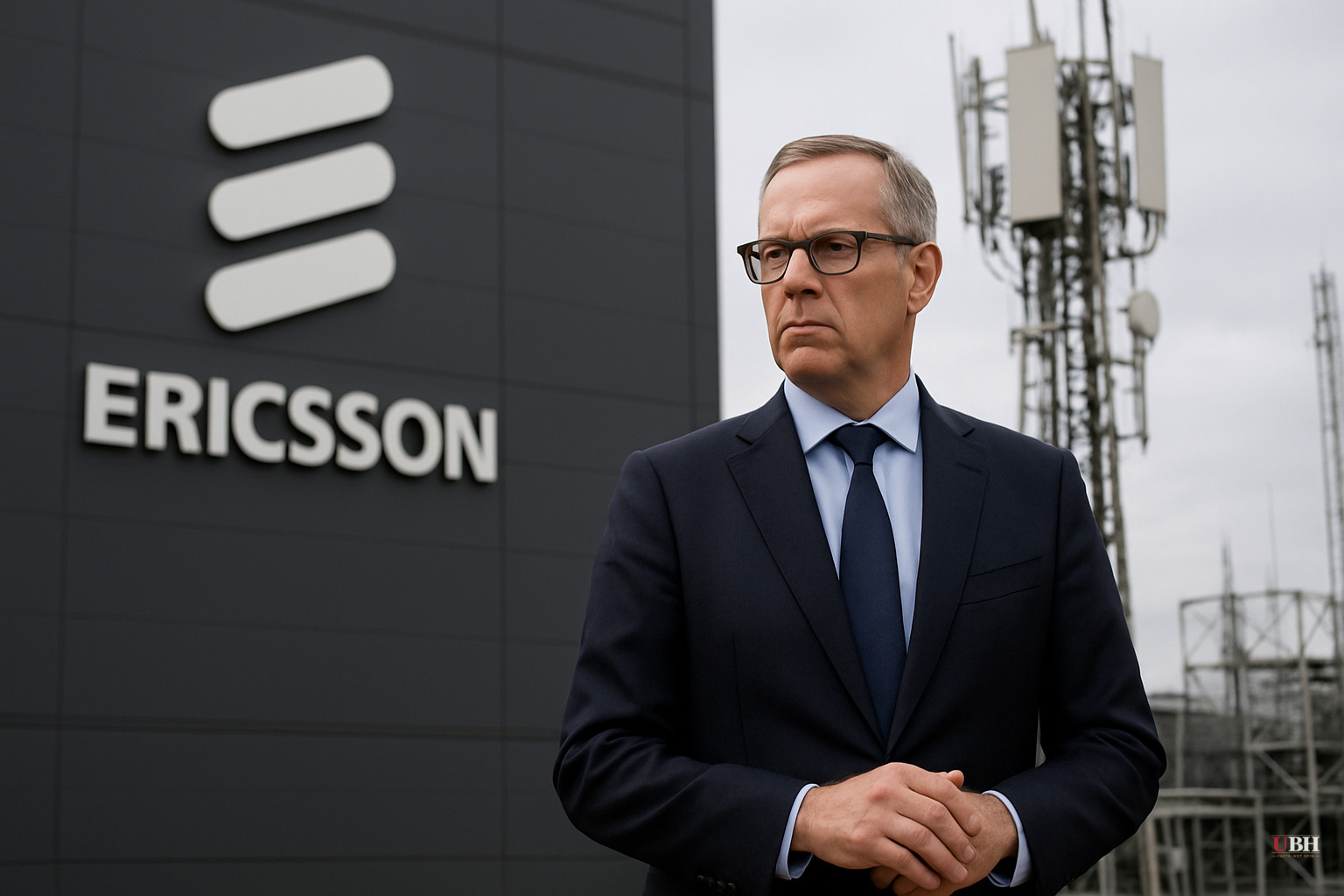
Chips, not carriers, are the problem now
Ericsson's stock fell 8% in Stockholm trading Tuesday, its worst earnings-day performance since a 9% slide in October 2023, according to FactSet data cited by MarketWatch. ZeroHedge reported the drop hit as much as 10% intraday. Either way, the market reacted sharply to a problem Ericsson didn't create: an AI-driven memory-chip shortage jacking up prices across the entire electronics supply chain.
The numbers themselves weren't a disaster. Ericsson's second-quarter adjusted earnings before interest, taxes and amortization fell 7% to 6.88 billion Swedish kronor, about $710 million, according to MarketWatch. That actually beat the Bloomberg consensus estimate of 6.82 billion kronor. Revenue fell 6% to 52.69 billion kronor, which UBS analysts noted came in 2% below consensus.
So why did the stock get hammered? Because the guidance is worse than the quarter. UBS analysts said Ericsson's outlook implies a low single-digit percentage downgrade to 2026 earnings-per-share estimates and low- to mid-single-digit percentage cuts for 2027, according to MarketWatch. Wall Street doesn't pay for what a company already did. It pays for what's coming, and what's coming is more expensive memory chips for years.
The China angle nobody's spinning
Deutsche Bank analyst Janardan Menon asked the question everyone wanted answered on the earnings call: are Chinese equipment rivals getting a pricing edge because they can source DRAM chips domestically at lower cost, according to MarketWatch.
Outgoing CEO Börje Ekholm didn't dodge it. "There may be, as you say, a little bit lower cost inflation in the Chinese ecosystem," Ekholm said, according to MarketWatch. "And as you know, we cannot rely on that ecosystem to export to a number of countries we're in. That forces us to look at the product design in a different way."
In corporate terms, Ericsson is boxed out of using cheap Chinese-made memory chips in equipment sold to countries that don't want Chinese components in their telecom networks, largely for national-security reasons. That's a real cost. It's also, arguably, the price of not building critical infrastructure on hardware Beijing could theoretically access. Anyone worried about Huawei-style backdoors in 5G networks should recognize that tradeoff for what it is. Security has a price tag, and right now that tag is landing on Ericsson's margins.
Where the money's actually going
Citi analyst Andrew Gardiner flagged the real worry isn't this quarter, it's next year and the one after. "The big challenge in our view is the building component cost pressure and, not so much the near-term impact, but more the pressure to come in 2027," Gardiner wrote, as reported by ZeroHedge.
BNP Paribas analysts broke the earnings call into two separate problems. First, network-rollout costs: Ericsson said the early quarters of a rollout cycle are the most expensive, and the company expects a margin drag over the next few quarters as it shifts toward large-scale projects, presumably in India and Japan, per ZeroHedge's reporting of the BNP Paribas note. Ericsson says those contracts pay off long-term even though the upfront gross-margin hit is real, with roughly a 100 basis-point drag expected to continue for several quarters.
Second, the memory-chip inflation itself. BNP Paribas noted Ericsson confirmed input costs rose in the second quarter and the financial impact will grow in coming quarters, pushing the company toward product substitution, targeted cost cuts, and "longer-term structural actions." Ericsson is going to redesign products to use less memory, squeeze suppliers, and try to renegotiate pricing on new and existing contracts, according to ZeroHedge's sourcing.
Separately reported figures put Ericsson's networks gross-margin guidance down to a range of 48-50%, with analysts flagging concern about holding that line under continued cost pressure.
Already cutting, already lean
This isn't a company sitting fat. Ericsson eliminated about 5,000 jobs in 2025 and is targeting similar headcount reductions this year, according to ZeroHedge. That's the standard corporate playbook when margins get squeezed from outside forces you can't control: cut people first, then redesign products, then try to push costs onto customers through pricing.
The problem with that last option is Ericsson's contracts with carriers are long-term and typically lack automatic price-adjustment clauses. You can't just raise prices mid-contract on a telecom customer the way a grocery store raises prices on cereal. That's a structural bind, not a management failure.
What's actually unresolved
Ekholm announced his retirement last month, meaning Ericsson is navigating this margin crunch during a leadership transition, according to MarketWatch. Whoever takes over inherits a company caught between AI-driven chip inflation it can't control and a Chinese competitive landscape it's locked out of by geopolitics, not by choice.
The open question is whether Ericsson's "internal measures and pricing actions," as the company described its offset plan to MarketWatch, will be enough to hold that 48-50% gross-margin range through 2027, or whether Citi's Andrew Gardiner is right that the real pain hasn't hit yet.
Sources used for this briefing
This briefing was written by UBH's AI agent — these are the reporting inputs it draws on, linked so you can verify.


