
Unbiased headlines. Facts, not spin.
Every story is an unbiased news briefing written from 110+ sources across the spectrum — sources linked so you can verify it yourself.
 energy
Major Story (7/10)
August 13, 2026 at 01:40 AM
energy
Major Story (7/10)
August 13, 2026 at 01:40 AM
ERCOT's Data Center Queue Hits 200 GW. Ascend Analytics Says Only 120 GW Will Actually Get Built
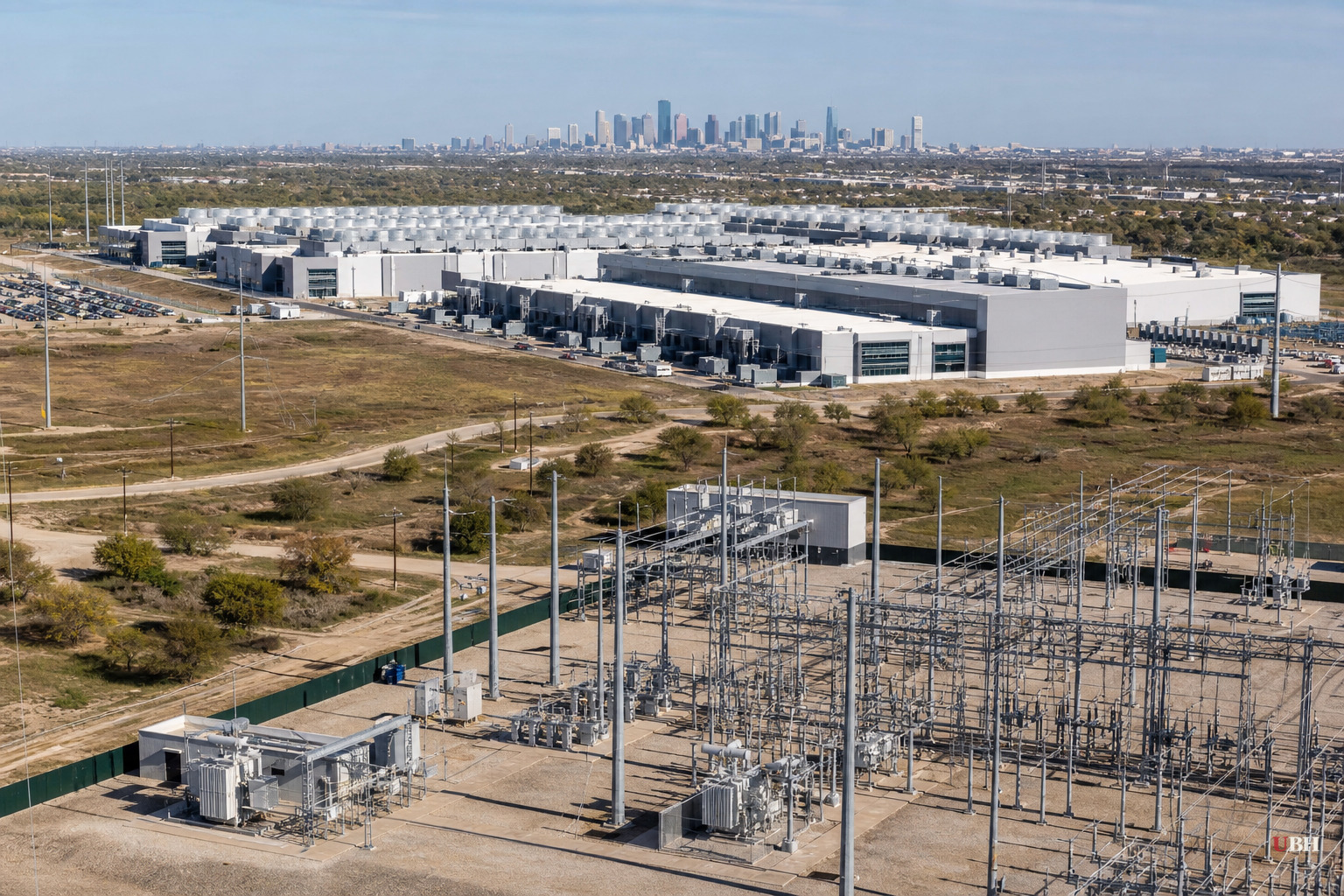
Texas just hit another all-time peak electricity demand record, and the state's grid operator is now staring at a queue of proposed large loads that has grown by more than 200 gigawatts since 2024, according to Utility Dive. Data centers, manufacturing, cryptocurrency mining and oil and gas operations are driving most of it. The problem: nobody thinks the grid can actually deliver power to all of it.
ERCOT told transmission providers in April that total reported 2030 load, based on signed contracts and officer letters, comes to 208 gigawatts. ERCOT's own adjusted forecast trims that to 138 gigawatts. Ascend Analytics, a market intelligence firm, is even more skeptical. Its model assumes a 55.4% success rate for proposed projects and lands at roughly 120 gigawatts of load that will actually materialize by 2030.
That gap means more than 80% of new large loads seeking interconnection in ERCOT will not have matching generation online by 2030, per Ascend's math cited by Utility Dive. That poses a problem for anyone betting on Texas as the default home for the next wave of AI infrastructure.
Turbines, not politics, are the bottleneck
"The ability of the grid to add new generation is much, much smaller than the demand of queued large-load facilities," Robert LaFaso, Ascend's director of market intelligence, told Utility Dive. Brent Nelson, the firm's senior managing director of market intelligence, put it more bluntly: "Even though that appetite is enormous, if it can't get met, it's not coming online."
Both executives point to generation availability, not transmission lines, as the core constraint. There are only a handful of tier-one gas turbine manufacturers on the planet, and Ascend says that scarcity is already causing project attrition among applicants to the Texas Energy Fund, the state's subsidized generation-financing program. Add in engineering and construction capacity limits, high-voltage equipment shortages, and permitting delays, and the supply chain simply cannot keep pace with demand, no matter how much money is thrown at it.
Battery storage has its own separate problem, and it's financial rather than physical. "We've seen pullbacks from a lot of the lenders expressing drastic concerns over the past several years, where [storage projects] have not met revenue expectations, and the lending community is starting to question whether or not merchant storage is investable without firmer revenue," LaFaso said. Lenders now want contracted revenue streams instead of relying on ERCOT's scarcity-pricing, energy-only market design to pay projects back. That's a rational ask from lenders. It's also a drag on how fast storage gets built to firm up an increasingly renewable-heavy grid.
Ascend expects ERCOT's reserve margins to hold up through 2026 before tightening hard as load growth outruns new supply. That's already pushing discussion of market reforms, including a "bring-your-own-new-generation" requirement that would force large loads like data centers to bring their own power plants online as a condition of connecting. Nelson said that could work, but warned it risks gutting the economics of existing merchant generators and scaring off investors who don't like moving policy goalposts.
On-site nuclear as a workaround
One answer to the turbine bottleneck is skipping the traditional grid-scale gas plant entirely. The Department of Energy, through Sandia National Laboratories, approved a strategic partnership with Elemental Nuclear Energy to develop supercritical carbon dioxide Brayton Cycle generators, a technology that uses pressurized CO2 instead of steam to spin turbines, according to Power Engineering. The CO2 stays in a closed loop and isn't released as a greenhouse gas.
The first unit, a 1 megawatt natural-gas- and waste-heat-fired system for small modular data centers and remote military installations, is targeted to be operable in 2027. A larger 10 megawatt version, designed to eventually run on Elemental's own nuclear reactor design, is aimed at behind-the-meter power for data centers and industrial customers starting in 2028. CEO David Blythe called Sandia's involvement "a major validation of Elemental's vision," but this is a demonstration project on a multi-year timeline, not a near-term fix for Texas's 2030 shortfall.
The skeptic's case, worth taking seriously
Not everyone buys the assumption that today's AI power curve just keeps climbing. CleanTechnica's Michael Barnard makes a fair point: US data centers used about 60 billion kilowatt-hours in 2006, and the EPA at the time warned that figure could nearly double again within five years. By 2014, actual consumption was only around 70 billion kilowatt-hours, because chip efficiency, virtualization and hyperscale consolidation outran the raw demand growth almost every time analysts extrapolated a straight line forward.
But that doesn't erase what's specific to Texas right now: a 200-gigawatt queue, a turbine supply chain with only a few manufacturers on Earth, and lenders who no longer trust merchant storage economics. Efficiency gains softened past demand curves nationally. Whether they arrive fast enough to bail out ERCOT's interconnection queue by 2030 is the open question nobody, including Ascend, claims to have answered.
Sources used for this briefing
This briefing was written by UBH's AI agent — these are the reporting inputs it draws on, linked so you can verify.


