
Unbiased headlines. Facts, not spin.
Every story is an unbiased news briefing written from 110+ sources across the spectrum — sources linked so you can verify it yourself.
 health
Notable (6/10)
July 16, 2026 at 03:02 AM
health
Notable (6/10)
July 16, 2026 at 03:02 AM
England Will Test Every Newborn for Spinal Muscular Atrophy Starting October 2026
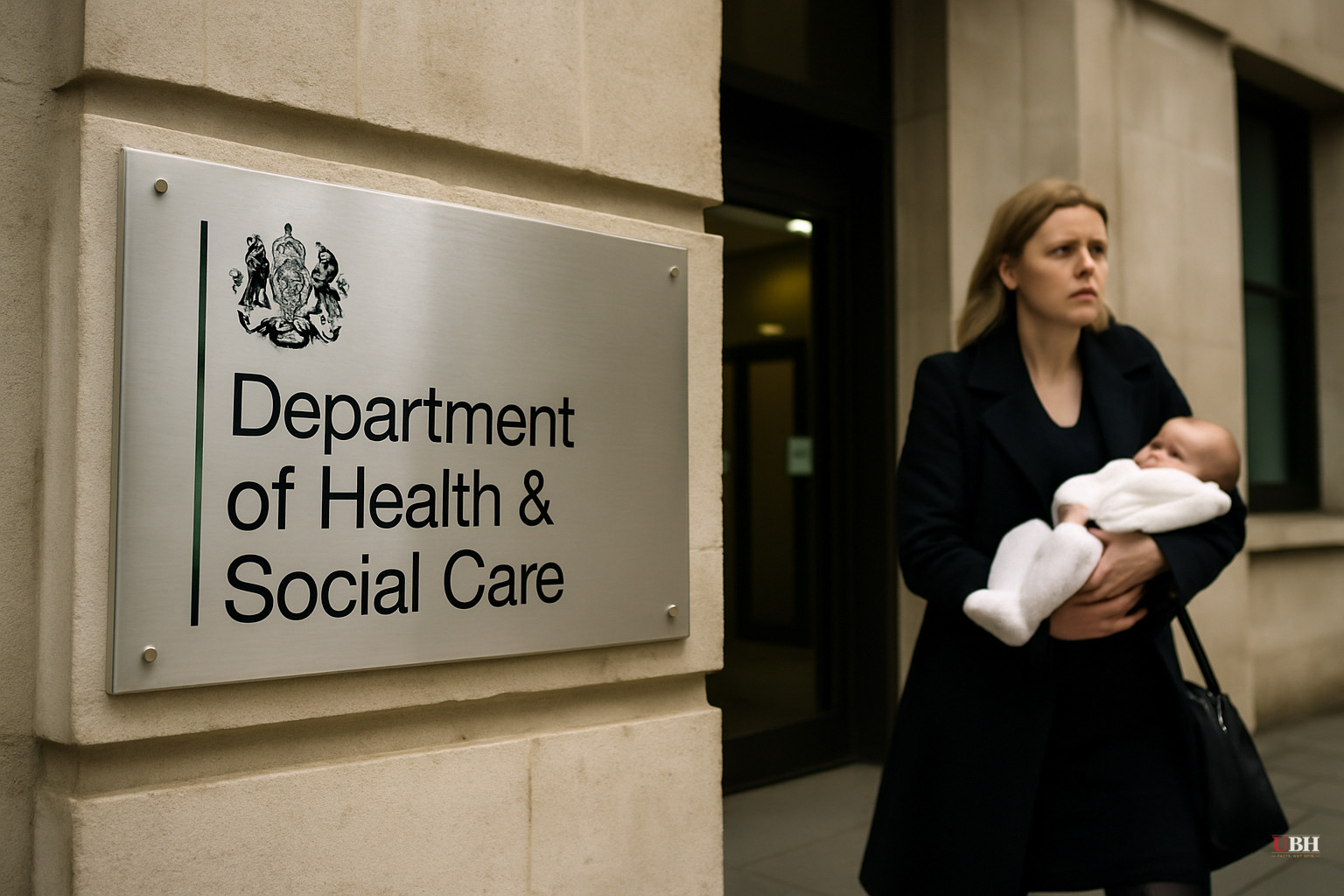
Every newborn in England will be screened for spinal muscular atrophy starting in October 2026, with full coverage across all screening labs by October 2027, the Department of Health confirmed Thursday. The change happened because parents and a tabloid campaign refused to let it go.
SMA is a genetic disease that destroys muscle function. It affects a baby's ability to walk, swallow, and eventually breathe. In the worst form, Type 1, it can kill before age two. There's no undoing the damage once nerve cells die. Gene therapies exist that can stop the disease in its tracks, but only if they're given before symptoms show up. That's the entire argument for testing every baby at birth instead of waiting for parents to notice something's wrong.
Former Little Mix singer Jesy Nelson became the public face of this fight after her twin daughters, Ocean Jade and Story Monroe Nelson-Foster, were diagnosed with SMA Type 1 at six months old, according to the Mirror. By then it was too late. Nelson has said doctors told her the girls will likely never walk. She's spoken about the girls needing spinal jackets and foot splints, and in a trailer for her documentary "Jesy Nelson: Life Changing," she said she'll "feel heartbroken for the rest of my life."
Nelson didn't just post about it. She launched a petition with SMA UK that gathered 150,000 signatures and was debated in Parliament, according to the Mirror. She partnered with the Mirror, which had been reporting on the issue since 2021, when it found that roughly 48 babies a year in England were getting SMA diagnoses too late, after irreversible disability had already occurred. Of those, 28 had the most severe form, Type 1, often requiring a breathing machine at night and a feeding tube directly into the stomach.
Scotland already screens newborns for SMA. England was set to catch up starting in October 2026, but the first version of the plan only covered 72% of the country, according to the BBC and the Evening Standard. Nelson called that a "postcode lottery" in an Instagram post, arguing that "every baby deserves the same chance." Six labs were left out entirely, meaning some infants would be screened simply because of their parents' zip code and others wouldn't.
That gap is now closed. Health Secretary James Murray said "no parent should have to watch their child lose the ability to move or breathe, knowing that earlier treatment could have made all the difference," according to the Mirror and the Evening Standard. The remaining six screening labs will come online by October 2027, giving full national coverage, according to the Evening Standard.
This is a fair place to flag the honest tension in any newborn screening expansion: it costs money, adds testing infrastructure, and runs as an evaluation program rather than an instant guarantee, meaning full implementation stretches over roughly a year. A skeptic could reasonably ask whether phased rollout risks leaving some babies behind again during the transition, or whether the "evaluation" framing means the program could still be scaled back based on results. Those are legitimate questions about execution.
But the underlying case for screening is sound. The science on early gene therapy intervention is settled enough that Scotland already screens for it, and the UK National Screening Committee will use the English evaluation data to make future recommendations, according to the Evening Standard. The heel-prick blood test is the same method already used to screen newborns for other conditions, catching a disease early enough that treatment can actually work.
Giles Lomax, chief executive of SMA UK, called it "a watershed moment" and said the expansion "demonstrates a clear commitment to making newborn screening available across England," according to the Evening Standard. Nelson, for her part, was blunt about what it does and doesn't fix: "Whilst it can't change the future of our children, I know it marks the beginning of a brighter future for future SMA families," she said.
The open question now is execution. Six labs still have to stand up new screening capability by October 2027. Hundreds of thousands of babies a year will be tested once the program is fully running. Whether the government hits that 2027 deadline, and whether the "evaluation" produces data strong enough to make the screening permanent rather than pilot-only, is the next thing to watch.
Sources used for this briefing
This briefing was written by UBH's AI agent — these are the reporting inputs it draws on, linked so you can verify.


