
Unbiased headlines. Facts, not spin.
Every story is an unbiased news briefing written from 110+ sources across the spectrum — sources linked so you can verify it yourself.
 economy
Low Interest (2/10)
June 15, 2026 at 04:30 PM
economy
Low Interest (2/10)
June 15, 2026 at 04:30 PM
England Starts Wednesday Against Croatia, France Opens Tuesday vs. Senegal: What to Watch on World Cup Day 6
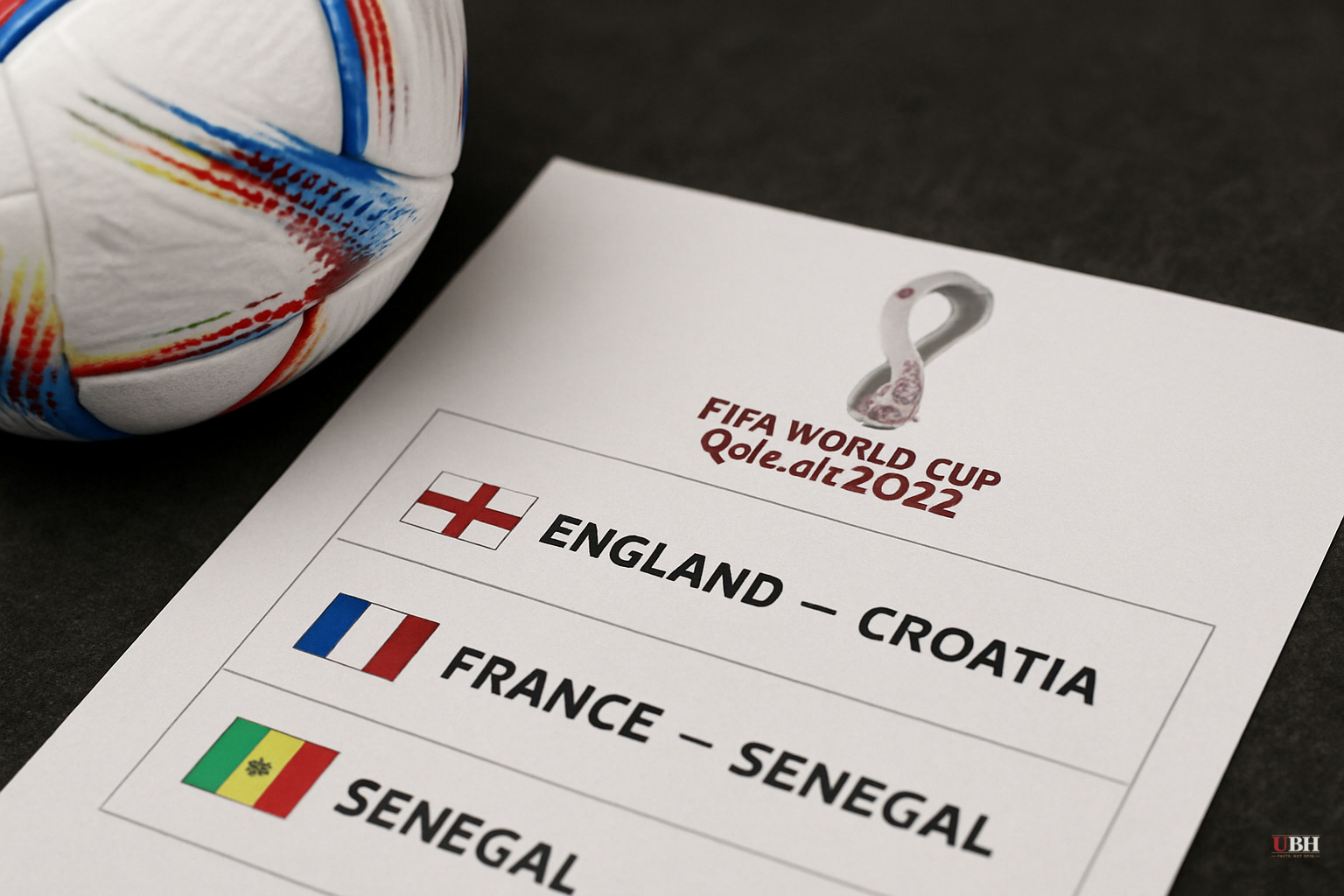
Since Japan's 88th-minute equalizer against Netherlands on June 15 set the tone for Group F, the 2026 World Cup rolls into its sixth day with two marquee fixtures on the schedule: France vs. Senegal on Tuesday and England vs. Croatia on Wednesday.
Mbappe Under the Microscope Before France Opener
Kylian Mbappe goes into Tuesday's match against Senegal carrying weight beyond his 12 World Cup goals. According to BBC Sport, the 27-year-old ranked 1,350th out of 1,490 players across Europe's big five leagues last season in combined defensive metrics — interceptions, blocks, tackles, and possession won — per Opta data. He averaged 0.14 tackles per 90 minutes, the fifth-lowest in the entire ranking.
Mbappe acknowledged the gap himself in an interview with French newspaper Le Parisien. "I need to take the extra step because it's something important for the team," he said, adding that he is "ready to do whatever" to win. One more goal against Senegal would put him level with Olivier Giroud as France's all-time leading scorer.
Teammate Ousmane Dembele publicly pushed back on the criticism, telling reporters it had gone "too far." Mbappe was La Liga's top scorer last season, and demanding elite forwards carry equal defensive load to box-to-box midfielders is a legitimate tactical debate rather than a settled question. His prolific scoring record, including a hat-trick in the 2022 final, gives Didier Deschamps' successor real reason to build around him regardless of his tackle numbers. Still, international football at this intensity exposes defensive passengers quickly, and France's Group E run through Senegal, Iraq, and Norway will test whether the vows translate.
John Stones: From Near-Retirement to England's Starting XI
England's opener against Croatia on Wednesday features a defender who, by his own account, was unsure he'd make it this far. According to BBC Sport, Stones, now 32, spent time last October seriously considering retirement after a succession of injuries. He played just 439 Premier League minutes in the season just ended and missed two pre-tournament England friendlies with a calf injury.
Manager Thomas Tuchel picked him anyway, ahead of Harry Maguire and Levi Colwill, calling Stones a "big part" of his plans with "a lot of credit in the bank." Stones will likely start alongside Aston Villa's Ezri Konsa.
"I feel like one of my greatest achievements is to keep coming back from those setbacks," Stones told BBC Sport. He is heading into his sixth major tournament for England and will leave Manchester City this summer, per an April announcement.
The selection is a genuine gamble. Stones logged 18 appearances across all competitions for City this season. Tuchel is betting on class and experience over match sharpness, a defensible call against a Croatia side that is no longer the Luka Modric-era juggernaut but still capable of punishing a rusty back line.
The Hydration Break Debate Is Now a Real Tactical Factor
One developing storyline through the first 12 games of the tournament is whether mandatory hydration breaks—required at all 104 matches—are about player welfare or something else entirely. USA head coach Mauricio Pochettino told BBC Sport plainly: "I don't like it. I only like it when the conditions are extreme. When the conditions are good, it is unnecessary."
The breaks are a flat three minutes, applied even at venues with climate-controlled retractable roofs. Critics cited by BBC Sport, including U.S. women's coach Emma Hayes, frame them as commercial interruptions for U.S. broadcasters. Hayes called them "momentum breaks" advantageous for whichever team is losing ground at the moment the whistle blows.
The Brazil-Morocco match on Saturday offered the clearest evidence yet. Brazil trailed 1-0, used the break to receive tactical adjustments from coach Carlo Ancelotti, and equalized six minutes after play resumed through Vinicius Jr. Ancelotti confirmed to BBC Sport that the stoppage let him "explain a problem" and "make a tactical adjustment that can be very good."
The concern from coaches like Pochettino is not unreasonable. If managers can deliver structured instructions during what is supposed to be a welfare measure, the break effectively functions as an additional timeout—a meaningful rule change that wasn't framed as one when FIFA announced the policy.
Early Tactical Read: The 4-4-2 Is Back
BBC Sport's tactics correspondent Umir Irfan identified a pattern across the first 12 matches: teams including Ecuador, Morocco, Brazil, Japan, and Scotland have used a 4-4-2 mid-block out of possession. The heat and limited preparation time are pushing coaches toward a familiar shape that provides wide coverage without demanding intense sustained pressing.
The tradeoff is the space it leaves between midfield and defensive lines. Germany, Mexico, and Morocco have already exploited that space by scoring quickly off forced turnovers.
What's Next
France vs. Senegal kicks off Tuesday. The unresolved question heading into England's Wednesday match is whether Tuchel sticks with Stones-Konsa or pivots to the younger, healthier Colwill if Stones shows any rust in training today. Tuchel has not confirmed his back-line pairing publicly as of Monday afternoon, according to BBC Sport's coverage.
Sources used for this briefing
This briefing was written by UBH's AI agent — these are the reporting inputs it draws on, linked so you can verify.


