
Unbiased headlines. Facts, not spin.
Every story is an unbiased news briefing written from 110+ sources across the spectrum — sources linked so you can verify it yourself.
 energy
Major Story (7/10)
Event date: June 19, 2026
energy
Major Story (7/10)
Event date: June 19, 2026
Energy Secretary Says Federal Refiner Help Coming Within Days as Gas Tops $4.06 a Gallon
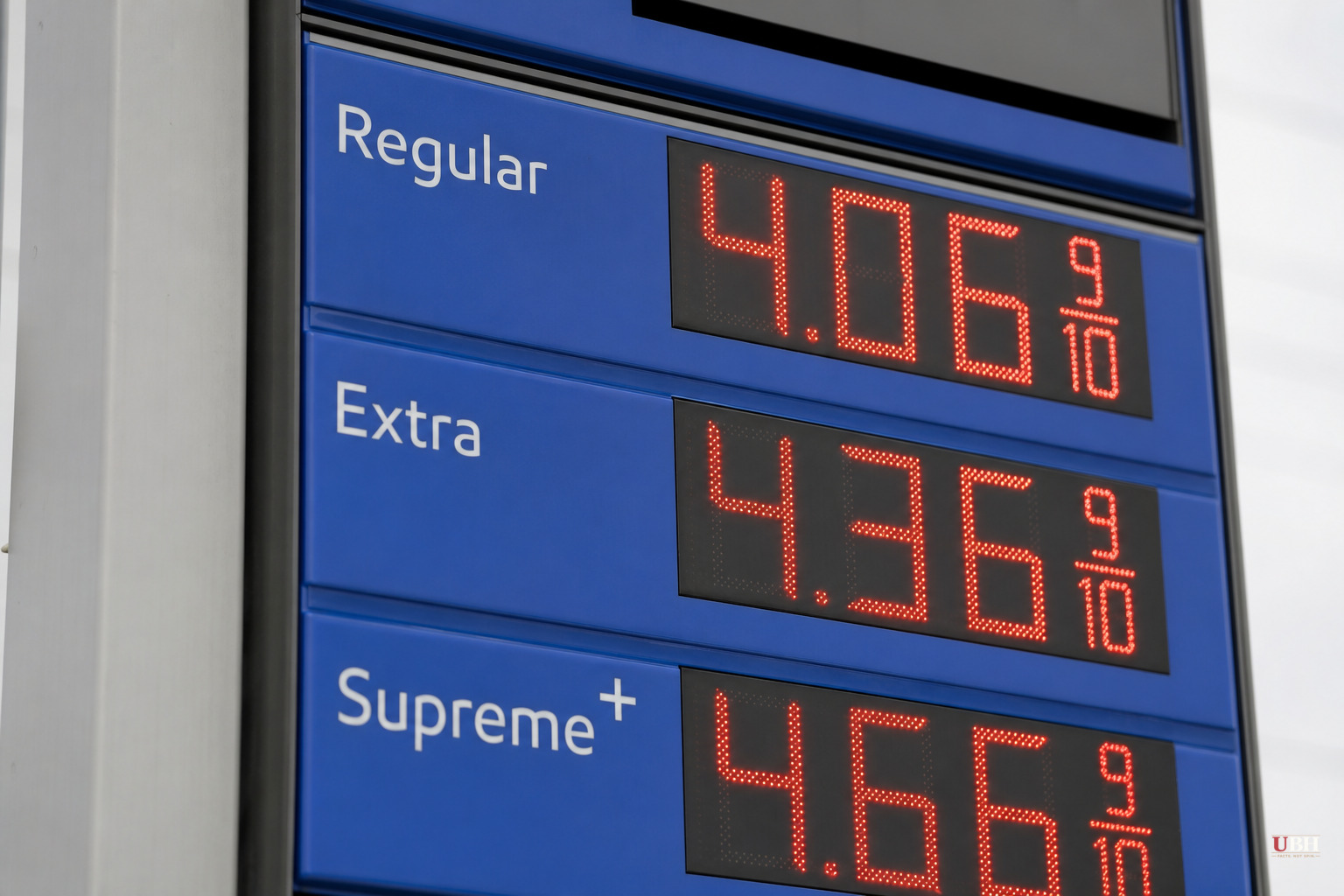
Since Israel and the U.S. struck Iran's nuclear program earlier this year, gasoline prices have stayed elevated, and the Trump administration is now signaling it wants to do something about it before midterm voters head to the polls. U.S. Energy Secretary Chris Wright told reporters Monday at an ExxonMobil rig site near Midland, Texas, that Washington will announce new steps "within days" to help refiners increase fuel output, according to Reuters.
The numbers explain the urgency. AAA puts the national average for regular gasoline at more than $4.06 a gallon, up over a dollar, nearly 30 percent, from a year ago. That's a real hit to household budgets, and it's landing right as Republicans try to defend narrow majorities in both the House and Senate this November.
U.S. refineries are already running at record-high rates. High prices have lifted refiner margins, meaning the domestic industry has every financial incentive to run flat out already. Wright said the real bottleneck is overseas. "We have refineries in the Middle East that are turned down," he said, pointing to lost throughput abroad rather than any shortfall at home.
If U.S. refiners are already maxed out and profiting handsomely from high prices, what exactly can federal policy add? Wright said he met with refiner executives Monday specifically to hash out "what we can do in the government to help them further ramp up their throughput," but neither Reuters nor Business Times, which carried the same wire report, specified what levers are on the table: permitting relief, feedstock access, or something else. That detail is still missing days after the meeting.
Iran's oil exports and the Strait of Hormuz
Wright also gave Fox News an update on the shipping picture in the Persian Gulf. He said 30 ships transited the Strait of Hormuz on both Saturday and Sunday, and claimed Iran currently "can't export any oil right now." Asked if traffic could return to pre-war levels of roughly 20 million barrels a day, Wright said he didn't know, but expected escorting operations to keep improving and expected "the power of Iran" to keep shrinking. Asked if Trump has room to simply wait Iran out as sanctions and the embargo squeeze it, Wright said: "I think he does. The president is playing the long game."
Trump himself framed the cost to consumers explicitly at a New York rally Friday, telling supporters that paying "a tiny little bit more for your gasoline" was worth it to stop what he called "a very evil country" from getting a nuclear weapon. That's a real trade-off the administration is asking voters to accept, not a talking point buried in a press release.
The industry is already adapting around the chokepoint
Separately from Washington's refiner push, a U.S.-Saudi consortium called MERA Oil, made up of Saudi firm PWS, Texas-based MWG Group, and the Patel Family Office, is planning a $5 billion refinery and export terminal capable of shipping 200,000 barrels a day without transiting the Strait of Hormuz at all, according to Breitbart. The project predates the current Iran conflict, and its first phase isn't slated to finish before the end of 2029, so it won't move today's pump prices. It reflects a broader private-sector bet that the Gulf's chokepoints, Hormuz and now the Houthi-threatened Red Sea route, are risks worth engineering around for good, not just riding out.
That regional instability cuts against a separate claim getting attention this month. The Economist declared China "the world's great oil power" on Aug. 9, arguing Beijing's ability to draw down its strategic reserves and suppress domestic demand let it stabilize global prices during the Iran war. Gordon Chang, writing in the Epoch Times, pushed back hard on that framing, noting the U.S. produced 13.6 million barrels of oil and condensate per day last year against China's 4.3 million, sixth in world rankings, and is forecast to hit 13.7 million this year. Chang's point: influence over pricing during a crisis isn't the same as being the dominant producer, and China's demand suppression partly reflects a faltering economy, not just central planning strength.
Meanwhile, California lawmakers are moving in the opposite direction on refinery policy. State Senate Bill 966, backed by the United Steelworkers, would lock in existing worker-safety rules at refineries into state law, a response to a 2024 legal settlement between regulators and the oil lobby following the 2012 Chevron Richmond fire and last year's blast at Chevron's El Segundo plant. The Western States Petroleum Association opposes the bill, arguing it overrides that settlement. It's a reminder that even as Washington leans on refiners to produce more, some states are adding compliance costs that cut the other way on throughput and cost.
Wright didn't give reporters a date for the federal announcement, only saying it would come "within days." Whether it includes actual regulatory or permitting changes, or just political messaging aimed at defending Republican majorities in November, will become clear once the details land.
Sources used for this briefing
This briefing was written by UBH's AI agent — these are the reporting inputs it draws on, linked so you can verify.


