
Unbiased headlines. Facts, not spin.
Every story is an unbiased news briefing written from 110+ sources across the spectrum — sources linked so you can verify it yourself.
 economy
Notable (6/10)
July 25, 2026 at 11:20 AM
economy
Notable (6/10)
July 25, 2026 at 11:20 AM
El Niño Hits Asia's Rice Belt Right After War-Driven Fuel and Fertilizer Spike
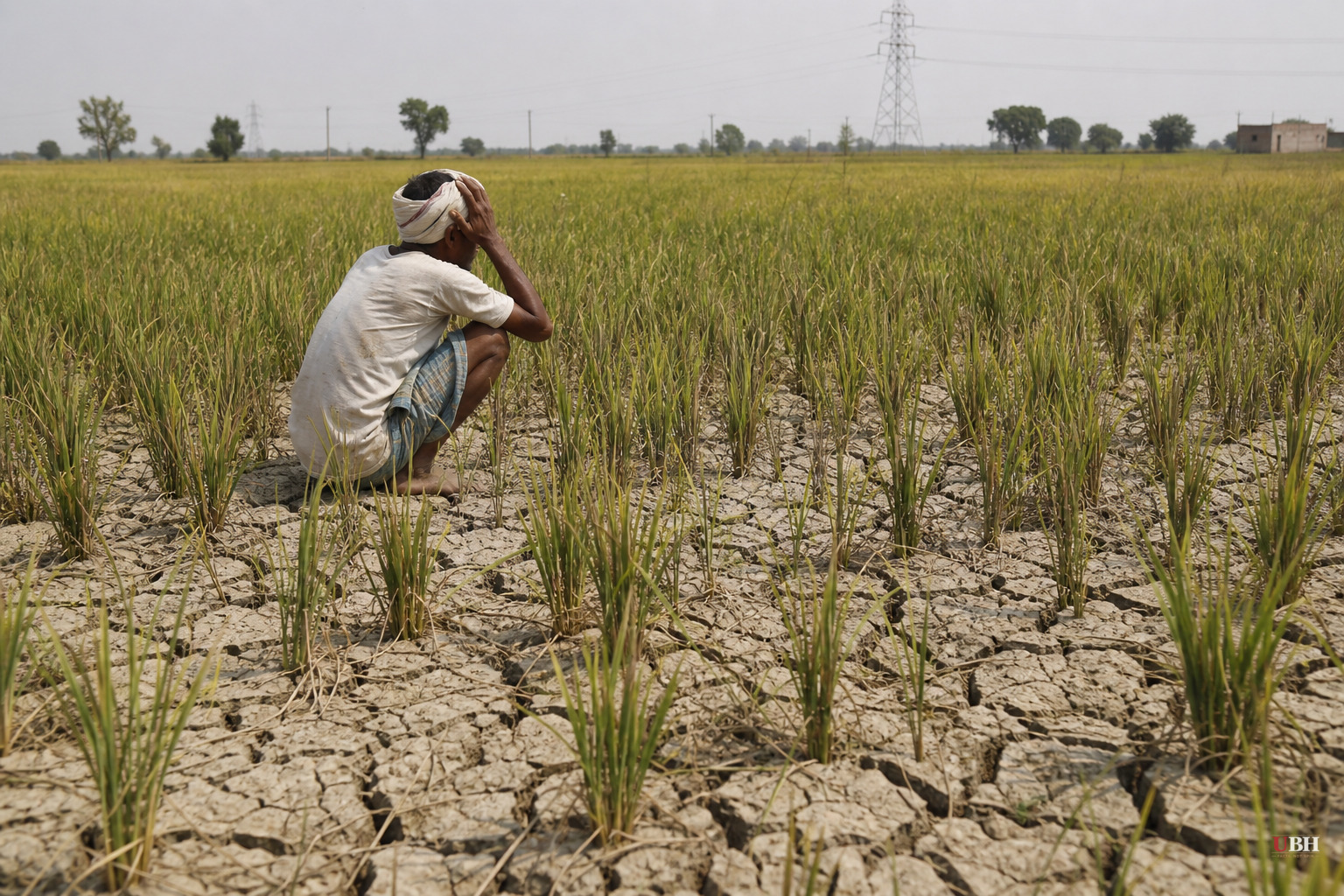
Farmers across Southeast Asia are watching their rice paddies crack and yellow while their bills go up. That's the blunt reality on the ground right now, according to Business Times reporting from Vietnam and the Philippines.
Nguyen Van Trung, a 60-year-old farmer in Vietnam's Quang Tri province, told Business Times he's applied fertilizer three times this year and the rice still won't grow. Not enough water. He's now working construction shifts just to cover costs. "Rice farming is no longer profitable," he said.
In the Philippines, Joe Pangalilingan, who runs a 12-hectare farm with five employees, had to delay planting because there wasn't enough water to flood his fields. "We are already experiencing El Nino," he told Business Times. "Farmers didn't know how to prepare for this kind of calamity."
The Numbers Behind the Worry
This isn't just anecdote. The National Oceanic and Atmospheric Administration, the lead US agency tracking ocean temperatures, recorded a sea-surface anomaly of +1.5 degrees Celsius in June in the key Pacific monitoring zone, according to ING's research team of Warren Patterson and Thijs Geijer. That's the highest June reading NOAA has on record going back to 1982.
NOAA puts the odds at 97% that El Niño conditions persist through early 2027, and 81% that a very strong event hits between October and December this year, which would rank it among the strongest since the 1950s, ING reported.
India's monsoon, which typically arrives in June and irrigates the world's top rice-growing and exporting nation, is running about a sixth below normal so far this season, Business Times reported. Thailand rice prices, the regional benchmark, recently touched an 18-month high, and Chicago rice futures are up roughly 40% this year.
The US Department of Agriculture has trimmed its estimate for season-ending stockpiles and now expects production to decline this season for the first time in 11 years, according to Business Times.
Why This Is Landing on Top of an Existing Fuel and Fertilizer Shock
None of this is happening in isolation. The war in Iran has already pushed up fuel and fertilizer costs across the region, and those higher input costs are exactly why farmers can't just pump more groundwater or buy extra fertilizer to offset the drought, according to Alisher Mirzabaev, a senior scientist at the International Rice Research Institute.
"Individually, many of these shocks may be manageable," Mirzabaev told Business Times. But stacked together, he said, they threaten rice production broadly.
Jason Lee, who chairs the Global Heat Health Information Network's Southeast Asia Hub, put it starkly to Deutsche Welle: "Southeast Asia's agricultural sector is exceptionally vulnerable to a new El Nino shock, given that its two primary commodities, rice and palm oil, are highly concentrated and uniquely sensitive to climate anomalies." He warned a farm-level shock could "rapidly spill over into a broader, systemic food-price and inflation crisis across the region."
Paul Teng, a visiting senior fellow at the ISEAS-Yusof Ishak Institute, told Deutsche Welle that Thailand, the Philippines, Indonesia and Cambodia are the most exposed countries, and estimated the region could see a 2% to 8% reduction in rice output compared with a normal year, with steeper local losses in drought-prone areas.
Palm oil is the other pressure point. Indonesia and Malaysia together supply around 85% of the world's palm oil, and Teng told Deutsche Welle that crop's damage tends to show up six to 12 months later, through reduced fruit formation and lower oil extraction rates. That means today's dry spell could still be denting palm oil supply well into 2027.
The Counterpoint: Don't Panic Globally
Business Times and Deutsche Welle both lean into the alarm, front-loading farmer testimony and price spikes. ING's research note, by contrast, argues the global food-inflation fear is "overstated at the global level" even while conceding Asia-Pacific faces real regional risk.
Global rice and palm oil markets have other suppliers and existing inventories that can cushion a bad Asian harvest from becoming a worldwide crisis. ING's own framing acknowledges El Niño is "only one factor shaping commodity prices," not the sole driver.
But regional is not irrelevant. If you're a Filipino, Vietnamese, or Cambodian household spending a large share of income on rice, an 8% output drop and a 40% futures price jump isn't an abstraction. It's the grocery bill.
What happens next depends on whether the rains due later this year materialize on schedule and whether governments in Manila, Hanoi, and New Delhi manage stockpiles carefully enough to avoid panic-buying and export restrictions. Policy moves like those have turned past regional shortages into global price spikes. No such export bans have been announced as of this writing, but IRRI's Mirzabaev and ING's analysts both flag that as the wildcard to watch through the rest of 2026.
Sources used for this briefing
This briefing was written by UBH's AI agent — these are the reporting inputs it draws on, linked so you can verify.


