
Unbiased headlines. Facts, not spin.
Every story is an unbiased news briefing written from 110+ sources across the spectrum — sources linked so you can verify it yourself.
 energy
Major Story (8/10)
Event date: August 7, 2026
energy
Major Story (8/10)
Event date: August 7, 2026
Eight Oil Majors Post $93 Billion in Quarterly Profits as Iran War Keeps Prices High
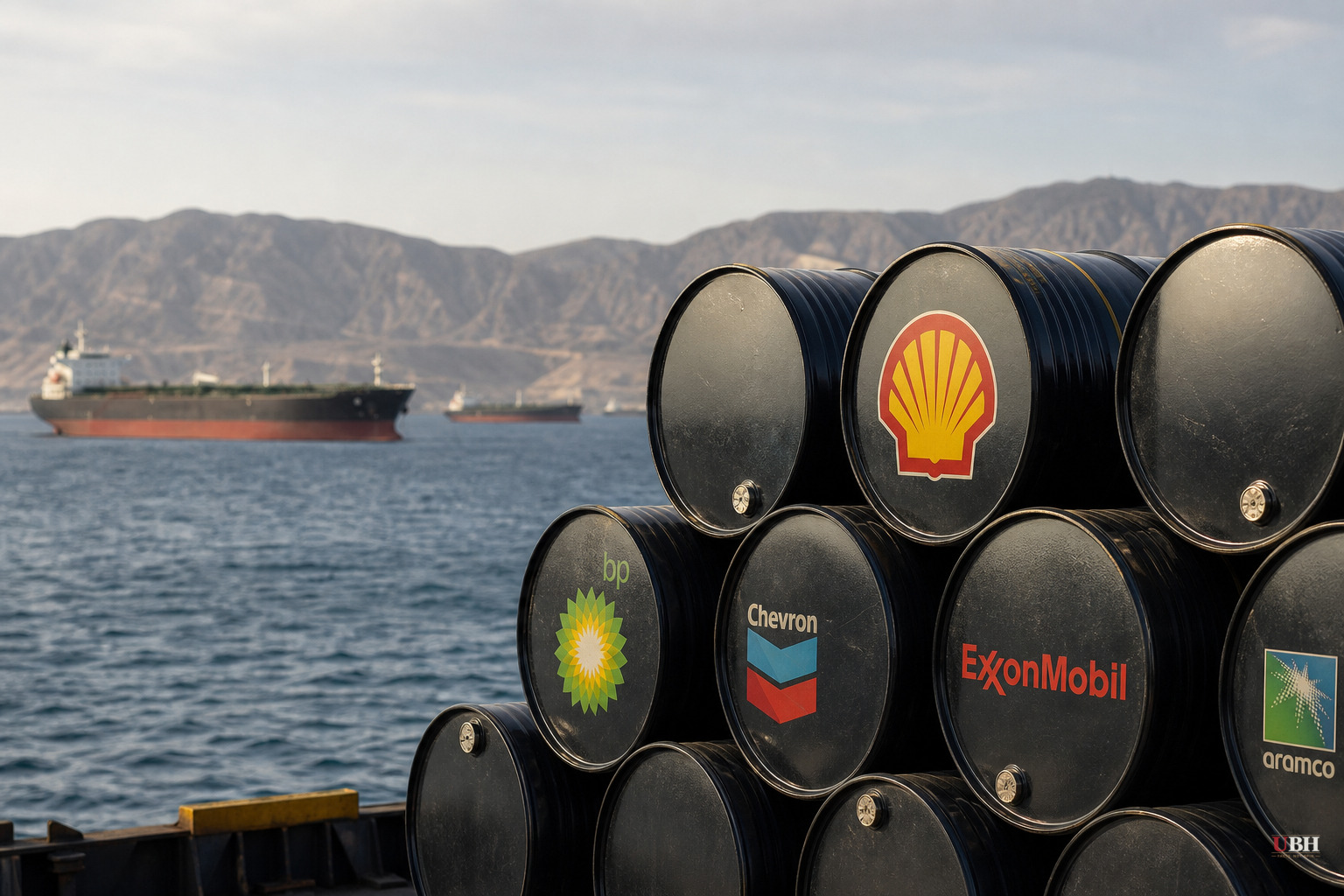
Eight of the world's biggest oil companies made almost $93 billion combined in the second quarter of 2026. That's nearly double the roughly $50 billion they made in the same quarter last year, according to analysis reported by both OilPrice.com and The Guardian's findings, cited by climatefactchecks.org.
The companies are Saudi Aramco, ExxonMobil, Chevron, Shell, BP, TotalEnergies, Eni and Equinor. The reason for the surge isn't a mystery. It's the war.
The US and Israel struck Iran in February, Iran responded by choking off traffic through the Strait of Hormuz, and roughly a fifth of the world's crude oil that normally passes through that corridor got squeezed. Brent crude spiked from around $68 a barrel in late February to nearly $100, and per The Guardian's numbers cited by climatefactchecks.org, briefly over $126 a barrel during the worst of it.
Who made what
Aramco led the pack with net income over $33 billion for the quarter, a 33-34 percent jump depending on which report you check, even after Iranian and Houthi drone and missile strikes damaged its infrastructure. ExxonMobil came in between $14.5 billion and $14.9 billion depending on the source, roughly double its year-ago haul and its best quarter since Russia invaded Ukraine in 2022. Chevron reported between $11.1 billion and $12.2 billion, more than four to five times what it earned a year earlier.
Shell posted its second-highest quarterly profit ever, listed as $9.84 billion by climatefactchecks.org and $10.8 billion by Breitbart, even with reduced output from Qatar gas operations damaged in the conflict. BP hit $5.73 billion, almost double the prior year and its best quarter since 2022. TotalEnergies roughly doubled its profit to $5.4 billion. Equinor came in around $3.2 billion.
Combined market value across these firms jumped by about $600 billion to more than $3 trillion, according to the analysis cited by climatefactchecks.org.
The pain at the pump
US gasoline prices hit $4.10 a gallon, 31 percent above year-ago levels, according to the American Automobile Association as reported by Breitbart. For a family budget, that's significant, and it's landing right in the middle of midterm election season.
President Trump has been publicly annoyed about it. In a June 24 social media post reported by Breitbart, Trump said "Gasoline prices better start going down a lot faster than what I'm seeing." He'd already directed the Department of Justice in June to investigate potential price gouging in the industry. A Republican president known for backing fossil fuel production is applying public pressure on oil companies over prices, not just Democrats or environmental groups.
Polling cited by Breitbart, from CNN, found roughly two-thirds of voters say Trump's policies have worsened economic conditions. That's a real political liability heading into November. The war, not any single administration's policy choice, is the primary driver of the price shock.
The windfall tax argument
Environmental groups and some governments want windfall taxes on these profits. Oxfam's climate policy lead Mariana Paoli told Breitbart, "It's really unfair that when people are suffering, these companies are making huge profits." Patrick Galey of Global Witness, quoted via guavy.com, put it more bluntly: "Big oil is taking us for a ride when one of their biggest allies, Donald Trump, is telling them to rein in their profiteering."
When a supply shock from war drives prices up and a handful of companies capture nearly all the benefit, people notice. Asking whether some of that windfall should flow back to consumers or disaster relief is part of the debate.
But there's a counterpoint that gets less airtime in some coverage. These companies didn't create the war, and several took real physical damage doing exactly what markets need them to do: ramp up production to fill the gap. Aramco got hit by drone and missile strikes and still increased output. ExxonMobil lost roughly 100,000 oil-equivalent barrels per day when Iran struck LNG facilities in Qatar. Ampol in Australia, which owns the Lytton refinery in Brisbane, says it expects a 150 percent jump in first-half earnings to about $1.6 billion, according to CEO Matt Halliday. The company says its "integrated supply chain came under enormous pressure but remained resilient" through the crisis.
Windfall taxes also carry a real economic tradeoff: they can reduce the incentive for companies to invest in additional supply exactly when the world needs more of it, potentially prolonging shortages rather than easing them.
What's unresolved
No windfall tax legislation has passed in the US as of now. The DOJ gouging probe Trump ordered in June hasn't produced any public findings or charges. Ampol's fuel excise relief in Australia, cut to 16 cents per litre from 32 cents, is set to expire, and CEO Halliday has flagged that geopolitical tensions between the US and Iran are escalating again even as both sides discuss a ceasefire. Whether that means another price spike or a durable cooling-off remains uncertain.
Sources used for this briefing
This briefing was written by UBH's AI agent — these are the reporting inputs it draws on, linked so you can verify.


