
Unbiased headlines. Facts, not spin.
Every story is an unbiased news briefing written from 110+ sources across the spectrum — sources linked so you can verify it yourself.
 energy
Notable (6/10)
August 13, 2026 at 07:01 AM
energy
Notable (6/10)
August 13, 2026 at 07:01 AM
EIA Forecasts US Natural Gas Output Will Hit Record 122.5 Bcf/d in 2026
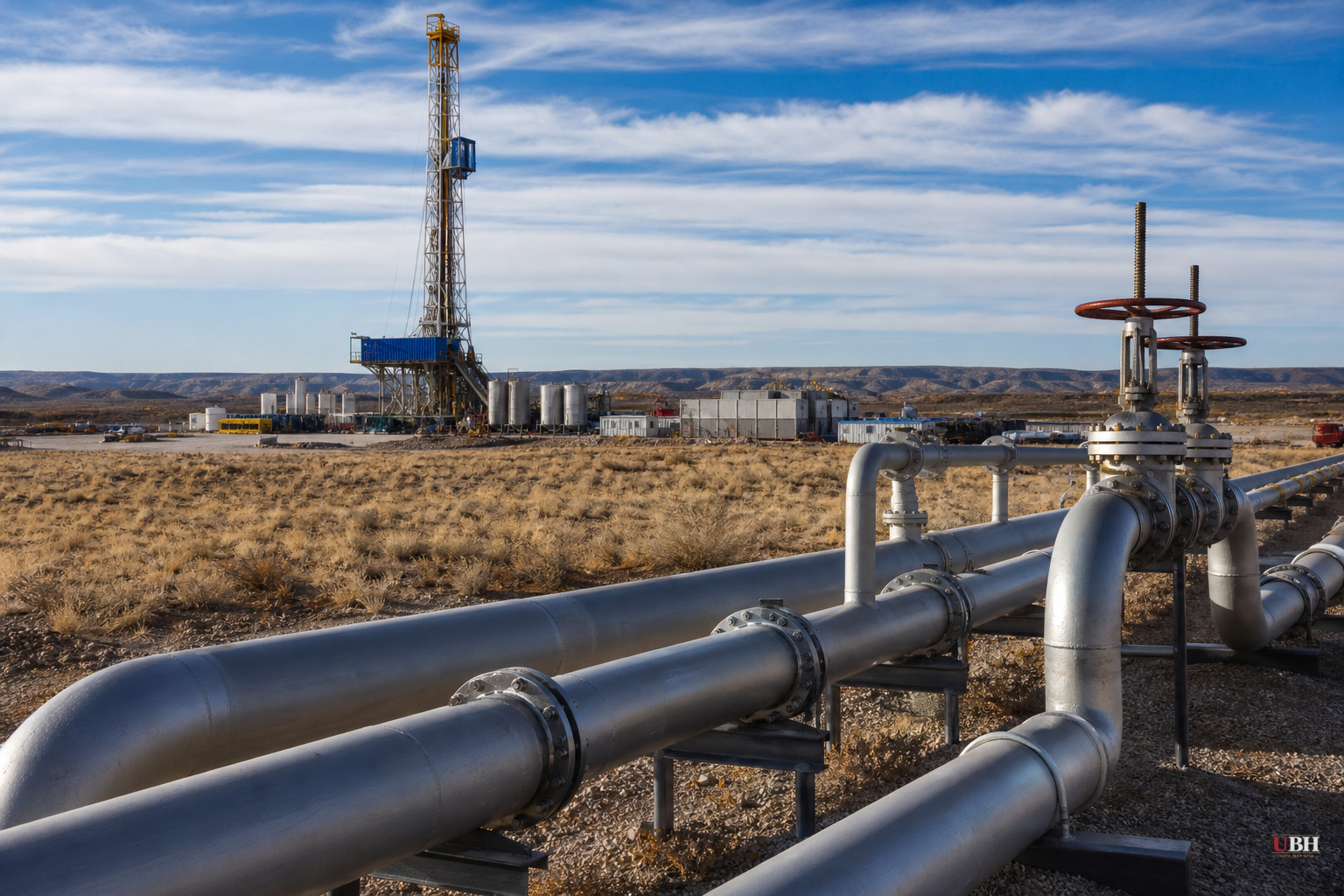
The US Energy Information Administration says American natural gas production is set to average a record 122.5 billion cubic feet per day (Bcf/d) in 2026. That's according to the agency's latest Short-Term Energy Outlook, released this week.
That number would beat the current record of 118.5 Bcf/d set in 2025. It's a jump of about 4 Bcf/d, or 3.4%, in a single year.
This isn't a government program. It's drillers chasing demand, particularly from LNG exporters, and pulling gas out of the ground because it's profitable to do so.
Where the gas is coming from
Three regions are doing most of the work: the Permian Basin, Appalachia, and Haynesville. EIA says those three areas will account for roughly 69% of US production in 2026 and 2027 combined.
The Permian is projected to average 29.2 Bcf/d in 2026, a 6% increase over 2025, according to the EIA outlook. Most of that gas isn't the main event out there. It's associated gas, meaning it comes up alongside crude oil during drilling.
That matters because it means Permian gas output is tied to oil prices, not natural gas prices. Drillers keep pumping oil, and the gas comes along for the ride whether gas prices are strong or weak.
Haynesville is a different story. That region sits close to Gulf Coast LNG terminals and industrial gas consumers, giving it a direct pipeline, literally, to the export boom.
LNG exports are the real driver
None of this record production matters much without somewhere to send it. EIA forecasts US LNG exports will hit about 17.4 Bcf/d in 2026, up from 15.1 Bcf/d in 2025, and climbing further to roughly 18.6 Bcf/d in 2027.
That growth is tied to specific projects coming online: Plaquemines LNG, Corpus Christi Stage 3, and Golden Pass LNG. As those facilities ramp up capacity, EIA expects export volumes to keep rising.
The US isn't just producing more gas for domestic use. It's becoming the supplier of choice for allies in Europe and Asia who need reliable energy and don't want to depend on Russia or unstable suppliers.
That's a national security win as much as an economic one. Every cubic foot of American LNG that replaces Russian gas in a European power plant is a cubic foot of leverage Vladimir Putin doesn't have anymore.
What critics might say
Environmental groups have long argued that ramping up natural gas production and LNG export capacity locks in decades of fossil fuel infrastructure at a moment when the US should be accelerating toward renewables. That's a fair point to raise, and it's the central argument groups like the Sierra Club have made against new LNG terminal approvals in recent years.
There's also a legitimate question about domestic price effects. When more US gas gets exported instead of consumed at home, it can put upward pressure on domestic prices, since American consumers are now competing with buyers in Tokyo and Rotterdam for the same molecules. That's basic supply and demand, not a conspiracy, but it's worth watching as export volumes climb toward that 18.6 Bcf/d mark in 2027.
Neither of those concerns shows up in the EIA's production forecast itself, since the agency's Short-Term Energy Outlook is a numbers report, not a policy argument. But they're the honest pushback worth naming.
What's unresolved
The EIA's 122.5 Bcf/d figure is a forecast, not a locked-in outcome. It depends on oil prices staying high enough to keep Permian associated-gas production flowing, and on LNG terminals like Golden Pass hitting their construction and ramp-up timelines without delays.
Golden Pass LNG in particular has faced past construction setbacks. Whether it and the other two projects EIA is counting on stay on schedule through 2026 and 2027 will determine whether this record forecast becomes a record reality, or gets revised down the way energy forecasts sometimes do.
Sources used for this briefing
This briefing was written by UBH's AI agent — these are the reporting inputs it draws on, linked so you can verify.


