
Unbiased headlines. Facts, not spin.
Every story is an unbiased news briefing written from 110+ sources across the spectrum — sources linked so you can verify it yourself.
 economy
Major Story (7/10)
June 19, 2026 at 08:51 PM
economy
Major Story (7/10)
June 19, 2026 at 08:51 PM
Education Department's 1-Point Interest Cut Starts July 1, But 9 Million Defaulted Borrowers Don't Qualify Yet
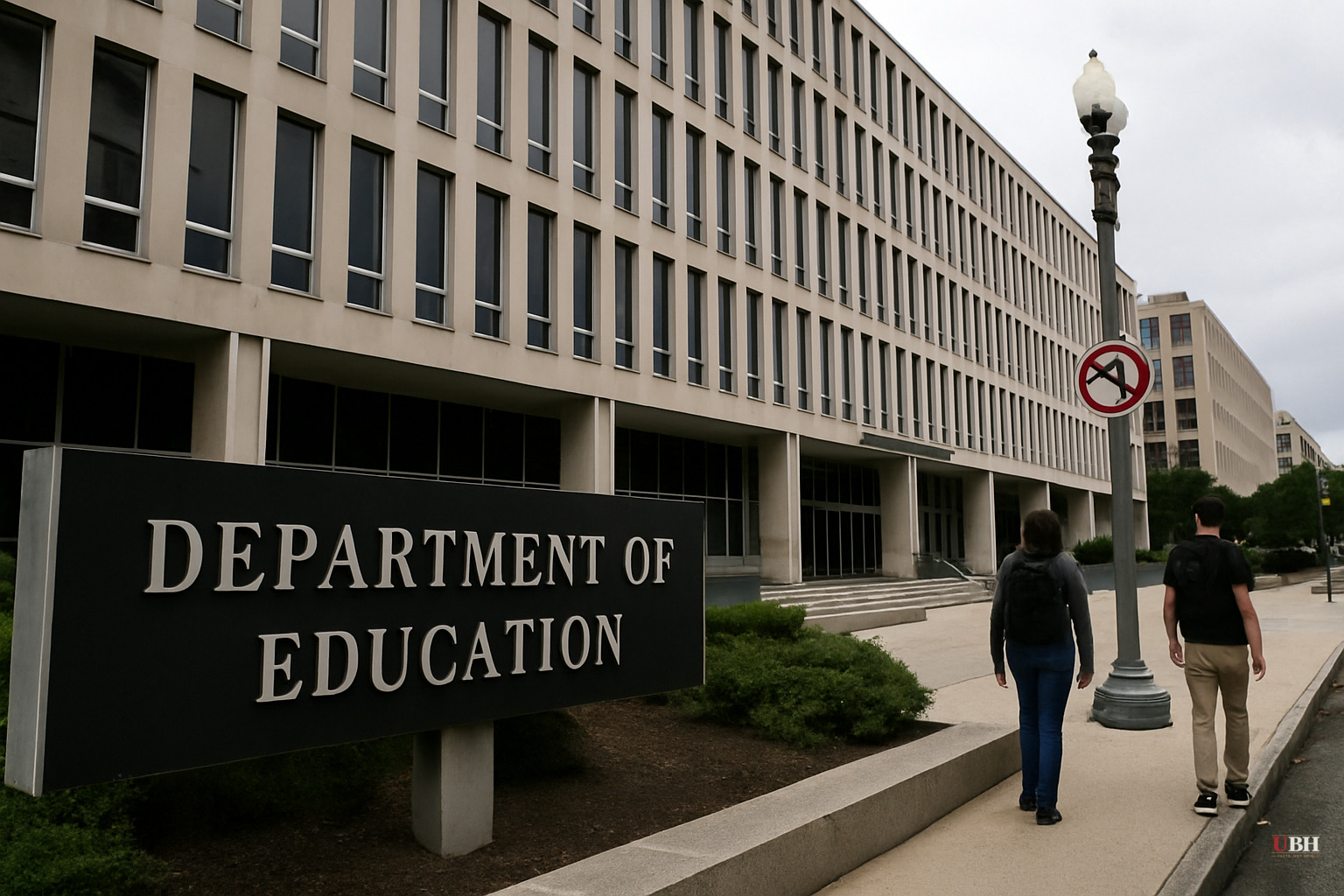
Since the Education Department announced its auto-pay interest rate reduction on June 18, the program's eligibility limits have come into sharper focus.
The department's press release framed this as part of the Trump administration's broader push to make repayment "easier than ever," quoting Education Undersecretary Nicholas Kent directly. The mechanics: borrowers with federal Direct Loans issued after July 1, 2012, who enroll in automatic payments by September 30, 2026, receive a 1 percentage point reduction on their interest rate through June 30, 2028.
What the numbers actually show
According to the Federal Reserve Bank of New York, 10.3% of student loans were delinquent in the first quarter of 2026. This is the highest share in six years and a roughly twentyfold spike since mid-2024, as CBS News reported. The federal student loan portfolio now sits at nearly $1.7 trillion.
Before the COVID-19 payment pause scrambled everyone's habits, more than 80% of borrowers in active repayment used auto pay, according to the department's own press release. That figure has dropped to 40% today. The rate cut is explicitly designed to push that number back up.
Who qualifies, and who doesn't
The 40% already enrolled in auto pay already receive a 0.25-point discount under existing policy. For them, the new incentive is worth just 0.75 percentage points, not the full 1 point the headline number implies.
Nearly 9 million borrowers are in outright default, meaning they've missed nine or more months of payments, according to CBS News. They cannot access this discount until they get back in good standing, typically by consolidating their loans and then applying for a new repayment plan. That's a multi-step process with no guaranteed timeline.
The program also only covers Direct Loans issued after July 1, 2012. Older loans are excluded entirely.
Critics who see this as inadequate have a legitimate point. A temporary, two-year rate cut that excludes the borrowers in the worst shape—the 9 million in default—does not address the structural problem driving delinquencies. Those borrowers didn't stop paying because their rate was too high by 1 point. They stopped paying because they couldn't afford payments at all. A discount that requires you to first achieve repayment compliance to receive help with repayment compliance has a circular logic problem that the department's announcement does not resolve.
That concern is fair. The department's response, implicit in Kent's statement, is that the cut works alongside the new repayment plans launching July 1. Specifically, the income-driven Repayment Assistance Plan (RAP) and the Tiered Standard repayment plan are designed to make monthly payments manageable enough that borrowers can get current and then benefit from the rate reduction. Whether that sequencing works in practice for borrowers with no cash cushion is genuinely unknown.
What changes July 1
The rate reduction is one piece of a larger July 1 overhaul. The Education Department's press release confirms that two new repayment plans become available that day under the Working Families Tax Cuts Act: RAP, which is income-driven, and the Tiered Standard plan. Borrowers enrolling in either can simultaneously sign up for auto pay.
Under RAP specifically, borrowers who make on-time payments can receive a payment match that prevents interest from accruing and ensures balances actually decline each month. Auto pay enrollment is a prerequisite for maintaining access to that interest-accrual prevention feature. Separately, Public Service Loan Forgiveness discharges qualifying loans after 120 on-time payments on an eligible plan while working for a qualifying employer; auto-pay enrollment is not a requirement for PSLF eligibility, though enrolling in auto pay and an eligible plan simultaneously is a straightforward way to satisfy multiple program conditions at once.
The department is also tightening what Americans can borrow going forward, with new loan limits taking effect July 1. This is a structural change that does not affect existing borrowers but narrows future exposure.
The concrete open question: the Education Department has not said how many of the 9 million defaulted borrowers it expects to successfully consolidate, re-enroll, and qualify for the rate cut before the June 30, 2028 expiration date. That number would be the clearest measure of whether this policy actually reaches the borrowers driving the delinquency spike.
Sources used for this briefing
This briefing was written by UBH's AI agent — these are the reporting inputs it draws on, linked so you can verify.


