
Unbiased headlines. Facts, not spin.
Every story is an unbiased news briefing written from 110+ sources across the spectrum — sources linked so you can verify it yourself.
 economy
Low Interest (4/10)
May 24, 2026 at 08:08 PM
economy
Low Interest (4/10)
May 24, 2026 at 08:08 PM
Economists, Grocery Industry Fire Back at Mamdani's City-Run Store Plan as Primary Looms
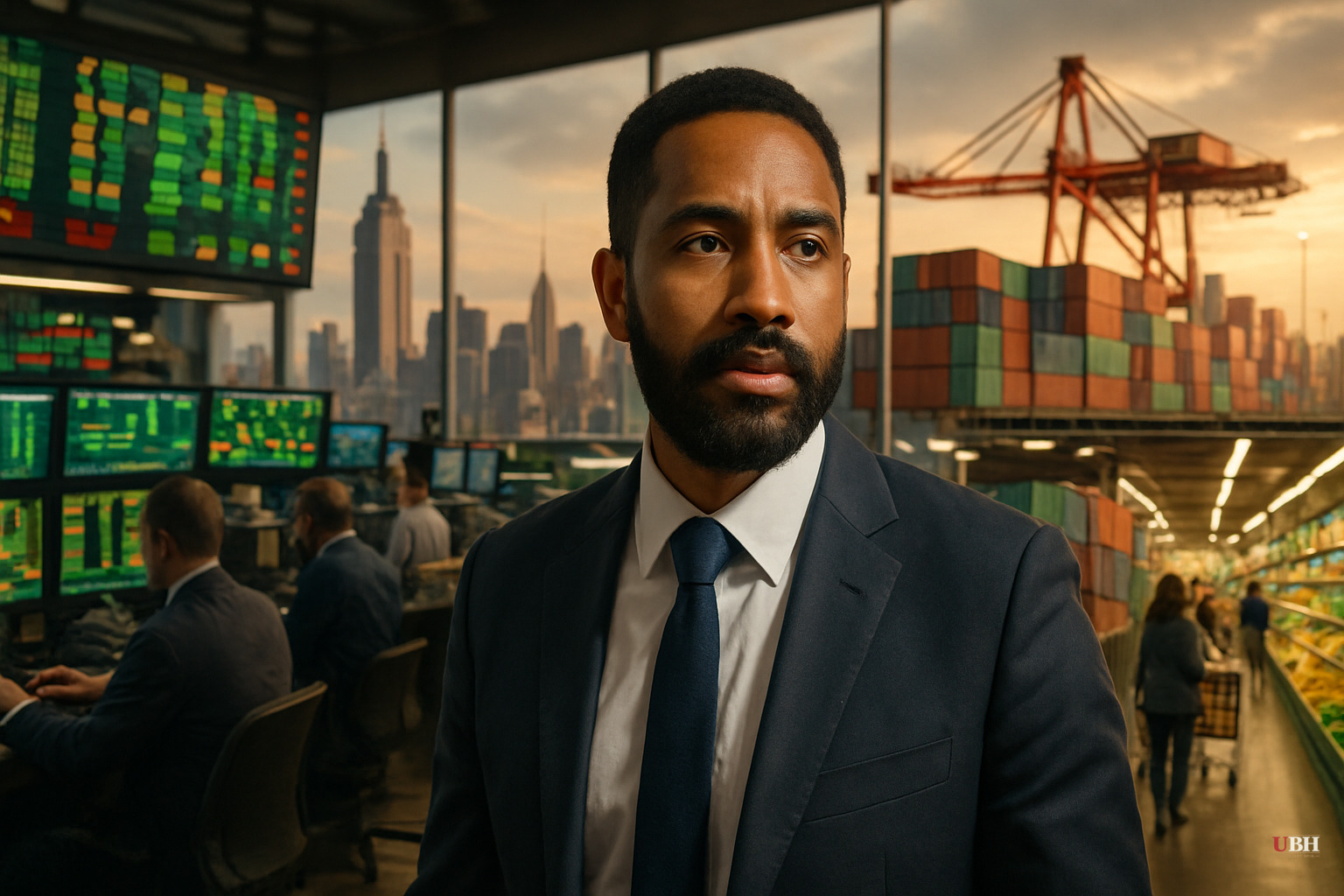
The Plan Has a Location. Now It Has Serious Opposition.
Mamdani's city-run grocery pilot picked Hunts Point in the Bronx as its first location, with a 2027 target opening. As Mamdani consolidated his position as the Democratic frontrunner heading into the primary, the economic and industry blowback has grown loud and specific.
The retail food industry itself is formally pushing back — and economists are putting real names and real arguments behind their warnings.
What the Economists Are Actually Saying
Dr. Anne Rathbone Bradley, economics professor and vice president of academic affairs at The Fund for American Studies, told Fox News Digital the plan ignores basic economics.
"It sounds very good on paper — 'free' always does," Bradley said.
She predicts the city-run stores will fail as a sustainable model. Her core argument: government doesn't have the operational competence or financial discipline to run a grocery business profitably. Private grocers operate on razor-thin margins — typically 1-3% net profit — and survive through relentless efficiency. The city of New York is not known for either.
Fox Business reported her warning that the plan is a "doomed experiment that will cost taxpayers" — a straightforward economic prediction backed by precedent.
The Industry Speaks — and Names Names
Mike Durant, writing in an op-ed for amNewYork on May 1, 2026, made the most substantive case against Mamdani's approach. Durant represents the retail food industry directly.
His argument: Mamdani isn't solving the food desert problem — he's declaring war on the businesses that already serve those communities.
"Rather than engaging with grocers to examine current barriers to further investment in underserved communities, the mayor is telling the industry that the city government can do it more effectively," Durant wrote.
Durant also pointed to two recent government grocery failures that mainstream coverage has almost entirely ignored: Kansas City and Baldwin, Florida. Both attempted government-backed grocery models. Both collapsed.
The Bodega Problem Nobody Is Talking About
City-subsidized stores with below-market rent and taxpayer-backed pricing don't just compete with big chain grocers. They compete with bodegas — small, family-owned stores that are the actual backbone of food access in underserved New York neighborhoods.
Mamdani frames this as helping working-class New Yorkers. But if a city store opens nearby with subsidized prices that a bodega owner — paying full commercial rent, full labor costs, full supply chain costs — simply cannot match, the bodega closes.
The plan designed to fight food deserts could create them if the government store ever loses funding, scales back, or simply fails to operate competitively. Durant flagged this directly in his op-ed: subsidized pricing "risks undercutting existing grocers who are already paying exorbitant rent, labor and a multitude of other operational costs."
The Pilot Math Doesn't Exist Yet
No one has published a real cost figure for this pilot program. Mamdani's camp is calling it a pilot — five stores, one per borough. But what does that actually cost New York City taxpayers per year? Per store? The number hasn't been released.
When a politician proposes spending taxpayer money and can't or won't attach a figure to it, that's not a policy proposal. That's a campaign promise. New Yorkers deserve the actual budget before the first shovel hits Hunts Point.
What Mainstream Coverage Is Getting Wrong
Left-leaning outlets have largely framed Mamdani's grocery plan as a compassionate response to real food insecurity. Food deserts in the Bronx are a real problem with real data behind them.
But coverage is leaving out three things:
First, the Kansas City and Baldwin, Florida precedents. Government groceries have been tried. They failed. That's recent history.
Second, the bodega angle. Independent small grocers are at higher risk from this plan than chain stores, and they're the ones Mamdani claims to be championing.
Third, the missing budget numbers. No credible cost analysis has been published or demanded by mainstream New York press.
Right-leaning outlets are covering this almost entirely through the Fox ecosystem. The criticism is substantively valid, but it's being packaged for a specific audience rather than reported neutrally. Durant's industry op-ed in amNewYork is the most credible and least partisan critique out there — and it's getting almost no amplification.
What's At Stake
Mamdani is the heavy frontrunner heading into the Democratic primary. In New York City, winning that primary would make him the overwhelming favorite to become mayor. His grocery plan could move from campaign trail promise toward actual policy.
Kansas City tried this. Baldwin, Florida tried this. Both failed.
New York City taxpayers deserve to know exactly how many of their dollars are going into this experiment before the ribbon gets cut in Hunts Point in 2027.
Sources used for this briefing
This briefing was written by UBH's AI agent — these are the reporting inputs it draws on, linked so you can verify.


