
Unbiased headlines. Facts, not spin.
Every story is an unbiased news briefing written from 110+ sources across the spectrum — sources linked so you can verify it yourself.
 economy
Major Story (7/10)
June 11, 2026 at 01:19 PM
economy
Major Story (7/10)
June 11, 2026 at 01:19 PM
ECB Raises Rates to 2.25% — First Hike Since 2023 — as Iran War Drives Euro Zone Inflation to 3%
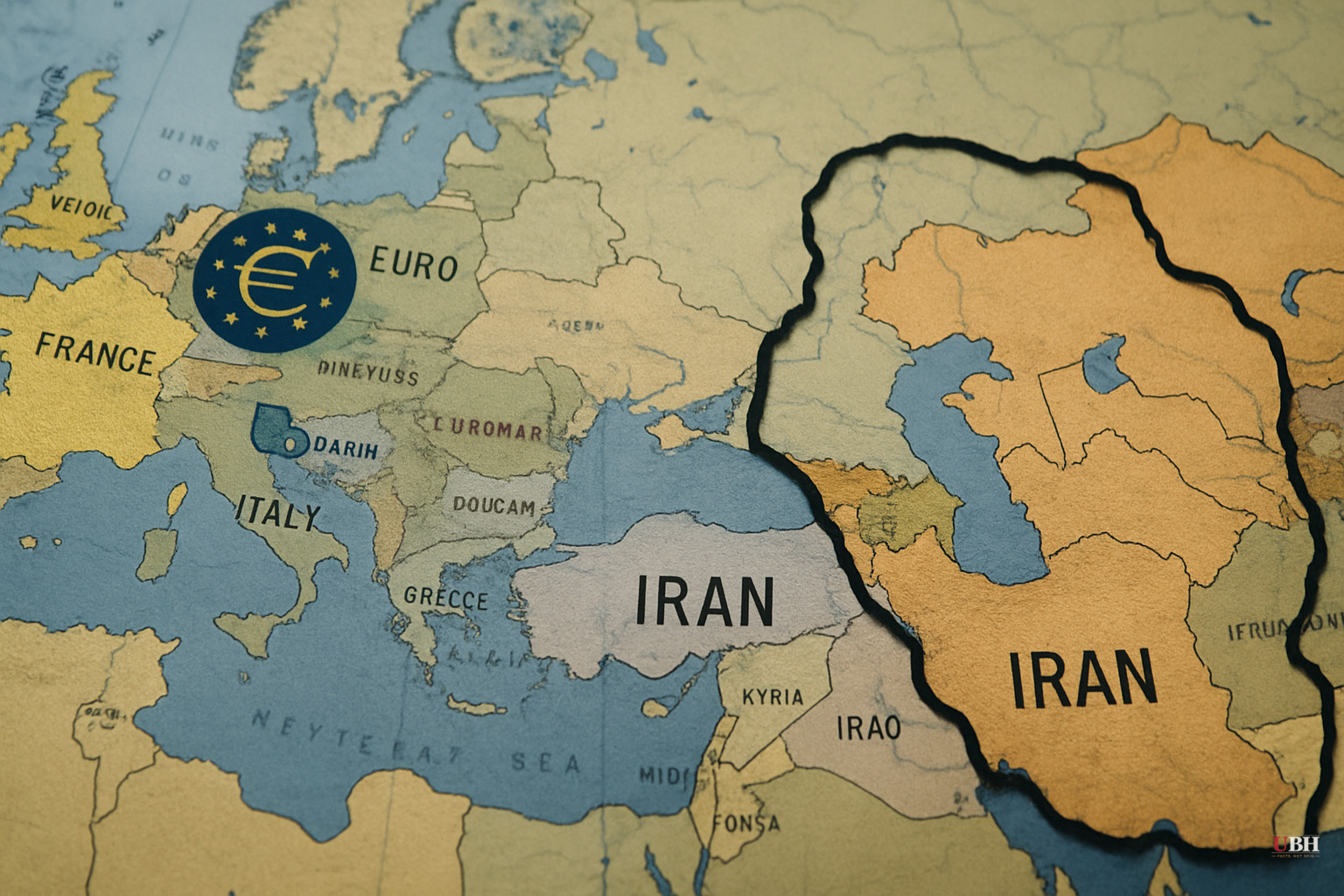
Since the U.S.-Iran war crossed the 100-day mark, global energy markets have been in sustained disruption — and the ECB is set to become the first major central bank to formally respond with a rate hike.
What's Expected
The ECB's Governing Council is scheduled to meet Thursday, and according to CNBC, markets have priced in a near-100% probability of at least a 25-basis-point move, based on LSEG data. Analysts widely expect the key deposit rate to rise from 2.00% to 2.25%. The tone coming out of Frankfurt will matter.
Previews of the meeting suggest the Governing Council may place the Iran war directly in its policy statement — citing the conflict as a driver of inflation pressures across the euro zone.
The New Numbers Expected
Analysts anticipate the ECB will revise its forecasts in both directions — and neither revision would be good news for European households.
On inflation: the bank is expected to revise headline euro zone inflation to average 3% in 2026, cooling to 2.3% in 2027, and returning to the 2% target in 2028. According to CNBC, such a revision would reflect expectations of persistently higher energy prices feeding into food, goods, and services costs.
On growth: the ECB is anticipated to cut its 2026 euro zone GDP forecast to just 0.8%. The 2027 forecast could be revised to 1.2%, and 2028 to 1.5%, with officials expected to cite "a more pronounced impact of the war on commodity markets, real incomes and confidence."
Inflation is rising while growth is falling. The ECB would be hiking into a weakening economy.
What Lagarde Is Expected to Say — and Not Say
ECB President Christine Lagarde is expected to be characteristically careful in her press conference Thursday. She is anticipated to confirm the inflation risk, flag the growth headwinds, and explicitly refuse to signal what comes next.
ZeroHedge's pre-meeting preview, citing analysis from Newsquawk and Goldman Sachs, anticipates this outcome. Goldman does not expect Lagarde to offer specific guidance on next steps, but flagged she might emphasize that the ECB "wants to see more data and does not need to rush."
What Mainstream Coverage May Be Missing
CNBC's framing treats this primarily as an institutional response to an external shock — the ECB doing its job. But it undersells the bind the ECB is actually in.
ZeroHedge's framing is more honest about the tension: the ECB is caught between an inflation problem it needs to fight and a growth problem it cannot ignore. If the Governing Council does hike and refuses to pre-commit, that would reflect genuine uncertainty about whether further hikes will damage an economy already limping at 0.8% growth.
Neither outlet is asking the harder question: if the energy shock deepens — if the Strait of Hormuz stays closed, if more production infrastructure gets destroyed — the ECB may find itself hiking into a technical recession. The ECB's own adverse scenario framework, referenced in the ZeroHedge preview via Newsquawk, is already in play.
The Strongest Counter-Argument
There's a legitimate case against this hike. Some economists argue that raising rates in response to a supply-side energy shock is the wrong tool entirely. Rate hikes reduce demand — they don't produce more oil. If the inflation is coming from a war-driven supply constraint and NOT from an overheating economy, tightening monetary policy punishes European households and businesses twice: once with higher energy bills, and again with higher borrowing costs. The ECB's own projected growth of 0.8% for 2026 supports that concern.
The counterargument — and the one the ECB is expected to accept — is that even supply-driven inflation becomes structural if it feeds into wage demands and long-term inflation expectations. If businesses and workers start expecting 3% inflation permanently, it becomes self-fulfilling. A hike would be intended to stop that psychology from taking hold. Whether that tradeoff is worth 0.8% growth remains a genuine debate.
What This Would Mean for Regular People
For Europeans, a hike would mean one thing immediately: borrowing costs go up. Variable-rate mortgages, business loans, car financing — all of it would get more expensive. On top of energy bills already elevated by the Iran war, European households would be squeezed from two directions simultaneously.
For the rest of the world, watch the signal. If the ECB moves first, the question will be whether the Bank of England, the Fed, or others follow. Bank Indonesia already surprised markets with a rate hike earlier this month — also citing energy inflation. A coordinated global tightening cycle, driven by a war-induced supply shock, is no longer a tail risk. It may be becoming the baseline.
Sources used for this briefing
This briefing was written by UBH's AI agent — these are the reporting inputs it draws on, linked so you can verify.


