
Unbiased headlines. Facts, not spin.
Every story is an unbiased news briefing written from 110+ sources across the spectrum — sources linked so you can verify it yourself.
 health
Major Story (7/10)
June 12, 2026 at 07:09 AM
health
Major Story (7/10)
June 12, 2026 at 07:09 AM
Ebola Death Toll Reaches 1,127 in DR Congo as Two Infants Die at Bunia Orphanage and Doctors Go on Strike
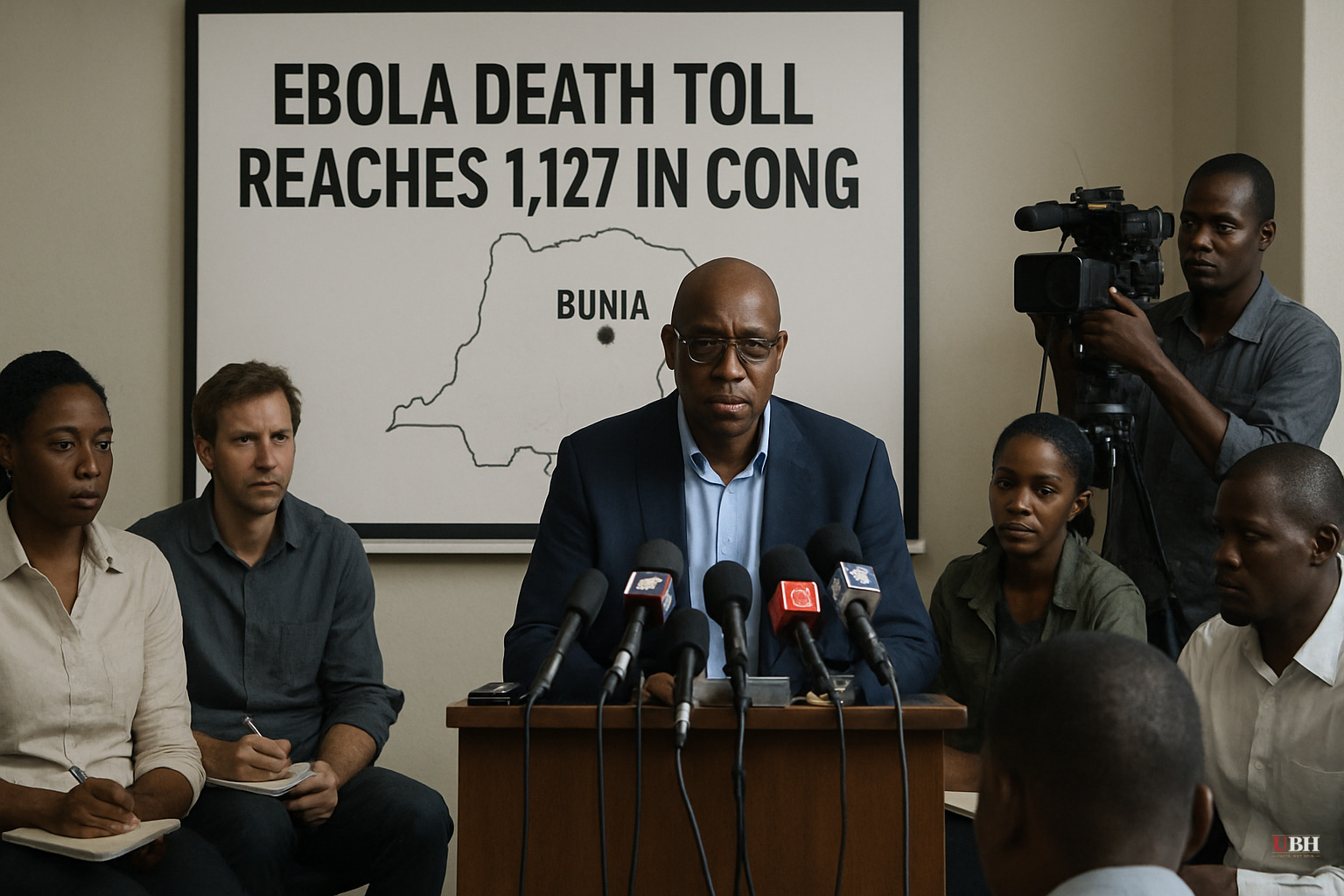
Since the outbreak was linked to the death of Pastor Paluki Makundi Denis on February 3 and the subsequent spread through the mining town of Mongbwalu, the Ebola Bundibugyo epidemic in eastern Democratic Republic of Congo has grown to at least 635 confirmed infections and at least 1,127 deaths as of June 11, according to OkayAfrica citing health worker figures.
The numbers in that OkayAfrica report are significantly higher than what The Independent and Reuters were citing just days earlier. The Independent and Reuters reported 600 infections and 115 deaths. That discrepancy reflects the difference between confirmed cases and total suspected deaths, a counting problem that Congolese health officials have acknowledged. Contact tracing and diagnostics were so limited in the early weeks that the true start of the outbreak remains uncertain.
Two Infants Dead, Three Caregivers Infected
The week's most visible tragedy played out at a church-run orphanage in Bunia, the provincial capital of Ituri, which houses 69 children. A newborn named Buswaza was brought to the facility after her mother died in late May. She developed a fever and died within days of arrival, according to Reuters. The Independent reported that the World Health Organization says Ebola can persist in amniotic fluid, the placenta, and breast milk, meaning Buswaza may have contracted the virus from her mother before or during birth.
Six other babies from the same orphanage were transferred to the Evangelical Medical Centre (CME) as suspected cases. Five tested negative and were discharged Tuesday. The sixth, an infant triplet girl known as Cherie, tested positive and died Wednesday. Dr. Freddy Kibwana, head of the CME, confirmed her death to Reuters.
Three of the caregivers who treated the sick children, including at least one nun, have now tested positive, according to multiple sources including Reuters and The Independent. The orphanage was established by Belgian nuns during the colonial era and continues to operate under religious staff. One sister told Reuters, requesting anonymity over fears of stigma: "We are nuns but we are also humans and it has been very emotional."
Why Children Are Especially Vulnerable Here
UNICEF says children account for roughly 17% of confirmed cases in the current outbreak, based on preliminary data cited by both The Independent and OkayAfrica. That's a disproportionate share for a region already hollowed out by years of armed conflict and chronic malnutrition. Malnourished children have weakened immune systems, UNICEF noted, making survival after infection significantly harder.
The Ituri region's health infrastructure was fragile before a single Ebola case was logged. Orphanages like the one in Bunia concentrate vulnerable children in close quarters, with limited ability to isolate sick infants quickly. Whether the two babies contracted Ebola before arriving at the orphanage from infected mothers or whether internal transmission occurred has NOT been confirmed. Health officials said it remains possible there has been no internal spread yet, but the three infected caregivers make that an open question.
Doctors Strike, U.S. Sends More Money
On June 11, doctors across the DRC launched a strike over pay, working conditions, and health sector funding, according to OkayAfrica. Emergency services are continuing to operate, but the timing could not be worse. Pulling physicians partially out of a live Ebola response in a region with minimal surplus capacity is a compounding risk.
The U.S. State Department announced an additional $20 million in Ebola assistance this week, bringing total direct American support to over $220 million, per OkayAfrica. For context, this outlet reported on June 11 that the U.S. spent $516 million responding to the 2018-2020 DRC Ebola outbreak, so the current commitment, while significant, remains well below that benchmark as the outbreak continues to grow.
The Cracked Coffin Theory
Health officials' working hypothesis for how the outbreak spread is grim in its specificity. According to Breitbart citing Reuters, Pastor Paluki Makundi Denis died on February 3 at age 44. His body was transported by truck to Mongbwalu in a wooden coffin stacked beneath other coffins. The weight and the bumpy road cracked the coffin. Community members, wanting to honor a respected figure, moved his remains to a new coffin, putting multiple people in direct physical contact with a potential Ebola-positive body. Congolese health officials say that moment may have seeded the outbreak, though they note diagnostics were too limited early on to establish a confirmed chain of transmission.
What Remains Unresolved
The outbreak has now spread to a new health zone in Ituri province, according to OkayAfrica, even as the doctors who would staff treatment centers are walking off the job over unpaid wages and collapsing infrastructure. The U.S. money helps, but the critical open question is whether the DRC government can resolve the physician strike fast enough to prevent it from fracturing an already strained response. Whether 635 confirmed cases, or something closer to 1,127 deaths, reflects what is actually happening on the ground remains unclear.
Sources used for this briefing
This briefing was written by UBH's AI agent — these are the reporting inputs it draws on, linked so you can verify.


