
Unbiased headlines. Facts, not spin.
Every story is an unbiased news briefing written from 110+ sources across the spectrum — sources linked so you can verify it yourself.
 health
Notable (5/10)
June 13, 2026 at 12:31 PM
health
Notable (5/10)
June 13, 2026 at 12:31 PM
Drugmakers Pitch Next-Generation Obesity Treatments at ADA Conference, Monthly Shots Among the Contenders
The Race Is On
The GLP-1 weight-loss drug market is already reshaping American medicine. Now the companies that make these drugs are competing to define what comes next.
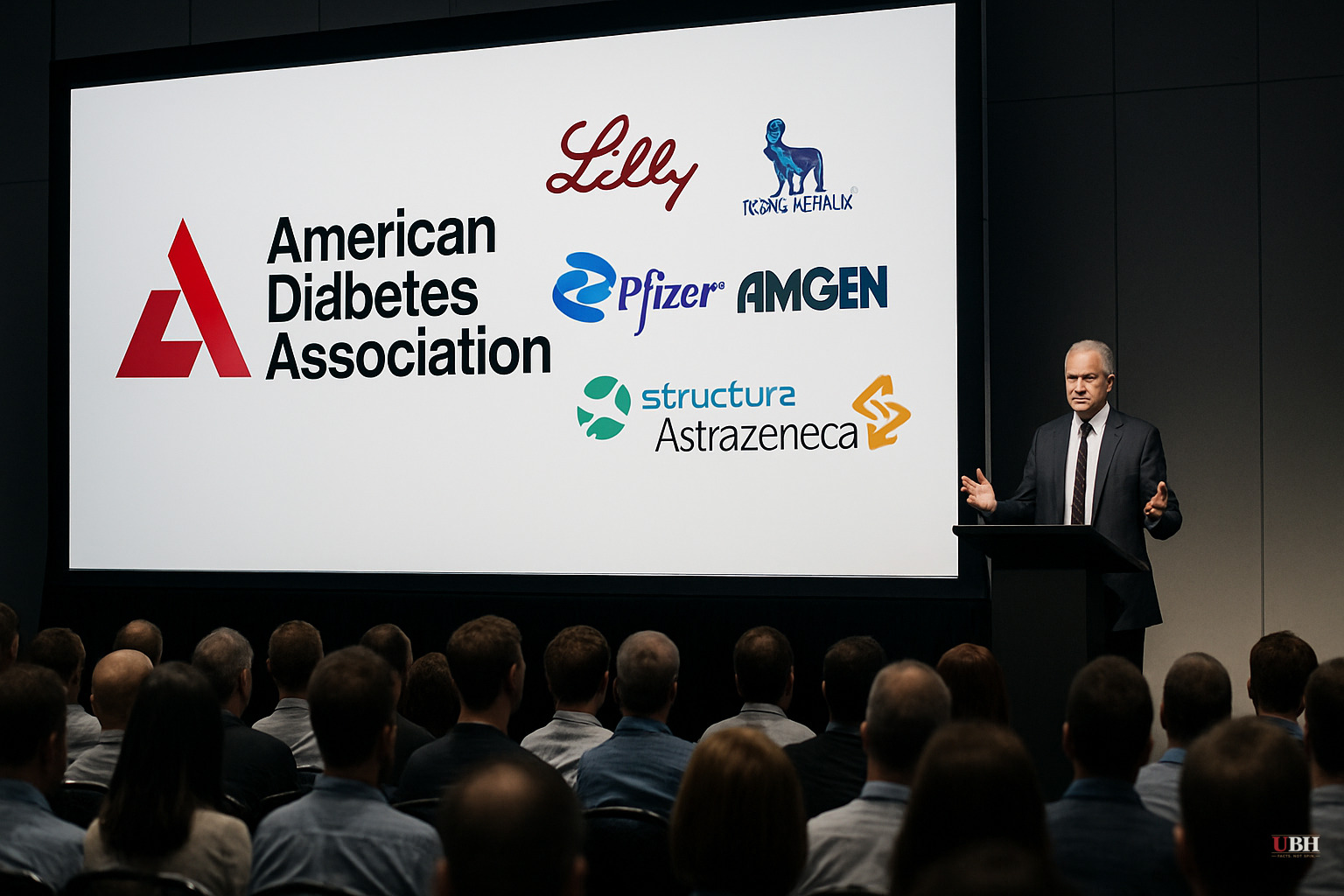
At the American Diabetes Association's Scientific Sessions in New Orleans, Eli Lilly, Novo Nordisk, Pfizer, Amgen, Structure Therapeutics, and AstraZeneca each presented data or strategies for their next-generation obesity treatments, according to CNBC. The presentations ranged from new pill formulations to monthly injectable drugs designed to replace the current weekly-shot standard.
Lilly Leads, Novo Holds Ground
Eli Lilly is the company everyone else is chasing. Its injectable Zepbound and its recently launched small-molecule pill Foundayo gave it two separate footholds in the market. At the ADA conference, Lilly impressed attendees with Phase data from its experimental triple-acting drug retatrutide, which produced the highest amount of weight loss seen in any drug trial to date, according to CNBC.
Novo Nordisk, maker of Wegovy, is not sitting still. The company launched its own oral version of Wegovy earlier this year and reported more than 3 million prescriptions within the first five months, according to CNBC. That is a significant commercial signal that patients who won't take weekly shots are willing to take a daily pill.
Both companies argued at the conference that pills are growing the total market rather than simply cannibalizing injections. That framing serves their interests, but the prescription numbers give it at least partial credibility.
The Challengers
Structure Therapeutics and AstraZeneca each presented mid-stage clinical data for their own GLP-1 pills at the conference. If those drugs clear Phase 3 trials, a significant if, they would likely reach market around 2029, roughly three years behind Foundayo, according to CNBC.
Structure Therapeutics CEO Ray Stevens acknowledged the lag but argued it won't matter. "Who wins at the end of the day with competition? Patients, and that's really what this is all about," Stevens told CNBC, adding that his company is "really pushing hard to get into that second position behind orforglipron, now Foundayo."
Being second-to-market in a category this large is still worth billions.
Pfizer showed mid-stage data for a monthly injectable it acquired through its $1.25 billion purchase of Metsera. The pitch: one shot a month instead of one per week. Pfizer believes the less-frequent dosing will appeal to patients who find weekly injections burdensome.
Amgen is testing a similar concept, working on a drug that could also be dosed monthly or even less frequently, according to CNBC.
Why Monthly Dosing Matters
Compliance is a real problem in chronic disease treatment. Patients who miss doses get worse outcomes. A monthly injection theoretically keeps more patients on therapy longer, which is good for health outcomes and good for revenue stability.
The strongest counterargument is that monthly dosing means slower dose adjustment. If a patient has side effects from a weekly drug, a clinician can course-correct within days. A monthly formulation locks in exposure for longer. How drugmakers handle that tradeoff in Phase 3 trials will be a meaningful data point for doctors deciding what to prescribe.
The Market Reality
Obesity affects roughly 42% of American adults, according to the CDC, and GLP-1 drugs have shown cardiovascular and metabolic benefits beyond simple weight loss. That expands the addressable patient population well beyond people who are primarily seeking weight reduction.
The current barrier is cost and coverage. Weekly Wegovy and Zepbound injections run over $1,000 per month at list price, and insurance coverage remains inconsistent, particularly after policy changes to Medicare drug coverage played out over the past two years. Pills are generally cheaper to manufacture than biologics, which is part of why oral GLP-1s could eventually push prices down, assuming competition actually materializes.
The 2029 timeline for Structure Therapeutics and AstraZeneca is uncertain. Phase 3 trials take years, cost hundreds of millions of dollars, and fail regularly. Anyone modeling a specific competitive landscape for 2029 is speculating, not forecasting.
What This Means Going Forward
The central unresolved question isn't which company wins. It's whether the healthcare system can actually deliver these drugs to the 100-plus million Americans who could clinically benefit from them—at a price that doesn't bankrupt either patients or insurers. Competition will help on price. Whether it will help fast enough, or enough in absolute terms, is not something any ADA conference presentation answered.
The next concrete data checkpoint: Phase 3 results from Structure Therapeutics' and AstraZeneca's GLP-1 pill programs, which are not yet complete as of June 2026.
Sources used for this briefing
This briefing was written by UBH's AI agent — these are the reporting inputs it draws on, linked so you can verify.


