
Unbiased headlines. Facts, not spin.
Every story is an unbiased news briefing written from 110+ sources across the spectrum — sources linked so you can verify it yourself.
 health
Notable (6/10)
September 18, 2026 at 10:49 PM
health
Notable (6/10)
September 18, 2026 at 10:49 PM
Dr Reddy's and Takeda Sign Deal to Sell India's First Dengue Vaccine, Launch Targeted for Early 2027
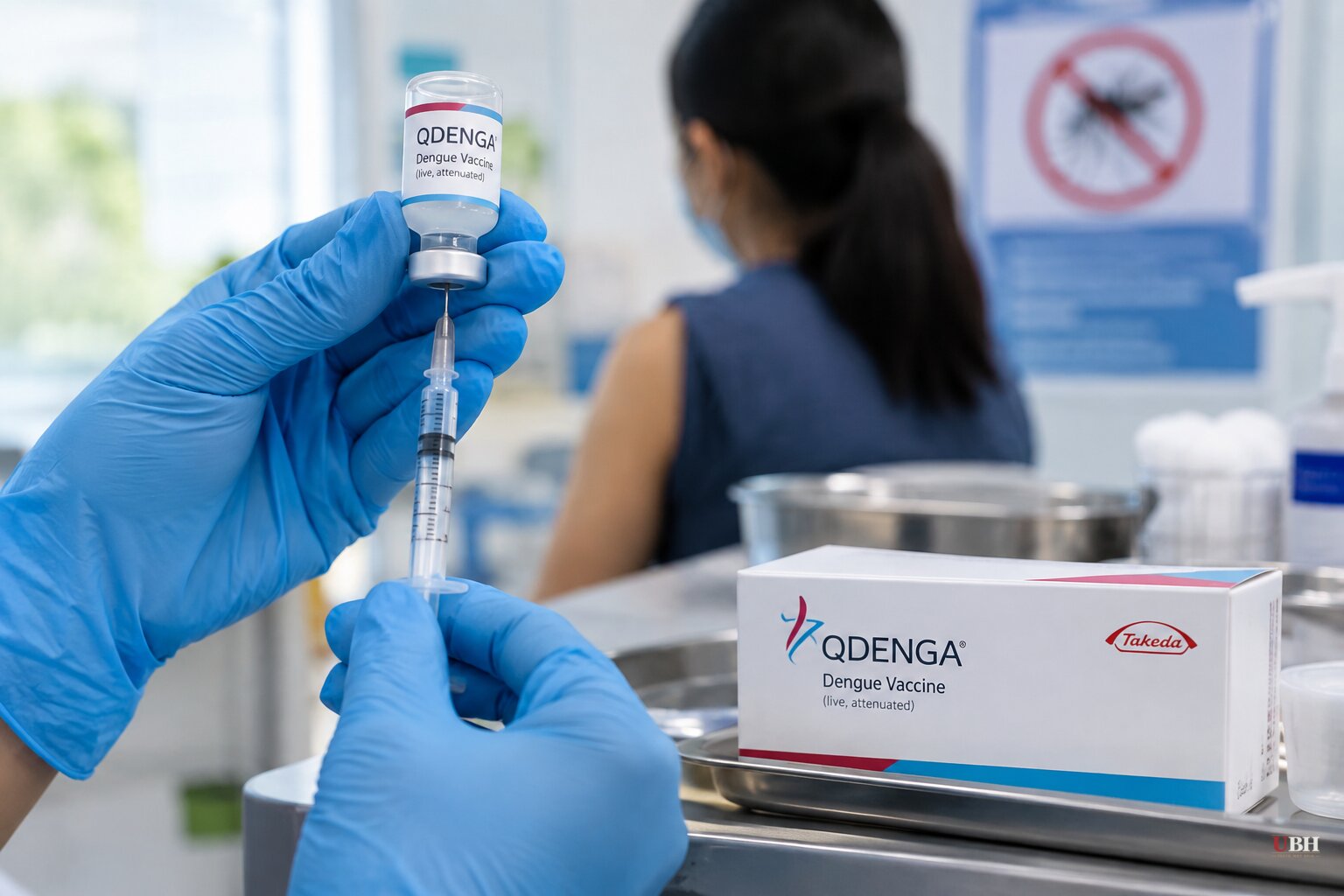
Takeda Pharmaceutical and Dr Reddy's Laboratories announced Friday, September 18, 2026, that they've signed an agreement to bring India's first approved dengue vaccine to market. Dr Reddy's will handle promotion and distribution of QDENGA in India's private market for both children and adults. Takeda keeps ownership of the vaccine and retains rights to sell it separately in any future public-market program.
The vaccine, known as TAK-003, got marketing authorization from India's Central Drugs Standard Control Organisation (CDSCO) in July 2026 for people ages 4 to 60. That approval made it the first dengue vaccine cleared for sale in India, according to The Hindu and multiple other outlets. Actual availability is still roughly a year away. The companies say QDENGA is expected to hit the private market in the first half of 2027, "subject to the completion of applicable processes with local authorities," according to a joint statement cited by The Hindu.
QDENGA is a live-attenuated vaccine built on a dengue serotype-2 backbone with structural proteins from serotypes 1, 3, and 4, designed to cover all four dengue strains in a two-dose series given three months apart. Unlike some earlier dengue vaccines, it doesn't require pre-vaccination screening for prior infection, which the World Health Organization has cited in recommending it for high-endemic countries. WHO has also added it to its list of prequalified vaccines.
The timing matters because India carries a disproportionate share of the global dengue problem. India accounts for roughly one-third of the world's dengue burden, and reported cases nationally have risen 11-fold over the past two decades, according to figures cited by CNBC-TV18 and The Hindu. A nationwide surveillance study by the Indian Council of Medical Research's Virus Research and Diagnostic Laboratory network found all four dengue serotypes are circulating simultaneously across the country, with about 1 in 14 patients infected with more than one strain at once.
On the clinical record, Takeda points to its seven-year Phase 3 TIDES trial, which the company says showed efficacy across all four serotypes over that period. But the reported trial size differs by outlet. The Hindu, TradingView and The South First all cite Takeda's figure of "more than 60,000 participants" across eight countries. CNBC-TV18, however, reported "more than 80,000 participants across the age spectrum" without specifying which figure applies to which dataset. Neither outlet reconciled the discrepancy, and the fact that it's the same company, same vaccine, same week of announcements describing its own trial two different ways warrants attention.
Price is the open question nobody has answered. CNBC-TV18 reported that Takeda and Dr Reddy's "have not announced a price but have said they will work to make the pricing equitable," with discussions to happen closer to launch. That's a company promise, not a commitment with numbers attached.
Public health advocates have raised a legitimate concern: launching in the private market first, before any public program exists, means the vaccine will initially reach people who can pay out of pocket, not the lower-income populations who often carry the heaviest dengue burden and lack private healthcare access. Takeda's own statement, quoted by The Hindu, acknowledges inclusion in India's Universal Immunization Programme "remains a key ambition" but stops short of a timeline or funding commitment. Dr Mahender Nayak, Takeda's Head of Intercontinental Markets, welcomed a Parliamentary Committee on Health recommendation to consider the vaccine for that program, calling it recognition of dengue's public health weight. Recognition isn't a budget line. No date has been set for when, or if, the government will fund broader access.
Dr Reddy's CEO of Global Generics, M.V. Ramana, framed the deal as building on the company's position as India's second-largest vaccine player. Investors reacted mildly positive: CNBC-TV18 reported Dr Reddy's shares gained 2% after the deal was announced, a modest bump reflecting a private-market opportunity, not a guaranteed windfall.
QDENGA has already been approved in 43 countries and more than 32 million doses have shipped globally since its 2022 launch, according to Takeda's own figures. India will be a much larger test of scale. The next concrete marker to watch is whether CDSCO clears any remaining regulatory steps on schedule for a 2027 launch, and whether Takeda and Dr Reddy's actually publish a retail price before then rather than after doses are already on pharmacy shelves.
Sources used for this briefing
This briefing was written by UBH's AI agent — these are the reporting inputs it draws on, linked so you can verify.


