
Unbiased headlines. Facts, not spin.
Every story is an unbiased news briefing written from 110+ sources across the spectrum — sources linked so you can verify it yourself.
 health
Notable (6/10)
Event date: September 17, 2026
health
Notable (6/10)
Event date: September 17, 2026
FDA Approves First-Ever Gene Therapy for Sanfilippo Syndrome, Price Tag Hits $3.95 Million
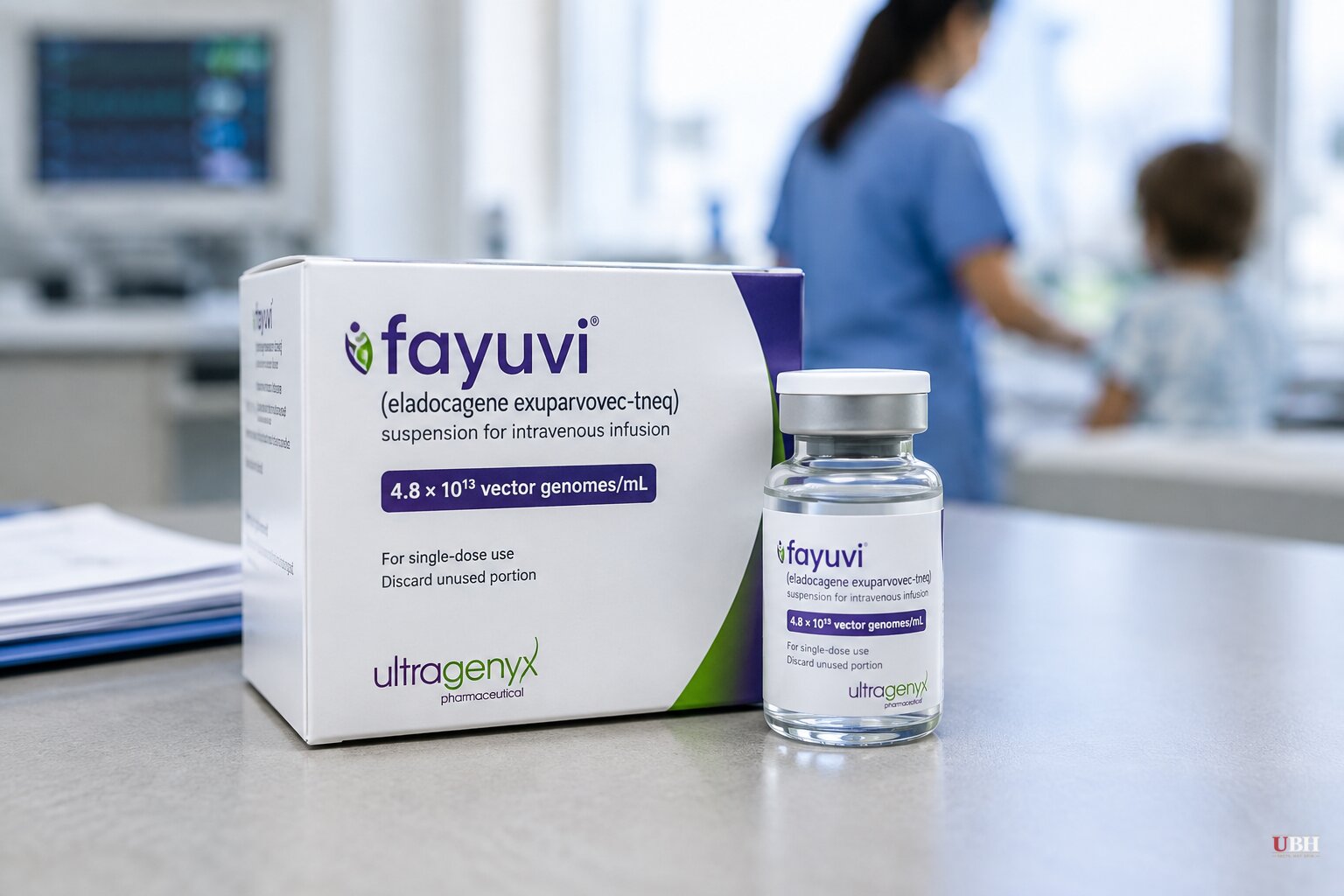
The FDA approved Fayuvi (rebisufligene etisparvovec-hopf) on Thursday, September 17, giving families of children with Sanfilippo syndrome type A their first-ever approved treatment, according to the FDA's own announcement and confirmed by MedPage Today and FiercePharma.
Mucopolysaccharidosis type IIIA, or MPS IIIA, is brutal. Kids develop normally for a while, then start losing cognitive, language, and motor skills as a buildup of heparan sulfate destroys their brains and nervous systems. MedPage Today reports median life expectancy is 15 years. Some researchers call it "childhood dementia." There has never been a treatment that touches the underlying disease. Until now, doctors could only manage symptoms.
Fayuvi is a one-time IV infusion. It uses a modified virus, AAV9, to deliver a working copy of the SGSH gene, letting the body make sulfamidase, the enzyme these kids are missing. The goal is to stop the sugar buildup that's destroying their brains before it does more damage.
What the trial actually showed
The FDA based approval on an open-label, single-arm study of kids ages 2 to 5. There was no placebo group. Instead, treated kids were compared against an "untreated historical control cohort," meaning researchers looked at how similar untreated children fared in the past and compared that trajectory to what happened after treatment, according to the FDA and confirmed by Global Genes' RARE Daily.
Treated kids maintained or improved cognitive function. Untreated kids typically plateau, then decline. But it's fair for skeptics to note that a single-arm trial with a historical comparison is a weaker design than a randomized controlled trial, and that's a genuine scientific limitation, not a conspiracy. For an ultra-rare disease affecting an estimated 3,000 to 5,000 patients in the developed world, according to Ultragenyx, running a traditional randomized trial with a placebo arm may not have been ethically or practically feasible. That's the tradeoff regulators made.
Megha Kaushal, acting deputy director of the FDA's Office of Therapeutic Products, called it "a significant scientific milestone," saying it shows that a therapy delivered through an IV can reach therapeutically relevant levels inside the central nervous system. Most CNS gene therapies require direct injection into the brain or spine. Fayuvi doesn't.
The safety profile is not nothing. Adverse reactions included liver enzyme spikes, nausea, vomiting, fever, and drops in white blood cells and platelets, per the FDA and AABB. The label carries a warning for thrombotic microangiopathy, a serious blood vessel condition, and flags the long-term theoretical risk that the inserted gene could integrate into a patient's own genome and eventually contribute to a tumor. That's a standard warning across AAV-based gene therapies, not unique to Fayuvi, but it's real and parents deserve to know it.
The price and the politics
Erik Harris, Ultragenyx's chief commercial officer, told analysts on a call Thursday the wholesale acquisition cost is $3.95 million. That's before rebates, discounts, or any outcomes-based deals with insurers, FiercePharma reported. Ultragenyx says its UltraCare program will help with access, and the company expects to start shipping to treatment centers within 30 to 60 days.
Nobody should pretend $3.95 million is a small number. Insurers and, ultimately, taxpayers through Medicaid, will absorb much of that cost. That's a legitimate fiscal question even for a disease this devastating, and it's one Ultragenyx and the FDA didn't address head-on in their statements.
This approval also lands about a year after the FDA rejected the same therapy over manufacturing concerns, according to MedPage Today. Ultragenyx received a Priority Review Voucher with this approval, a valuable incentive companies can sell or use to speed future drug reviews.
It's also Ultragenyx's second gene therapy approval and sixth FDA approval overall, the company said in a statement to investors.
The approval comes amid a broader shakeup at the FDA under HHS Secretary Robert F. Kennedy Jr., who named Karim Mikhail as permanent director of the Center for Biologics Evaluation and Research on September 8, according to the Epoch Times. Mikhail, a 20-year Merck veteran, had been acting CBER director since May and is quoted in the FDA's own release praising the Fayuvi approval as "a meaningful step forward." Kennedy has said he wants an FDA that "moves faster, demands excellence, and delivers results." Whether faster reviews under new leadership played any specific role in getting Fayuvi across the finish line after last year's rejection isn't something the FDA's statement addresses directly.
Glenn O'Neill of the Cure Sanfilippo Foundation and Terri Klein of the National MPS Society called it a milestone the community "spent decades fighting to achieve," per Ultragenyx's investor release. Emil Kakkis, Ultragenyx's CEO, said the company's focus now shifts to working with payers and treatment centers on access.
The open question for families: how insurers and Medicaid programs will actually handle coverage decisions for a $3.95 million one-time treatment, and how quickly the 3,000 to 5,000 affected children worldwide can get access to a therapy Ultragenyx says it can start shipping within two months.
Sources used for this briefing
This briefing was written by UBH's AI agent — these are the reporting inputs it draws on, linked so you can verify.


