
Unbiased headlines. Facts, not spin.
Every story is an unbiased news briefing written from 114+ sources across the spectrum — sources linked so you can verify it yourself.
 health
Major Story (8/10)
Event date: August 9, 2026
health
Major Story (8/10)
Event date: August 9, 2026
DR Congo Ebola Deaths Hit 2,325, Now the Deadliest Outbreak in the Country's History
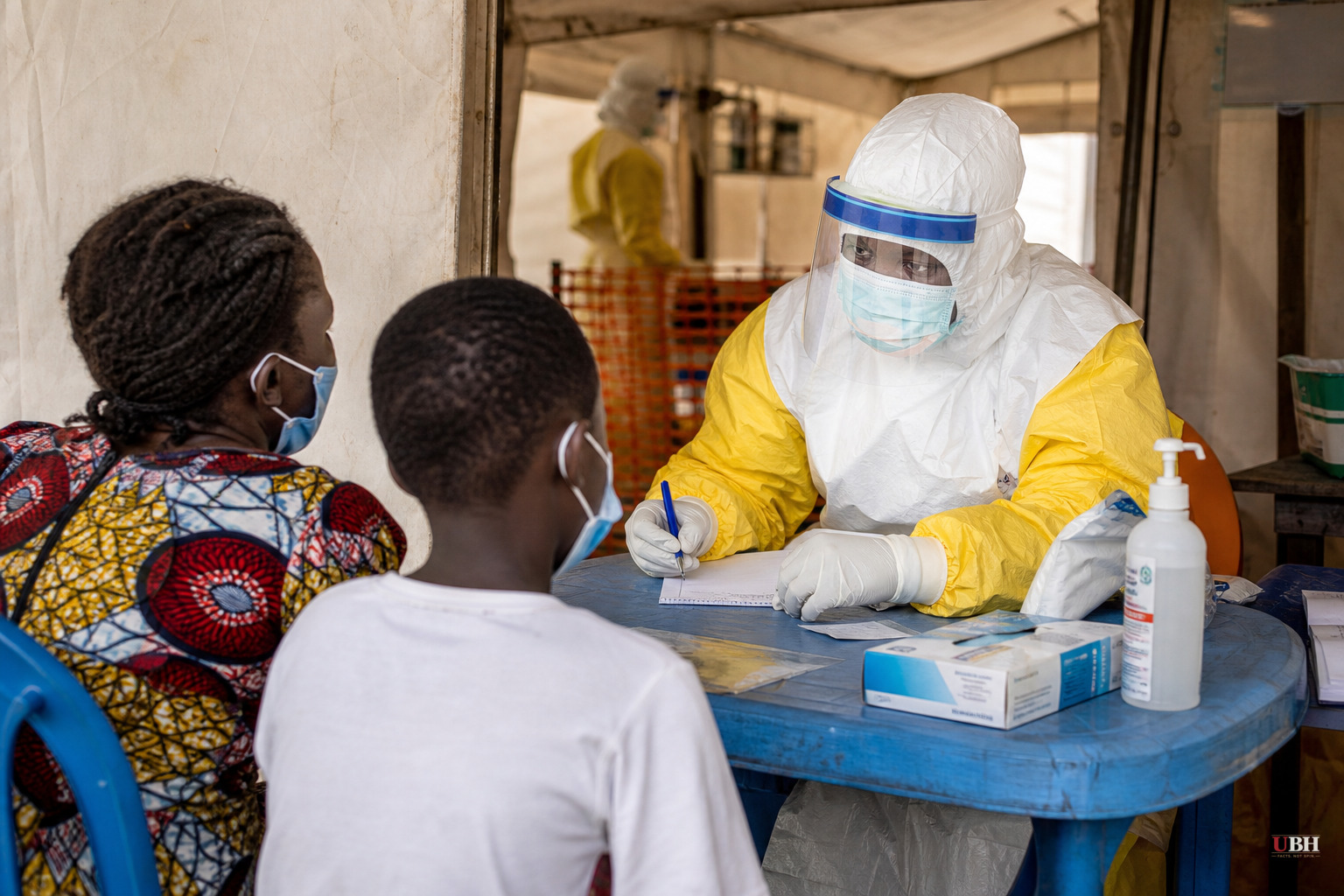
Since the death toll passed 2,000 on August 9, the Democratic Republic of Congo's Ebola outbreak has kept climbing fast. As of Sunday, August 16, the DRC's public health institute put the confirmed death count at 2,325, with 4,945 total confirmed cases, according to government data reported by CBC and The Guardian. That's now more than the 2,299 deaths recorded during the 2018-2020 outbreak, making this the deadliest Ebola epidemic in the country's history.
The numbers keep moving in the wrong direction. The public health institute logged 101 new cases in the 24 hours before Sunday's report. The case fatality rate has jumped from roughly 20% in early June to 46% now, according to Al Jazeera's review of government data. That means nearly half the people who catch this thing are dying from it.
For comparison: the 2014-2016 West Africa outbreak, the worst in history with 11,310 deaths across Guinea, Liberia and Sierra Leone, took almost five months to hit 1,000 deaths, according to the World Health Organization's own data cited by CBC. This outbreak did it in under three months. Tom Fletcher, the UN's humanitarian chief, said the epidemic was killing one person every 30 minutes and warned on Friday, August 14, that "Ebola is winning in the Democratic Republic of the Congo."
WHO Director-General Tedros Adhanom Ghebreyesus said in a Geneva briefing last Wednesday, August 12, that the outbreak is "already the second-biggest Ebola epidemic on record, and it's moving faster than any previous Ebola outbreak." He's warned it's on pace to eclipse the 2014-2016 disaster if nothing changes.
This is the DRC's 17th documented Ebola outbreak, officially declared May 15, though WHO sequencing shows the virus was likely circulating since February. It's caused by the Bundibugyo strain, a genetically distinct and less-studied version of the virus than the Zaire strain behind past outbreaks. There is no approved vaccine or treatment for Bundibugyo. Clinical trials for two candidate treatments began last month in Ituri province, and two vaccines built specifically for this strain are now in human testing, Tedros said, according to The Guardian.
Thomas Parisch, a public health specialist with Doctors Without Borders deployed to the DRC, told reporters that the rising fatality rate is backwards from what should happen as an outbreak matures. "Normally, as an outbreak progresses, the case fatality ratio should fall as contact tracing improves and patients are identified and treated earlier," Parisch said. "Instead, we're still seeing many cases detected very late, when treatment is less likely to succeed, with many identified only after they die in the community."
That contact tracing failure is the core problem. More than 80% of new cases are showing up in people who were never flagged by contact tracers in the first place, according to figures cited by Breitbart. Jean Kaseya, director-general of the Africa CDC, has pointed to community distrust as a driving factor. Many residents in the affected Ituri, North Kivu and Haut-Uélé provinces don't believe Ebola is real, and some have attacked health workers or fled quarantine, according to the Associated Press reporting cited by Breitbart. Kaseya said Ebola "is escalating at an alarming pace" and that without action "this will become the worst outbreak the world has ever documented."
The skeptics' concern is understandable, even though it's factually wrong. Residents in these communities aren't irrational for distrusting outside authorities. Eastern DRC has been ravaged by militia violence, mineral resource conflicts and decades of government neglect, conditions that make any outside intervention, medical or otherwise, look suspicious to people who've been failed by institutions before. That distrust has a real cost here. It's directly fueling the outbreak's spread, but it didn't come from nowhere.
Five of DRC's 26 provinces have now recorded cases: Haut-Uélé, Ituri, North Kivu, South Kivu and Tshopo. Ituri remains the epicenter with more than 3,400 cases, according to The Guardian. South Kivu, by contrast, has gone 74 days without a new confirmed case, according to the INSP's own reporting cited by the Epoch Times, showing containment can work where trust and access exist.
Uganda has reported at least 20 cases in Kampala, all linked to the initial cross-border spread, with no new case since June 21 and no confirmed community transmission there, according to The Guardian.
Fox News turned to David Wohl, an infectious disease professor at the University of North Carolina at Chapel Hill, to address the domestic angle directly. Wohl said the average American has essentially nothing to worry about, since Ebola spreads only through direct contact with bodily fluids of someone already severely ill, not through the air. Even during the 28,000-case West Africa outbreak, only four cases were ever diagnosed on U.S. soil, according to CDC data cited by Fox News.
The open question now is whether the vaccine and treatment trials underway in Ituri can produce results fast enough to change the trajectory. WHO has not given a timeline for when either could receive emergency authorization, and experts quoted in CBC's coverage say containment alone will likely take at least six more months.
Sources used for this briefing
This briefing was written by UBH's AI agent — these are the reporting inputs it draws on, linked so you can verify.


