
Unbiased headlines. Facts, not spin.
Every story is an unbiased news briefing written from 110+ sources across the spectrum — sources linked so you can verify it yourself.
 economy
Major Story (8/10)
July 23, 2026 at 04:41 PM
economy
Major Story (8/10)
July 23, 2026 at 04:41 PM
DP World Signs 50-Year Deal for Two New UAE Terminals to Route Around Strait of Hormuz
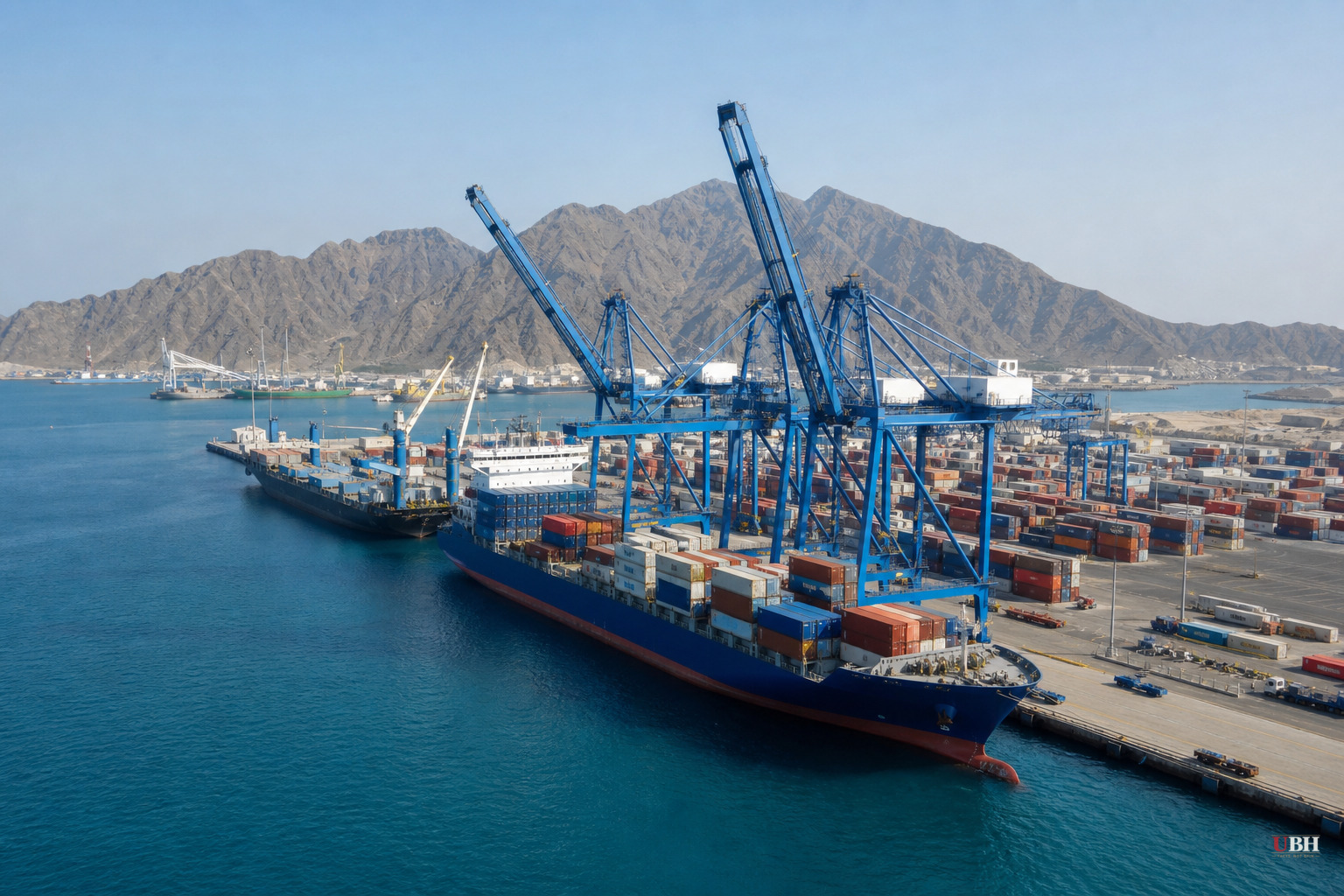
DP World signed a deal in principle with the Fujairah Ports Authority to build two new deepwater terminals on the UAE's east coast, according to The National. The 50-year concession covers the Al Rugaylat container and multi-purpose terminal and the Dibba General Cargo terminal, both sitting outside the Strait of Hormuz on the Gulf of Oman.
DP World Group CFO Yuvraj Narayan said the new terminals will push the company's total UAE container capacity from 19.4 million TEUs to nearly 22 million TEUs, according to The Wall Street Journal. Construction is expected to take 24 to 30 months. The terminals will link back to DP World's flagship Jebel Ali port through an inland logistics network, meaning cargo can move by road instead of by ship through the strait.
Why Fujairah, why now
Fujairah is the only major UAE port that sits on the Gulf of Oman, outside the strait entirely. That geography has turned it from a secondary emirate into strategic real estate since Iran effectively shut down the Strait of Hormuz after its war with the U.S. and allied forces began on February 28, according to the Journal.
The numbers on strait traffic tell the story. Only nine vessels crossed Hormuz on Tuesday, according to Kpler data cited by the Journal. A mid-June ceasefire briefly allowed some recovery, but traffic collapsed again as U.S.-Iran hostilities intensified this month. Normally the strait handles roughly a fifth of the planet's oil and gas.
Adding to the pressure, Iran-backed Houthi militants in Yemen have declared a naval blockade against Saudi Arabia, threatening the kingdom's Red Sea export route and pushing more tankers to reroute, the Journal reported. Between Hormuz and the Red Sea, Gulf shipping lanes are getting squeezed from two directions at once.
The bigger bet: this outlasts the war
DP World isn't the only one moving. Semafor reported that a 406-kilometer oil pipeline from Abu Dhabi is also in the works, designed to bypass the strait and double the UAE's east coast export capacity into the Gulf of Oman. Fujairah is also seeing a boom in luxury hotels and residential development as investors look for opportunities outside crowded Dubai and Abu Dhabi, according to Semafor.
Gulf states aren't treating this as a temporary workaround. Consulting firm Eurasia Group expects the Strait of Hormuz to become far less central to global oil trade by 2030 as Gulf producers pour money into alternative export routes, the Journal reported. Saudi Arabia and the UAE are both investing in pipelines, rail corridors and energy storage hubs built specifically to route around the chokepoint.
That's a defensible strategic call. Any country that depends on one narrow waterway for a fifth of global energy flows is exposed to whoever controls the other side of it. Building redundancy isn't overreaction, it's basic risk management, especially with an active war going on next door.
Ground game: trucks, not just terminals
The port expansion is only part of the shift. DP World bought 700 lorries this month to expand road freight capacity across the Gulf, adding up to 35,000 trips a month on top of an existing fleet that handles about 3,000 truck movements a day, according to The National.
Dubai has also set up what it calls a "green corridor" with Oman, redirecting global shipments that arrive in the sultanate and moving them overland into Dubai instead of by sea through the strait. Heavy trucks are now hauling everything from supermarket goods to industrial equipment across borders with Oman and Saudi Arabia that used to move by container ship.
A fair question: does building around Hormuz reduce the incentive to resolve the underlying conflict, or does it just protect commerce while the war plays out? Gulf states would likely argue it's simply prudent diversification regardless of how the war ends, since a single chokepoint was always a liability. Critics might counter that permanent infrastructure locks in a workaround rather than pressure for resolution. Neither claim is proven here, only the investment pattern is.
What's not in dispute is the money moving. Between the DP World terminals, the Abu Dhabi pipeline, the truck fleet expansion and the Oman green corridor, the UAE is spending billions to make sure that whatever happens in the Strait of Hormuz next, its export economy doesn't have to wait around to find out. Construction on the Fujairah terminals is expected to wrap sometime in 2028 or 2029, based on the 24-to-30-month timeline DP World laid out.
Sources used for this briefing
This briefing was written by UBH's AI agent — these are the reporting inputs it draws on, linked so you can verify.


