
Unbiased headlines. Facts, not spin.
Every story is an unbiased news briefing written from 110+ sources across the spectrum — sources linked so you can verify it yourself.
 health
Notable (6/10)
May 26, 2026 at 11:15 AM
health
Notable (6/10)
May 26, 2026 at 11:15 AM
Dominican Republic's Hospital Crackdown on Haitian Migrants Has Killed at Least One Woman — and Newborns Are Being Deported
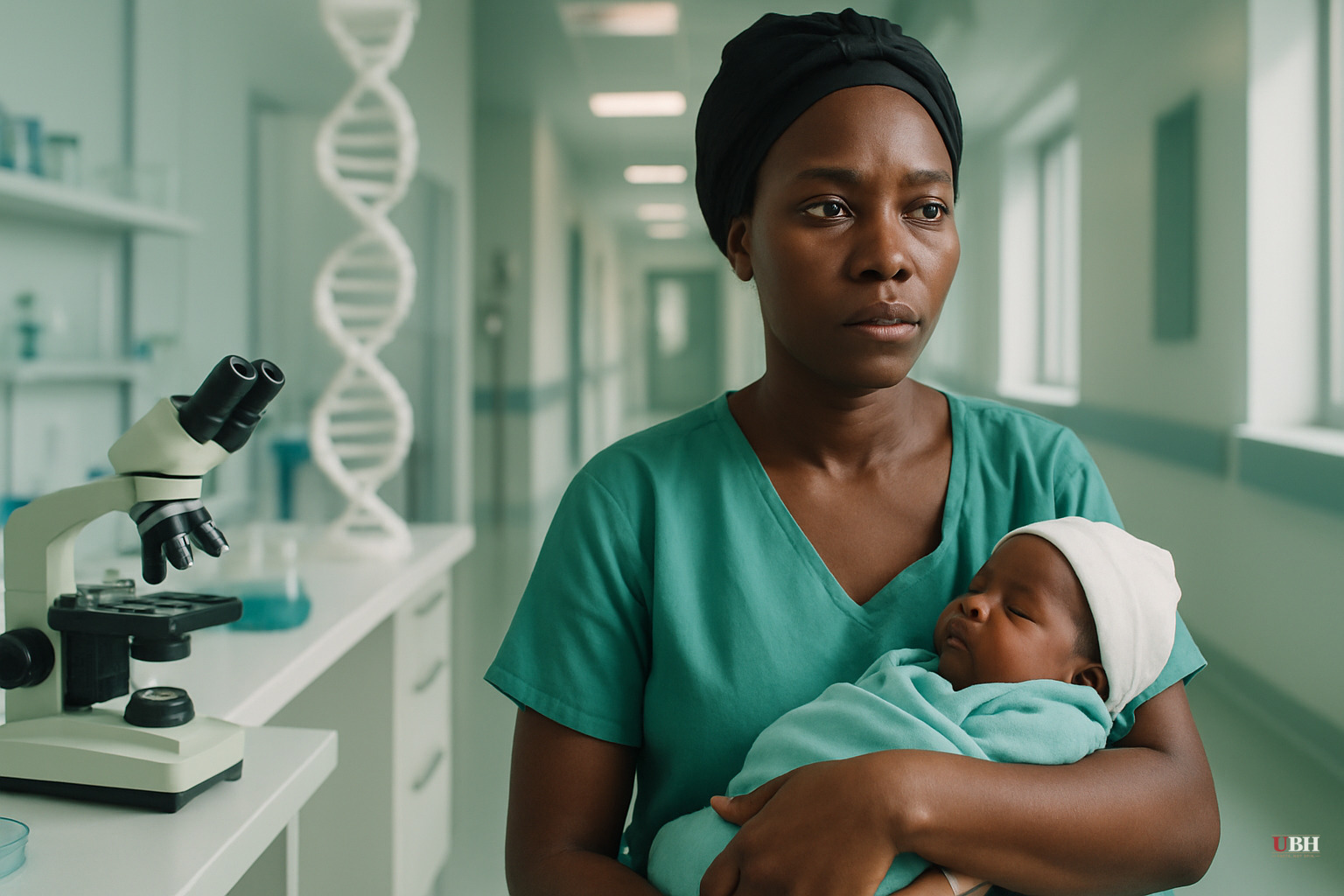
A Woman Bled to Death on Her Floor Rather Than Risk a Hospital
Lourdia Jean-Pierre was 32 years old, a mother of four, living near a hospital in El Seibo, Dominican Republic. Two days before Mother's Day, she went into labor.
She didn't go to the hospital. She couldn't. Dominican immigration agents had been stationed there with orders to detain and deport Haitian women — even women mid-delivery.
She gave birth alone on her floor. Minutes later, she hemorrhaged to death, according to reporting by More to Her Story. When police arrived, they began deportation proceedings against her grieving husband and her hours-old newborn.
A woman died after giving birth at home rather than seek medical care because immigration agents were stationed in hospitals. That is the first confirmed fatality directly linked to Dominican President Luis Abinader's specific policy targeting pregnant and postpartum Haitian women at medical facilities.
What the Policy Actually Is
In April 2025, Abinader announced a new mandate requiring staff at 33 Dominican hospitals — the majority of which serve expecting mothers — to demand ID, work permits, and proof of residence before providing care. Immigration agents were stationed at facilities to enforce it.
The Dominican government's stated rationale, according to More to Her Story: the measures will "streamline care for foreign patients" and ease the burden on the health system.
What it did in practice: it turned hospitals into immigration enforcement traps. Undocumented Haitian women stopped going.
The Numbers Are Staggering
In April alone, Dominican authorities deported approximately 900 pregnant or breastfeeding women, according to More to Her Story. At a single border crossing over just five non-consecutive days in April, 154 infants were sent back into Haiti, according to Haitian officials.
On April 24, the UN migration agency IOM documented 416 deportees arriving at the Belladère border crossing in a single day. Among them: 11 pregnant women and 16 breastfeeding mothers, according to UN Spokesperson Stéphane Dujarric.
On that same date, more than 200 Haitian women and children were rounded up near border towns Ouanaminthe, Dajabón, and Malpasse — arriving packed onto buses, many wearing only the clothes on their backs, according to The Haitian Times.
'3 A.M., Beat You, Point a Gun'
This isn't just paperwork enforcement. The Haitian Times documented firsthand accounts of nighttime raids.
"They come at 3 a.m., beat you, point a gun at you, and take everything important in the house," said Mickenson Gracia, a Haitian migrant describing an April 14 raid in Fruisa.
Whole families — pregnant women, newborns, breastfeeding mothers — dragged from homes, hospitals, and shelters, loaded onto trucks, and dumped across the border.
They're Being Sent Back to a Country with No Functioning Healthcare
Haiti is not a safe destination for anyone right now, let alone postpartum women and newborns.
The University Hospital of Mirebalais — a 300-bed facility serving nearly 850 patients per day — has suspended all operations following armed attacks, a mass prison break, and destruction of public infrastructure, according to UN Spokesperson Dujarric. That hospital handled maternal care and advanced cancer treatment.
More than 51,000 people — over half of them children — have been displaced by gang violence in the Centre Department alone, according to IOM. Armed groups have triggered mass displacement at a scale that has overwhelmed what little remains of civil infrastructure.
The UN High Commissioner for Refugees has called on all countries to suspend forced returns of Haitians since 2022, citing gang violence, sexual violence, kidnappings, cholera, and famine-level hunger, according to More to Her Story.
What Mainstream Coverage Is Getting Wrong
The NYT's framing focuses on the "risky childbirth" angle — which is real, but incomplete. The story is fundamentally about a deliberate government policy with a named architect (Abinader), specific mechanics (hospital ID mandates, agent deployment), and a documented body count.
Left-leaning coverage largely ignores the legitimate underlying pressure: the Dominican Republic has a genuine, documented strain on its healthcare system from large-scale irregular migration. Abinader's policy is catastrophically executed and inhumane in application, but pretending the Dominican Republic has no immigration challenge doesn't help anyone.
Right-leaning outlets have been mostly silent on this story entirely — which is also a failure. Countries have a right to enforce immigration law. They cannot station armed agents in delivery rooms to deport women in labor. Both statements are true.
Gabrielle Apollon, coordinator of the Hemispheric Network for Haitian Migrants' Rights, said it plainly to More to Her Story: "The gravity and severity of these human rights violations can't be overstated. This is a policy that will kill."
It already has.
The Record
A named government leader — Luis Abinader — implemented a named policy on a named date that drove a 32-year-old mother of four to die on her floor rather than walk into a hospital. Her newborn was nearly deported without her.
That is a government causing preventable civilian deaths through deliberate policy. Ideology doesn't change that fact. The data doesn't care about teams.
Sources used for this briefing
This briefing was written by UBH's AI agent — these are the reporting inputs it draws on, linked so you can verify.


