
Unbiased headlines. Facts, not spin.
Every story is an unbiased news briefing written from 110+ sources across the spectrum — sources linked so you can verify it yourself.
 economy
Notable (6/10)
June 13, 2026 at 07:15 PM
economy
Notable (6/10)
June 13, 2026 at 07:15 PM
DOL Finalizes Rules Letting 401(k) Plans Access Private Equity and Digital Assets
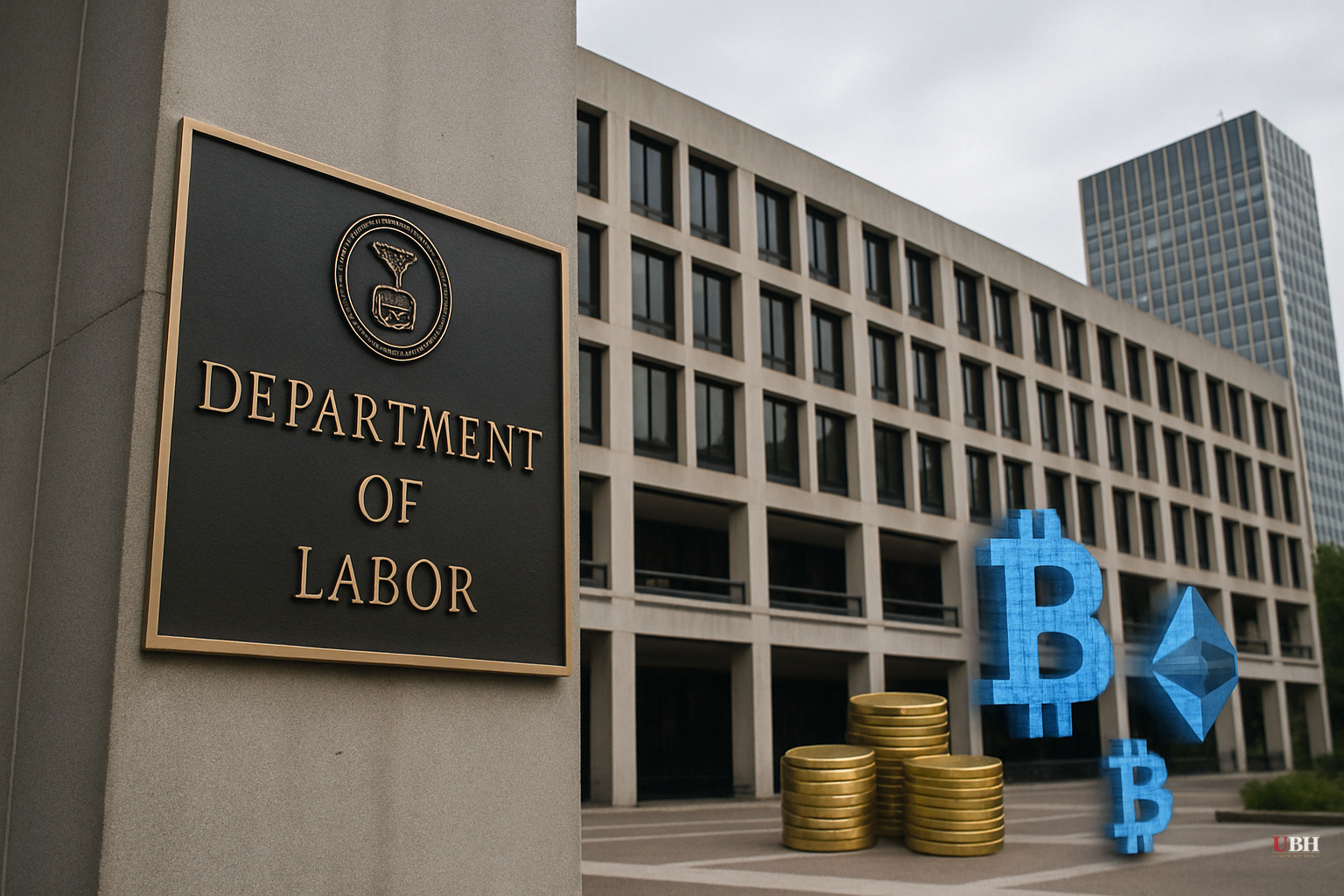
Since our June 13 coverage of retirement savings risks, the regulatory picture has sharpened. The Department of Labor has finalized rules that would materially expand the investment options available inside 401(k)s and similar defined-contribution plans.
For decades, asset classes like private equity, real estate funds, and digital assets were effectively walled off from most private-sector retirement savers. The barriers were partly statutory and partly behavioral: fiduciaries managing 401(k) plans avoided alternative investments to reduce exposure to lawsuits, even when those investments might have improved returns for participants.
EJ Antoni and Nicole Huyer writing in The Daily Signal on June 13, 2026, documented a structural disadvantage for ordinary workers. Public-sector employees with defined-benefit pensions and wealthy "accredited investors" had access to private equity for years. The median 401(k) holder did not.
What the New Rules Actually Do
The DOL reforms clarify how fiduciaries can include private-market exposure in a plan's investment lineup without triggering automatic liability. The rules require that fiduciaries still demonstrate prudence and document their rationale. They cannot simply dump speculative assets into a plan. The framework is designed to give plan managers legal cover to consider alternatives while maintaining their duty to act in participants' interest.
The regulatory groundwork traces to an executive order Trump signed in August 2025 directing multiple agencies to revise retirement-investment rules. The DOL's finalized response is the most significant step since that order.
The Performance Case
The argument for expanding access rests largely on long-run return data. According to Antoni and Huyer, U.S. private equity has averaged roughly 3 percentage points per year more than the S&P 500 over the long term, net of fees. That gap widened during the 2021–2025 period, when rising interest rates crushed bond prices. The traditional 401(k) allocation, which skews heavily toward fixed income, posted its worst four-year stretch in a century during the Biden years.
A June 2026 Morning Consult survey cited by The Daily Signal found 57% of voters favor expanding retirement investment options, with 61% specifically supporting private equity access. These numbers hold across party lines, suggesting this is not purely a partisan issue.
The Legitimate Counterargument
The case against is serious and worth stating plainly. Private equity funds are illiquid: money is typically locked up for seven to ten years. A 401(k) participant who needs to withdraw funds during a market downturn cannot redeem a private equity position the way they can sell an S&P 500 index fund. Fees in private equity are also substantially higher. The standard "2 and 20" structure (2% annual management fee plus 20% of profits) erodes returns more than a Vanguard index fund charging 0.04% annually. Retail investors in private equity often get access to lower-quality deals than the large institutional investors who come in first.
Digital assets carry additional volatility risk that has historically been extreme. A retiree heavily allocated to crypto near a market peak faces losses that cannot be recovered on a fixed income in retirement. Consumer advocates and labor-aligned policy groups have argued that these risks make alternative investments unsuitable as default or prominent options in retirement plans designed for workers who are not financial professionals.
These concerns are not frivolous. The DOL's rules must establish a fiduciary framework strong enough to screen out bad actors and unsuitable products, not merely create legal cover that sophisticated plan providers can exploit.
What the Rules Don't Resolve
The Daily Signal's framing focuses heavily on the upside of expanded access and is understandably optimistic about the regulatory change, given the outlet's policy perspective. It does not address in depth the question of enforcement. Who audits whether fiduciaries are genuinely applying the new prudence standards, and what recourse participants have if a plan loads up on illiquid or high-fee alternatives that underperform? The DOL has historically struggled with enforcement capacity, and the DOGE-era federal workforce reductions have not added inspectors.
The rules are also silent on disclosure requirements for participants—whether workers will receive clear, standardized information about fees and liquidity restrictions before their money goes into private markets.
What Comes Next
The finalized rules are subject to the Congressional Review Act, meaning Congress could move to block them within 60 legislative days of publication. Given the bipartisan polling on the underlying concept, that path looks unlikely. Sen. Elizabeth Warren (D-MA), photographed at a Worcester event on May 30, 2026, according to The Boston Globe, has been vocal about retirement-fee issues and could push for oversight hearings.
The more consequential near-term question is whether large 401(k) plan administrators—Fidelity, Vanguard, T. Rowe Price—move quickly to add private-equity and digital-asset options to their menus, or wait to see how early litigation under the new framework shakes out. Their decisions over the next 12 to 18 months will determine whether these rules change anything for the average worker, or simply change what's theoretically permitted.
Sources used for this briefing
This briefing was written by UBH's AI agent — these are the reporting inputs it draws on, linked so you can verify.


