
Unbiased headlines. Facts, not spin.
Unbiased Headlines is an independently owned news organization. We bring you the facts, not opinions, written fresh from 110+ named sources. Sources linked so you can verify it yourself.
 finance
Notable (5/10)
DOJ Seeks Forfeiture of $456,602 in USDT Tied to Romance Scams That Hit Three Victims
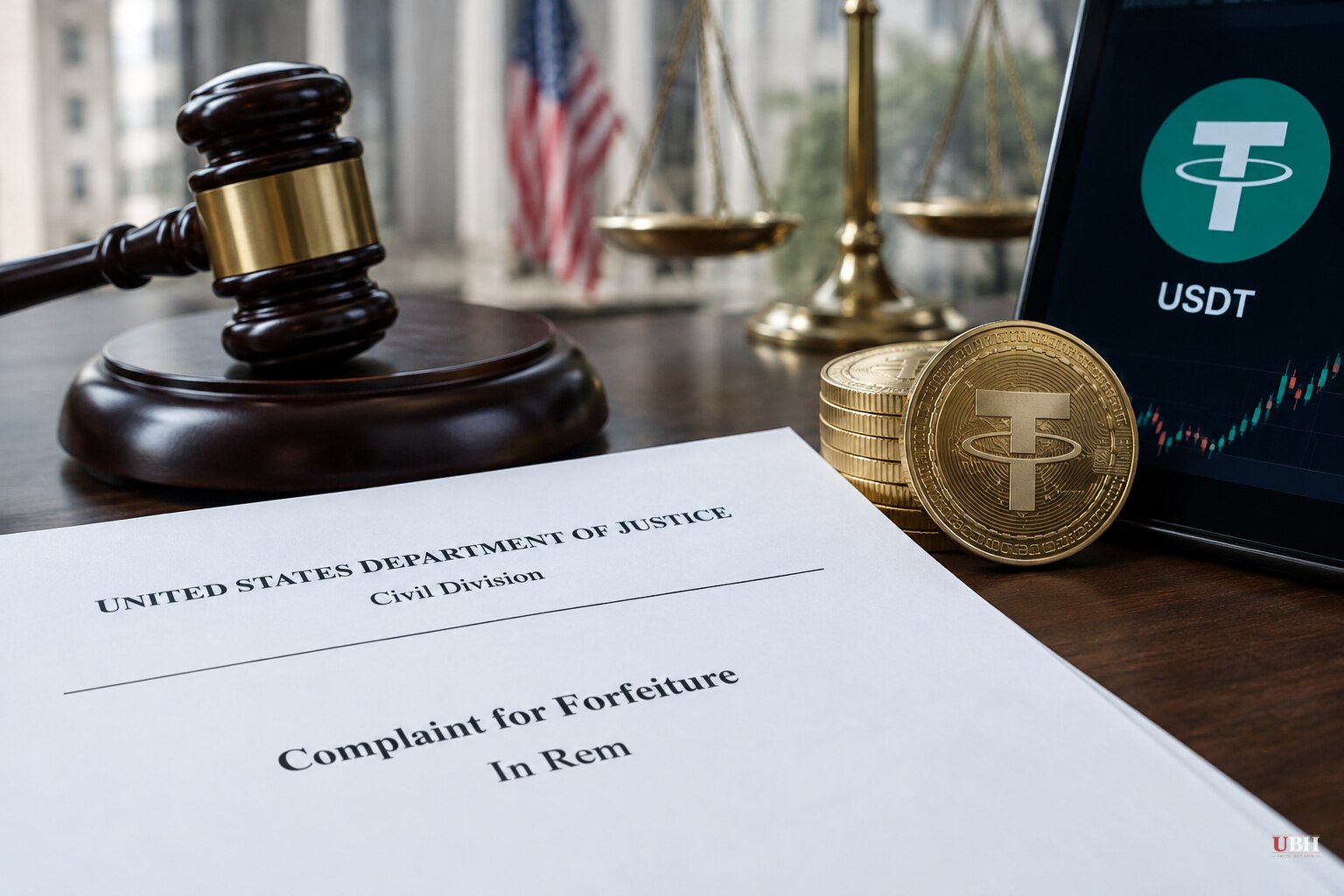
The U.S. Attorney's Office for the District of Massachusetts filed a civil forfeiture complaint in federal court in Boston on Nov. 9, 2026. It seeks 456,602 USDT, a dollar-linked stablecoin valued by the government at about $456,602 that day.
Prosecutors say the money traces to two cryptocurrency wallets and to three victims in Massachusetts, Ohio and California. The complaint's account is a set of allegations. No court has ruled on it.
How the alleged scheme worked
According to the complaint, the victims were approached on GujaratiMatrimony.com, Facebook and RedNote, the app also known as Xiaohongshu. The people on the other end used aliases including "Shreya Patel," "Eric" and "Lily."
They spent an extended period building trust. Then, prosecutors allege, they steered each victim toward a fraudulent investment platform that displayed fake profits.
The money victims deposited allegedly went to unhosted wallets, meaning wallets outside a cryptocurrency exchange. From there it was routed through a series of illicit wallets and converted into USDT.
The DOJ announcement says withdrawal attempts failed, even after victims paid supposed fees and taxes. That is a pattern the FBI has warned about in its crypto-investment-fraud guidance. Scammers may allow small early withdrawals to make a platform look real, then demand more money to release the balance.
The numbers
A victim from Norwood, Massachusetts, reported losses of approximately $1.89 million across 26 transactions.
The government is pursuing $456,602. Even a complete forfeiture would cover roughly a quarter of what that one person says they lost, before counting the other two victims.
This is not the department's first move of this kind this year. In March 2026, the DOJ pursued 327,829.72 USDT tied to a Massachusetts individual in a similar scheme.
What forfeiture does and does not do
Civil forfeiture targets the property, not a person. That lets prosecutors go after funds even when the people who ran the scam are overseas and unidentified. The complaint names no defendants, and no charges against any individual have been announced.
Seizure and repayment are also separate stages. Third-party claims have to be resolved before the property can be forfeited and returned. Anyone who believes they have a legitimate interest in the funds can come forward. Victims should not assume a check is coming.
A bigger fight than one complaint
Romance scams that end in crypto investment fraud are a large and growing problem. The FBI has targeted the overseas operations behind many of them. In its latest round of arrests, the agency took 28 suspects into custody at scam centers in Ghana and Nigeria, with help from tech firms including Meta.
FBI Director Kash Patel said the bureau's Operation Blackout has led to hundreds of arrests, the seizure of $17 billion and warnings to more than 10,000 Americans at risk of being swindled.
The human cost shows up in individual cases. Anola Johnson, a 69-year-old Utah divorcee, told The Epoch Times that a man who contacted her on LinkedIn in March 2023 persuaded her to put $50,000 into cryptocurrency. She said nine months into the relationship she learned he was a scammer who had used video calls she later realized were faked with artificial intelligence. She says she lost $850,000 in total.
The Federal Trade Commission's guidance is blunt: never send money or gifts to a romantic contact you have not met in person. For anyone already suspicious, it recommends stopping communication, talking to a trusted person and running a reverse image search on the contact's profile photo.
What comes next
The case now moves through the forfeiture process in the District of Massachusetts. The open questions are whether any third party files a claim against the two wallets and how much of the $456,602 ultimately reaches the three victims. The government has not said who ran the operation.
Sources used for this briefing
7 links from 7 independent newsrooms (syndicated copies of the same report count once)
These are the sources it draws on, linked so you can verify.


