
Unbiased headlines. Facts, not spin.
Unbiased Headlines is an independently owned news organization. We bring you the facts, not opinions, written fresh from 110+ named sources. Sources linked so you can verify it yourself.
 finance
Notable (6/10)
Event date: October 27, 2026 ·
Citi Wins China Approval for Wholly Owned Securities Unit After Five-Year Wait
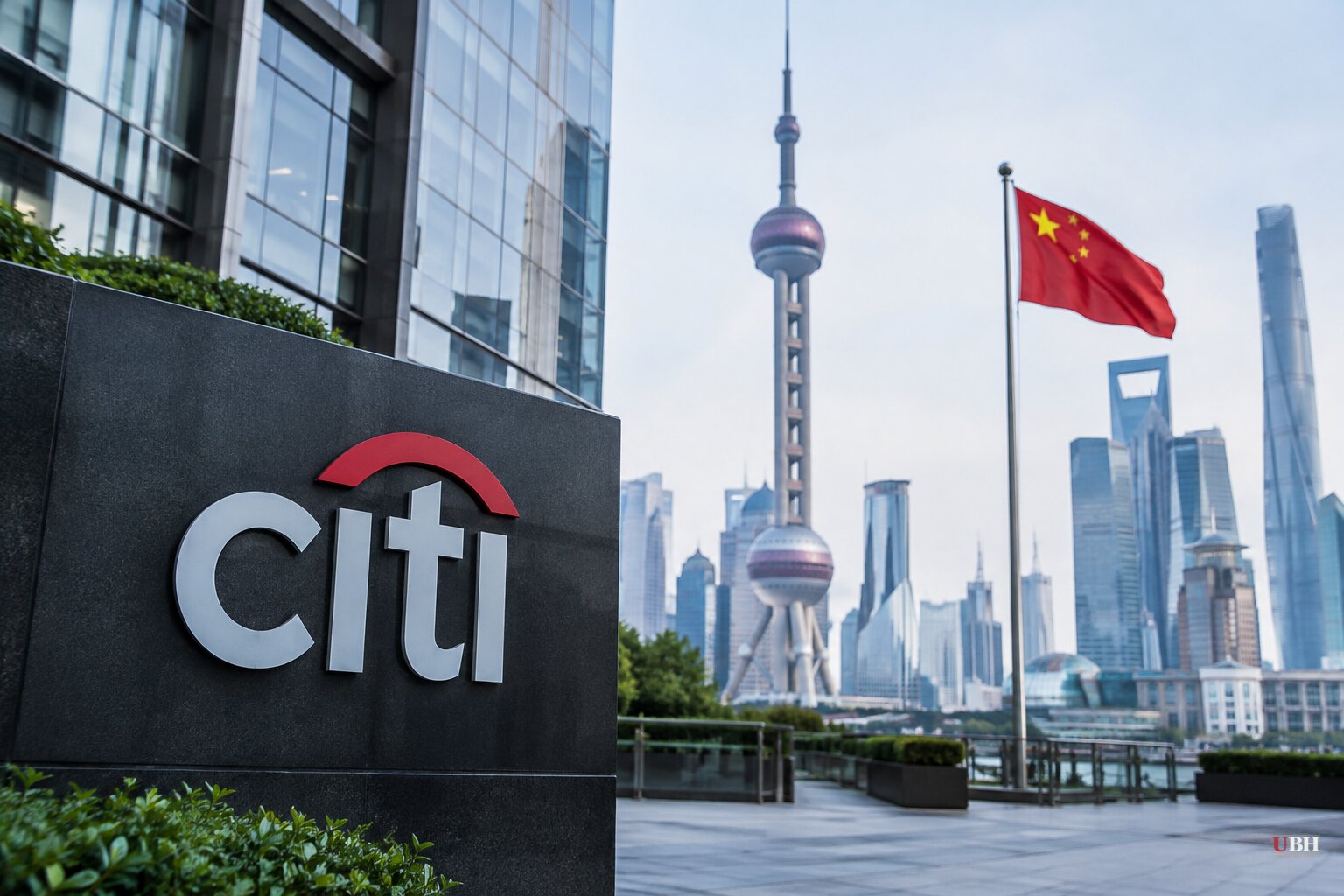
Citigroup is getting into China's onshore securities business. It is years behind its biggest Wall Street rivals.
The China Securities Regulatory Commission approved the plan on Friday, Oct. 23, for Citigroup Securities (China) Company Limited, known as CSCCL. The unit will be headquartered in Shanghai with registered capital of 1.2 billion yuan, about $180 million. It will be the seventh wholly foreign-owned securities company in China, according to China Daily.
What the license covers
CSCCL is cleared to offer equities brokerage, securities underwriting, research, investment advice and principal trading to domestic and foreign clients. Citi must still complete the remaining statutory and regulatory procedures before it can begin operating. The bank has not said when that will happen.
Citi has operated commercial banking in China since 1902 and says it serves 70 percent of the Fortune 500 companies operating there. What it lacked was a domestic underwriting license. That limited how much of a Chinese client's cross-border financing it could handle from start to finish.
"By adding onshore capabilities to our global platform, we will be able to do more for clients in China's domestic capital markets, including helping them raise capital, access investors and trade locally," Fraser said in the bank's statement.
A five-year wait
Citi applied in late 2021. It had left the field in 2019, when Citigroup Global Markets Asia sold its 33.3 percent stake in the Citi Orient Securities joint venture to partner Orient Securities.
The delay was not just paperwork. Citi had to work through shifting Chinese data-security rules and scrutiny from U.S. regulators, according to Bloomberg's account of Fraser's interview in Shanghai.
The competition got there first. The CSRC lifted the foreign ownership cap on securities firms on April 1, 2020. JPMorgan won approval that August and Goldman Sachs followed about two months later. Morgan Stanley is also licensed.
Those units have made money. Goldman's wholly owned China securities unit nearly tripled its 2025 profit to 1.46 billion yuan, about $217 million. JPMorgan's almost quadrupled to 984 million yuan, according to their China annual reports.
Fraser's pitch
Speaking to Bloomberg Television in Shanghai, Fraser said the license gives Citi an advantage because of its global network. "All I would say to the competition is watch out, because we have this unique offering already from that global network, the history we've got, and now with this," she said.
Kaleem Rizvi, Citi's global co-head of corporate banking, said the firm expects to hire about 100 bankers over the next several years. Reuters reported earlier that Citi aimed to have roughly 100 employees in the unit by the end of 2026. Citi has not reconciled the two timelines publicly.
Fraser also said Citi posted a record third quarter. She called last week's AI-stock selloff "a tad overdone" and said the need for computing power "is not going away."
Beijing's welcome and the trade backdrop
Beijing is openly courting this kind of investment. CSRC Chairman Wu Qing said at the Financial Street Forum in Beijing on Oct. 19 that China would steadily expand high-standard opening-up of its markets. He encouraged foreign institutions to bring their parent companies' expertise and to diversify their offerings.
Dong Ximiao, chief economist at Merchants Union Consumer Finance, said the approval reflects China's continued push to broaden and deepen financial-sector opening.
The approval comes while U.S.-China friction continues. President Donald Trump and Chinese President Xi Jinping agreed a 12-month trade truce in October 2025. China's trade surplus with the U.S. still hit $34.01 billion in September 2026, the highest in 20 months, according to Family Wealth Report.
Beijing has also tightened controls on Chinese residents' use of offshore accounts. That gives international firms a reason to build onshore operations.
Conference this week
Citi is scheduled to hold its 21st annual China Conference in Shanghai and Shenzhen from Nov. 10 to 13. It expects about 1,500 institutional investors, policymakers and corporate leaders. Fraser is among the headliners. Citi says onshore market access and market-entry strategy are on the agenda.
Marc Luet, Citi's head of Japan, Asia North and Australia, called China "one of Citi's most important markets."
It is unclear how quickly CSCCL can launch and win business against firms that have had five years to build onshore franchises.
Sources used for this briefing
6 links from 6 independent newsrooms (syndicated copies of the same report count once)
These are the sources it draws on, linked so you can verify.


