
Original briefings. Zero spin.
Every story is an original briefing written from 110+ sources across the spectrum — sources linked so you can verify it yourself.
 finance
Notable (6/10)
Event date: September 3, 2026
finance
Notable (6/10)
Event date: September 3, 2026
DOJ Opens New Anti-Fraud Division as an 8-Year-Old Fugitive Case and a $500 Million Trade Finance Scandal Show the Scope of the Problem
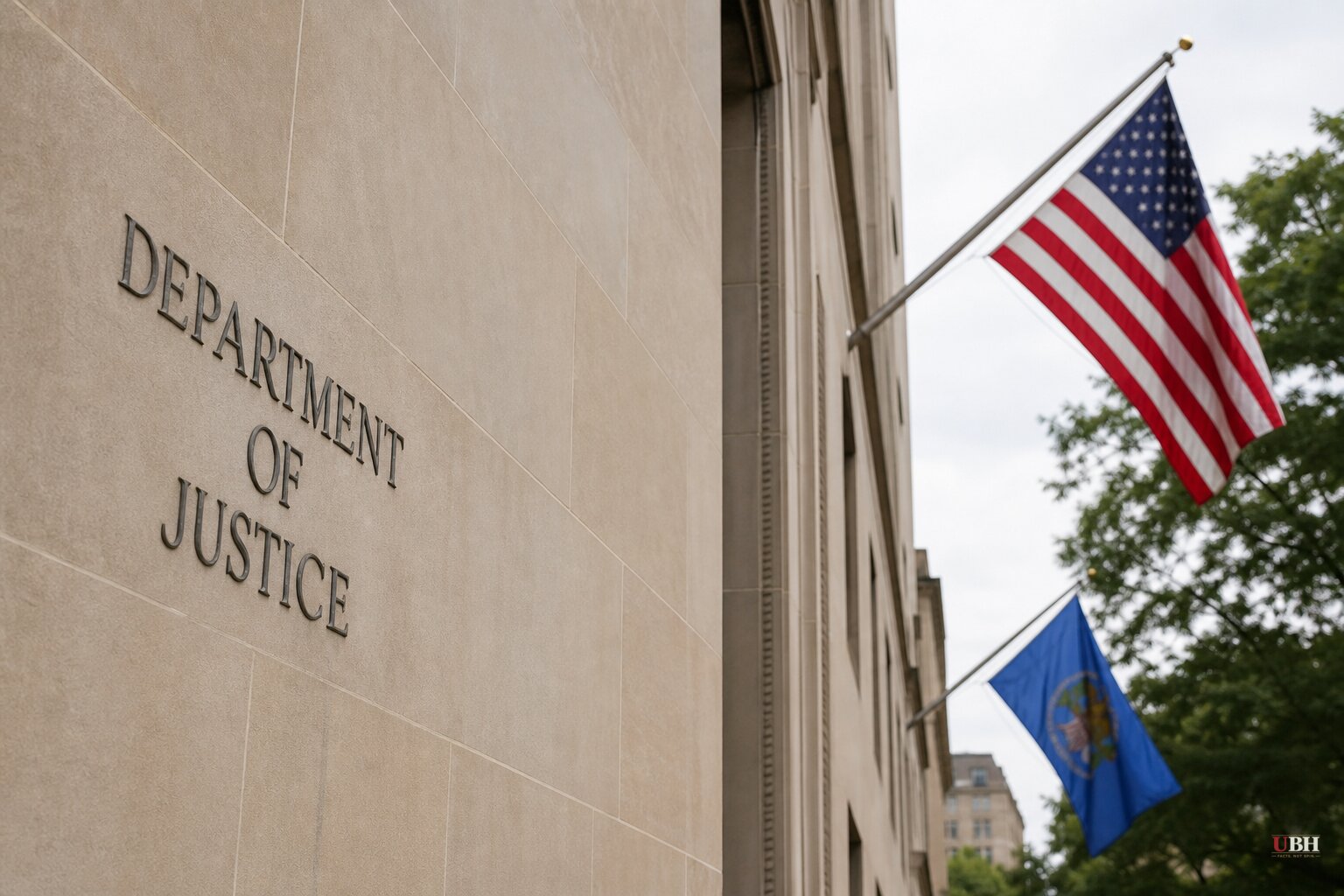
A new division, an old fugitive, and a fresh half-billion-dollar mess
The Department of Justice officially stood up its new anti-fraud division on September 1, according to the DOJ's own announcement reported by The Epoch Times. The unit is led by career federal prosecutor Colin McDonald, who was confirmed by the Senate on a party-line 52-47 vote in March and sworn in that April.
The DOJ says the division exists to prosecute fraud against federal government payments, "no matter its size or complexity." The department cited Government Accountability Office estimates that fraud involving federal funds costs taxpayers between $233 billion and $521 billion a year, or 3 to 7 percent of federal spending, per The Epoch Times.
McKinsey, in a December 2024 white paper cited by the DOJ, argued that recovering the full upper estimate could cut roughly a quarter of the federal deficit and cover the Social Security shortfall along with the Departments of Homeland Security and Commerce. McKinsey also noted that fraud enforcement itself costs money to run, and pointed to IRS fraud-prevention work from 2013 to 2014 that saved about $2.7 billion a year as a real-world benchmark, far short of the headline number.
Senate Judiciary Committee Ranking Member Dick Durbin opposed McDonald's nomination in February, arguing the administration should look at its own conduct first. "The worst examples of waste, fraud, and abuse in recent years are coming from inside the Trump administration," Durbin said, according to The Epoch Times. That's Durbin's political charge, not a finding established by any of the reporting here, and the DOJ's new division is aimed at federal payment fraud generally, not at any specific administration official.
The fugitive: eight years and counting
While the DOJ pitches a fresh start, one federal fraud case from the last decade is still unresolved. Mary Carole McDonnell, former CEO of TV production company Bellum Entertainment, was indicted in 2018 on five counts of bank fraud and two counts of aggravated identity theft, according to Fox News Digital.
Prosecutors allege McDonnell posed as an heir to the McDonnell Aircraft family, invented an $80 million secret trust, and used fabricated trust-company documents to secure a $15 million loan from Banc of California, receiving roughly $14.7 million of it. The FBI says she used similar tactics to defraud other lenders out of more than $15 million total between July 2017 and May 2018.
A federal arrest warrant was issued December 12, 2018. The FBI's active wanted notice says it believes she is in Dubai. Antonio Sabato Jr., who hosted Bellum's home makeover series "Fix It & Finish It" and says he had no role in the company's finances, told Fox News Digital he only learned of the case when a reporter called him this week: "I didn't know anything at all until you guys called." McDonnell has not been convicted of anything. She remains a fugitive, and the case predates McDonald's new division by nearly a decade, underscoring that a federal indictment alone doesn't guarantee a fast resolution.
The half-billion-dollar trade finance fight
Separately, and in a different court system entirely, a Jefferies-linked fund has moved to freeze up to $499 million tied to Singapore-based iron ore trader Radiant World, according to the Financial Times as reported by The Straits Times. LAM Trade Finance Group II, run by Jefferies unit Leucadia Asset Management, secured the freezing order from London's High Court against Radiant World, founder Pinkesh Nahar, affiliated firm Sapphire Minmetals, and Sapphire chairman Rakesh Sethi, Reuters reported.
That exposure is larger than the roughly $300 million previously disclosed for Jefferies' Point Bonita fund, according to Traders Union, which reported the fund's Radiant exposure grew from $35 million in 2021 to hundreds of millions of dollars by this year. Point Bonita had already been under pressure from investor redemptions tied to the collapse of auto-parts maker First Brands Group, to which Jefferies disclosed $715 million of exposure last October and now faces two lawsuits over, per Traders Union.
Separately in Singapore, invoice-financing platform Incomlend Pte. filed suit alleging Radiant World used Glencore invoices that had already been paid, backed by fake contracts, to raise $31.7 million, according to Mining.com. Glencore told Incomlend the underlying contracts weren't genuine and that a cargo had shipped on a different vessel than the one Radiant named, the filing says. Incomlend is seeking more than $34 million including lost profit.
Glencore itself booked a roughly $480 million provision against its Radiant exposure, Startup Fortune reported, citing Bloomberg and the Financial Times, while Vitol and Cargill have stopped trading with the firm entirely.
Radiant World has strongly denied wrongdoing, telling Reuters the fraud claims are "inaccurate and unsubstantiated" and that its business continues to operate normally. Sethi has separately denied that Sapphire and Radiant should be treated as one business, and a Hong Kong record shows Radiant held a majority stake in Sapphire only until 2015. None of these allegations have been tested at trial.
Different fraud, different rulebook
The DOJ's new division prosecutes fraud against federal government payments. McDonnell's alleged scheme targeted private banks. Radiant World's case is a commercial trade-finance dispute playing out in London and Singapore courts, not U.S. federal court. None of these three stories are legally connected. What connects them is scale and speed, or the lack of it: a federal fugitive case that's nearly eight years old and unresolved, and a private lending fund that let its exposure to one trader balloon from $35 million to nearly half a billion dollars over four years before anyone froze the money.
McDonald's division has no public prosecutions to point to yet since its formal launch. Whether it can move faster than the McDonnell case did is the open question the DOJ has set for itself.
Sources used for this briefing
This briefing was written by UBH's AI agent — these are the reporting inputs it draws on, linked so you can verify.


