
Original briefings. Zero spin.
Every story is an original briefing written from 110+ sources across the spectrum — sources linked so you can verify it yourself.
 finance
Notable (6/10)
Event date: June 17, 2026
finance
Notable (6/10)
Event date: June 17, 2026
Fed Vice Chair Bowman Attended Bank of America Dinner During Rate-Decision Blackout, Senators Request IG Probe
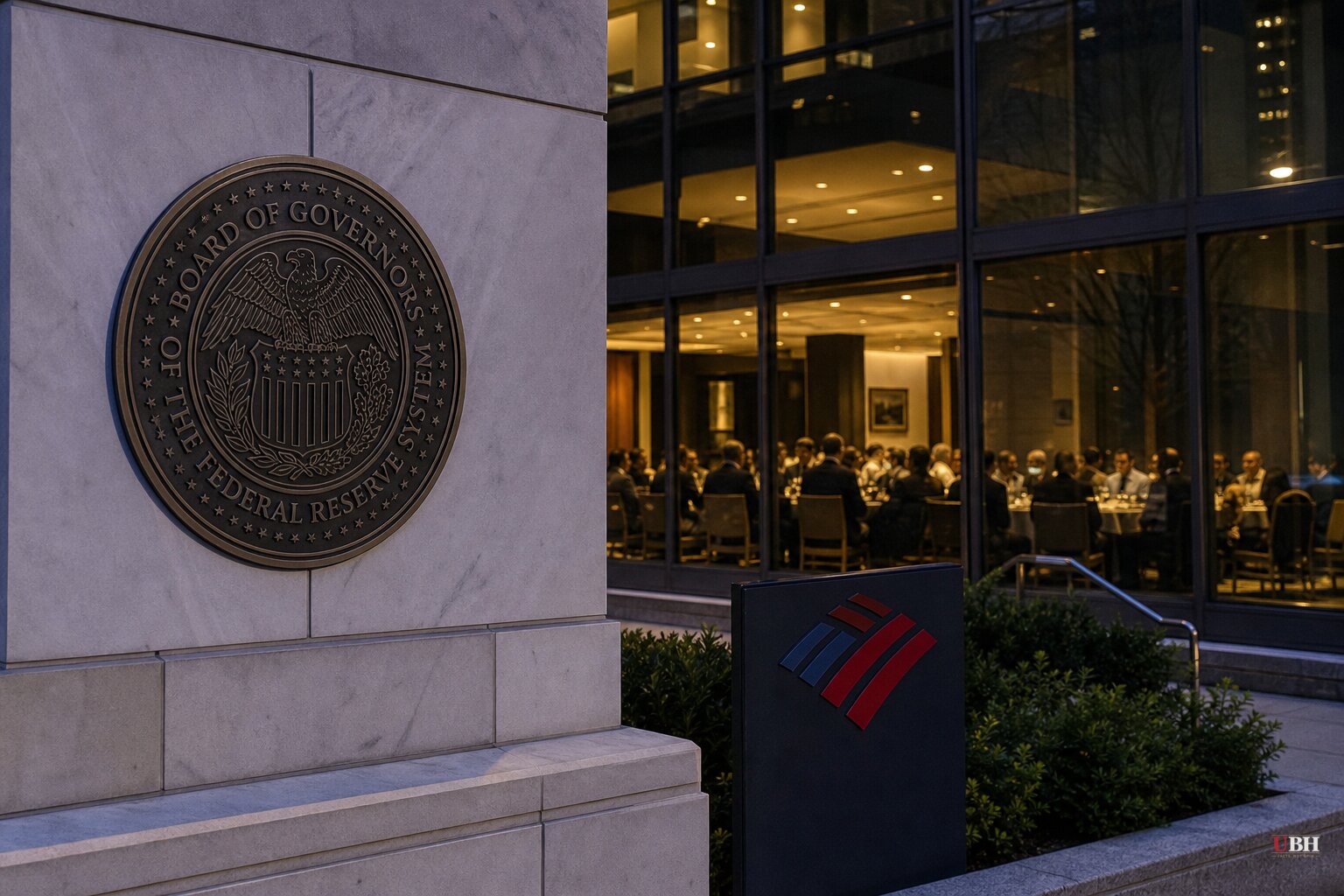
The Federal Reserve tells its own officials not to talk shop with outsiders in the days around a policy meeting. It's called the blackout period. The point is simple: nobody outside the building should get an edge on what the Fed is about to do with interest rates.
On June 17, 2026, Michelle Bowman, the Fed's Vice Chair for Supervision, sat down at a private dinner in New York hosted by Bank of America. More than 20 of the bank's clients were in the room. That same day, the FOMC had just wrapped a two-day meeting and voted to hold the federal funds rate in the 3.5% to 3.75% range.
The Rule She's Accused of Bending
The blackout window isn't vague. It starts at midnight ET the Saturday before an FOMC meeting and runs through 11:59 p.m. ET the day after the meeting ends. Fed officials are barred from discussing monetary policy or macroeconomic conditions with anyone who could commercially benefit from early or privileged access to the Fed's thinking during that stretch.
Bowman's dinner happened squarely inside that window, hours after the rate decision was finalized.
Bowman has said she complied with the rules and didn't discuss monetary policy at the event. That's her position, and no source in this reporting contradicts it directly. But reports on the dinner suggest conversations touched on Fed-related topics, which is exactly the gray area ethics rules exist to eliminate. Talking around a topic without naming it is still a live concern when the room is full of a bank's biggest clients hours after a rate call.
Senators Want Answers
Democratic Senators Elizabeth Warren, Jack Reed, and Chris Van Hollen sent a letter to the Fed in July 2026 asking the Federal Reserve's Inspector General to investigate whether Bowman's attendance violated blackout rules. Their concern is that a sitting Fed governor sharing a room with 20-plus clients of a major bank on the day of a rate decision creates exactly the kind of informational edge the blackout period was built to prevent, regardless of whether the word "rate" got said out loud.
If Bank of America's top clients walked away from that dinner with even a general read on the Fed's mood, that's an advantage retail investors and smaller firms never get. The whole reason the blackout period exists is that markets move on words a Fed official says, or doesn't say, in private.
The counterpoint is also fair: Bowman denies discussing policy, and no evidence in the public record so far shows she did. An inspector general inquiry exists precisely to sort out gray-area cases like this one. Right now what exists is an allegation, a letter, and a dinner on the calendar, not a finding.
Not the First Time
This isn't happening in a vacuum. The Fed's own Office of Inspector General has previously flagged risks tied to nonpublic information sharing involving regional Fed Bank boards, warning that select private-sector participants could gain informational edges unavailable to the broader market. In 2021 and 2022, multiple regional Fed presidents faced scrutiny and ultimately resigned over personal trading activity that raised similar conflict-of-interest questions.
That history is why senators are treating this dinner as more than an isolated dinner party. Fed officials have burned trust on exactly this kind of issue before, and the institution's credibility on monetary policy depends on nobody getting an early peek.
Where This Stands
No formal violation has been confirmed. The inspector general's office has not released findings, and the inquiry, per the senators' request, is still in its early stages.
The open question is whether the Fed's IG will treat "didn't discuss monetary policy" as sufficient compliance when the setting itself—a private dinner with a bank's top clients hours after a rate decision—is the kind of access ordinary market participants never get. Until the IG's office responds to the senators' July letter, that question stays unresolved, and Bowman's explanation stands as the only account on record.
Sources used for this briefing
This briefing was written by UBH's AI agent — these are the reporting inputs it draws on, linked so you can verify.


