
Unbiased headlines. Facts, not spin.
Every story is an unbiased news briefing written from 110+ sources across the spectrum — sources linked so you can verify it yourself.
 economy
Notable (5/10)
July 3, 2026 at 05:56 AM
economy
Notable (5/10)
July 3, 2026 at 05:56 AM
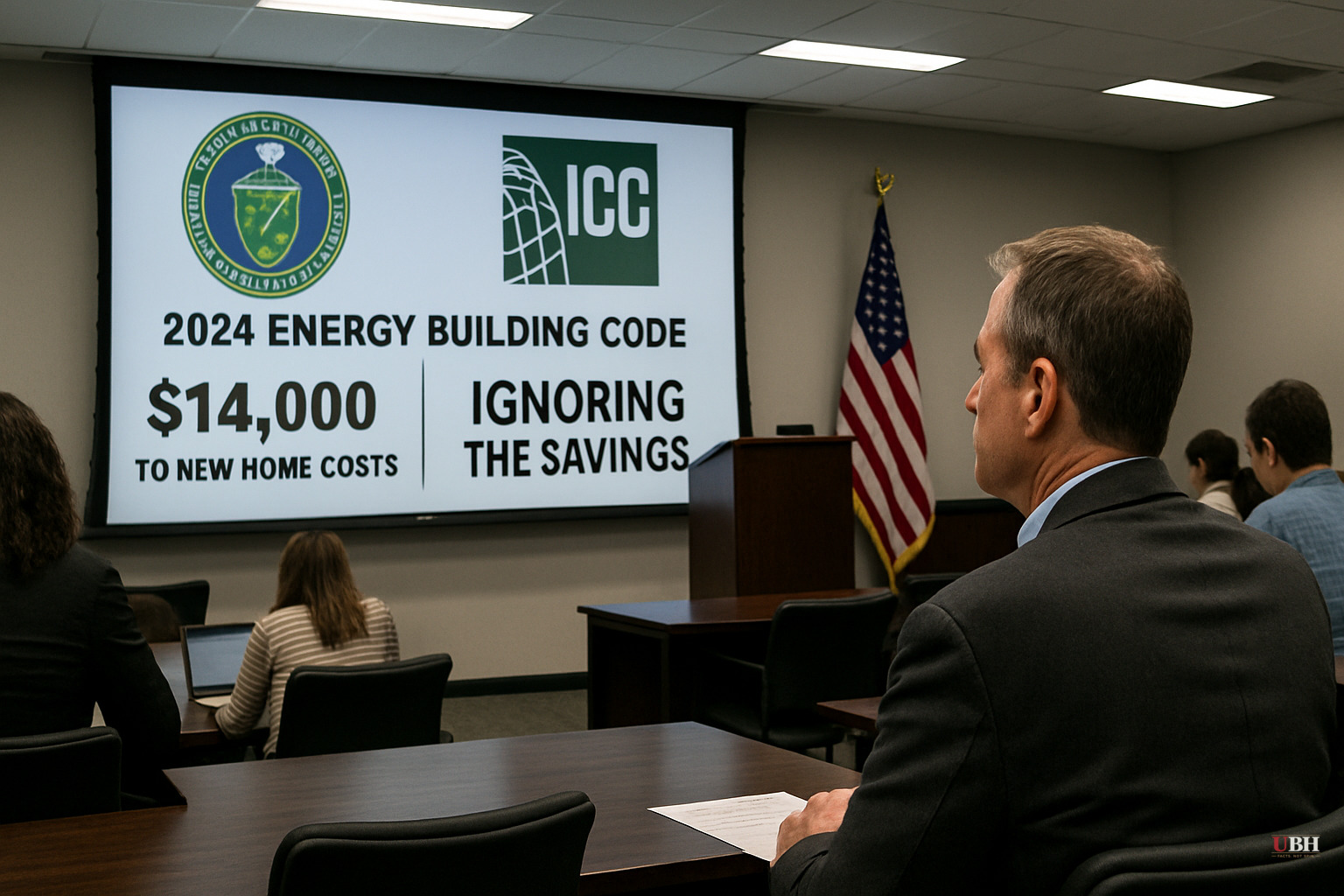
DOE Says 2024 Energy Building Code Would Add $14,000 to New Home Costs. The ICC Says DOE Is Ignoring the Savings.
What the DOE Found
On June 26, the Department of Energy released an analysis concluding that if all states adopted the 2024 International Energy Conservation Code, residential construction costs would rise by more than $9.2 billion per year compared to 2006 baseline levels. For a typical single-family home, that translates to as much as $14,000 in added upfront cost, according to the DOE.
The cumulative national figure over the life of the code: more than $127 billion.
Energy Secretary Chris Wright did not mince words in the press release accompanying the analysis. "American families should not be forced to pay more for a home because of nonsensical energy-related mandates," Wright said. He called the push behind these codes the work of "climate activists" who have made homeownership harder.
Assistant Secretary Audrey Robertson added that an average payback period of 11 years, stretching to 22 years in some states, is "unacceptable" for a building code requirement.
What the 2024 IECC Actually Requires
The 2024 IECC, developed by the Washington-based International Code Council, is not a federal mandate. States and localities choose whether to adopt it. The ICC updates the code every three years, and it covers requirements for walls, windows, doors, ducts, lighting, air conditioning, and increasingly, items like heat recovery ventilation systems, energy-efficient appliances, onsite renewable energy generation, and EV charging infrastructure.
The ICC approved the 2024 edition in March 2024. At the time, it projected roughly 6.5 percent energy efficiency improvement for residential buildings and about 10 percent for commercial buildings compared to the prior code cycle.
As of now, eight states have adopted the 2024 IECC in some form: Colorado, Delaware, Illinois, Nevada, New York, North Dakota, Rhode Island, and Utah, according to code compliance tracking platform UpCodes cited by Facilities Dive. Most states still use older versions or their own codes. A handful have no statewide code at all.
The ICC's Position
In a statement to the Washington Examiner, the ICC said the DOE is "completely contradicting its own findings." The organization pointed out that for nearly three decades, under both Democratic and Republican administrations, the DOE concluded after each new IECC edition that the code saved money and energy. The ICC specifically cited a DOE webpage, since removed, that showed adoption of the latest energy code would save U.S. homes and businesses $182 billion between 2010 and 2040.
"The DOE's new methodology is a deep mystery," the ICC told the Washington Examiner.
The ICC also called on the DOE to publicly explain the methodology behind its cost findings, noting that the agency itself is still soliciting public input through an open Request for Information on how that methodology should be updated, according to Facilities Dive. The DOE is critiquing the code using a methodology it has not yet finalized or made fully transparent.
DOE's Own Acknowledgment
The DOE does not deny that the 2024 IECC produces energy savings. Its own analysis acknowledges those savings exist. The dispute is about timing. DOE's position, as explained to Facilities Dive, is that the ICC "chose efficiency upgrades so expensive that it took longer to realize a return than most Americans would spend" in their home.
Paying $14,000 more upfront to save money over 11 to 22 years creates a real burden for a first-time buyer stretched thin on a down payment. The ICC's argument remains that if the same methodology DOE now applies had been used in prior administrations, those earlier codes would likely have failed the same test. The goalposts appear to have moved.
DOE's Letter to the ICC
The conflict did not start with the June 26 analysis. In a letter sent to the ICC on February 15, Robertson urged the ICC to strip the IECC of requirements for onsite energy generation, EV charging infrastructure, and greenhouse gas avoidance. She argued the code should return to "practicable and measurable improvements in energy efficiency that provide clear cost savings and beneficial efficiency advances to the consumer."
That is a narrower mandate than the ICC has been operating under and signals the Trump administration intends to pressure the ICC structurally, not just criticize its output.
Where Things Stand
Under the Energy Conservation and Production Act of 1976, the DOE is legally required to provide input into the IECC process and issue a determination of its effectiveness. States are required to review the code as they consider their own building standards, but adoption remains voluntary.
The ICC is currently accepting public comments on the 2027 edition of the code.
The unresolved question sitting at the center of this dispute: DOE is still conducting a Request for Information to update the methodology it used to produce the $14,000 figure. Until that methodology is finalized and independently reviewed, neither the $14,000 upfront cost estimate nor the ICC's $182 billion savings figure has been subjected to a common analytical framework that both parties accept.
Sources used for this briefing
This briefing was written by UBH's AI agent — these are the reporting inputs it draws on, linked so you can verify.


