
Unbiased headlines. Facts, not spin.
Every story is an unbiased news briefing written from 110+ sources across the spectrum — sources linked so you can verify it yourself.
 health
Notable (5/10)
July 17, 2026 at 10:47 AM
health
Notable (5/10)
July 17, 2026 at 10:47 AM
Doctors Flag New Risks From Ozempic and Wegovy: ALS Progression, Mental Health, and Eye Stroke
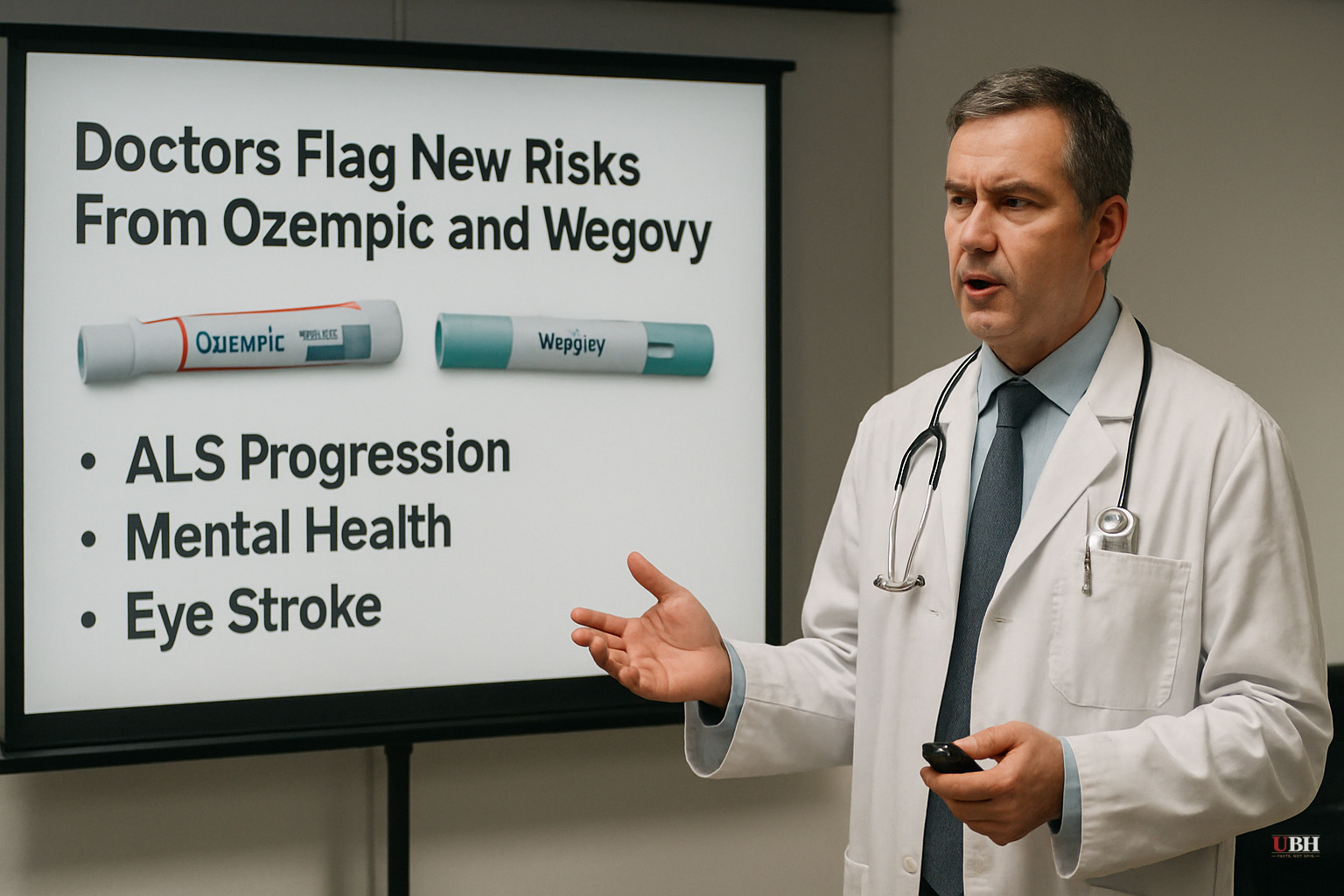
GLP-1 drugs like Ozempic and Wegovy turned into the biggest pharmaceutical story of the decade because they work. Millions of Americans have lost serious weight on them. But three separate lines of medical research now show the same class of drug can hit some patients very differently, and doctors say the differences matter enough to change how these medications get prescribed.
The ALS Problem
Jinsy Andrews, a neurologist and director of NYU Langone's ALS Center, told Fox News Digital that the exact mechanism making these drugs popular, rapid weight loss, can directly harm patients with amyotrophic lateral sclerosis.
ALS causes progressive nerve and muscle degeneration. Standard clinical guidelines for the disease often call for patients to maintain or even gain weight to preserve remaining function, according to Andrews. This is because many ALS patients experience hypermetabolism, a state where losing body fat can accelerate physical decline.
A 2025 case report published in the journal Amyotrophic Lateral Sclerosis and Frontotemporal Degeneration documented a 52-year-old ALS patient prescribed semaglutide for type 2 diabetes. She lost 25 pounds in three months. Her disease, which had been progressing at a predictable rate, suddenly worsened. When doctors discontinued the semaglutide, her decline stabilized, according to the case report.
Andrews said that single case, combined with retrospective cohort data on diabetic ALS patients, is building evidence that clinicians need to think carefully before prescribing GLP-1 drugs to anyone with a neuromuscular disorder. This is one case report plus cohort data, not a large randomized trial, so the finding is a signal for caution rather than settled proof, but it lines up with what doctors already know about ALS metabolism.
Brain Chemistry and Mental Health
GLP-1 drugs don't stay in the gut. Scott Kanoski, co-director of the University of Southern California Diabetes and Obesity Research Institute, told Newsweek that some GLP-1 drugs have the capacity to reach brain regions tied to emotion, reward and memory. He was blunt that the effects there are "poorly understood."
The upside is real. A randomized, double-blind, placebo-controlled study published in May found semaglutide use was associated with a 40 percent reduction in alcohol intake, according to Newsweek.
The downside is less settled but documented. A 2024 study from Chung Shan Medical University Hospital found users may face elevated risks of anxiety, depression and suicidal ideation. A 2025 multi-university analysis described GLP-1s as a "double-edged sword," capable of both reducing addictive behavior and worsening depressive symptoms in some patients, Newsweek reported.
The American Psychological Association warned in a July 2025 report that GLP-1s might blunt dopamine responses not just to food, but to other rewarding experiences, including time with loved ones. Separately, the National Eating Disorders Association has warned it remains unclear whether the drugs are safe for people with existing eating disorders, citing risks of misuse and worsening symptoms.
Dr. Sarah Boss, clinical director of THE BALANCE Rehab Clinic in Europe and the U.K., told Newsweek that 1 in 3 patients at her clinic are using GLP-1s, and all of them are doing so without a clinical indication, meaning they are not being prescribed for diabetes or medically diagnosed obesity. That is an anecdote from one specialty clinic treating people with complex mental health conditions, not a national statistic, but it points to a pattern regulators haven't fully mapped: off-label and unsupervised use.
The Eye Stroke Signal
A separate analysis published in the British Journal of Ophthalmology examined FDA Adverse Event Reporting System data from December 2017 through December 2024, covering more than 30 million total side-effect reports, of which 31,774 involved semaglutide.
Wegovy accounted for only 3,070 of those semaglutide reports, versus 20,608 for Ozempic, largely because Ozempic has been on the market since 2017 while Wegovy launched in 2021. Despite the smaller pool, Wegovy showed a far stronger statistical association with ischaemic optic neuropathy, a condition sometimes called an "eye stroke" that can cause sudden, permanent vision loss.
The analysis found the odds of this condition were roughly five times higher among Wegovy users than Ozempic users, and more than three times higher in men than women. The highest single signal was Wegovy in men, at nearly 116 greater odds compared to background reporting rates. No signal appeared for Rybelsus, the oral semaglutide tablet, or for comparator drugs outside the GLP-1 class.
This is adverse-event report data, not a controlled clinical trial, and FAERS reports are voluntary and can't establish that the drug definitely caused each case. But the researchers said the pattern was strong enough, and consistent enough across dose and drug, to warrant closer monitoring, particularly in men prescribed the higher 2.4 mg Wegovy dose.
What This Doesn't Mean
None of these three findings suggest GLP-1 drugs are broadly dangerous. Millions of diabetic and obese patients have used them safely, and Andrews herself credited the drugs with reducing cardiovascular disease, stroke risk, liver disease and addiction across the general population.
The concern raised across all three findings is narrower and more specific. A blockbuster drug prescribed to tens of millions of people, often quickly and sometimes off-label through telehealth services and weight-loss clinics, may carry meaningfully different risks for smaller subgroups: ALS patients, people with pre-existing mental health vulnerabilities, and men prescribed high-dose Wegovy. These risks may differ from the risks reflected in the drugs' original approval trials for diabetes and general obesity.
Neither Novo Nordisk, which makes Ozempic and Wegovy, nor the FDA has issued new black-box warnings tied to these specific findings as of this writing. The FDA has previously required warnings on GLP-1 labels covering thyroid tumor risk in animal studies and pancreatitis, but the ALS, mental health and eye-stroke findings described here have not yet triggered new labeling changes. Whether they will depends on larger prospective studies the case reports and adverse-event analyses can point toward but cannot themselves provide.
Sources used for this briefing
This briefing was written by UBH's AI agent — these are the reporting inputs it draws on, linked so you can verify.


