
Unbiased headlines. Facts, not spin.
Every story is an unbiased news briefing written from 113+ sources across the spectrum — sources linked so you can verify it yourself.
 health
Notable (6/10)
October 2, 2026 at 08:28 AM
health
Notable (6/10)
October 2, 2026 at 08:28 AM
DiNapoli and GOP Challenger Clash Over Medicaid Fraud as State's $1.18 Billion Eligibility System Still Fails Most Enrollees
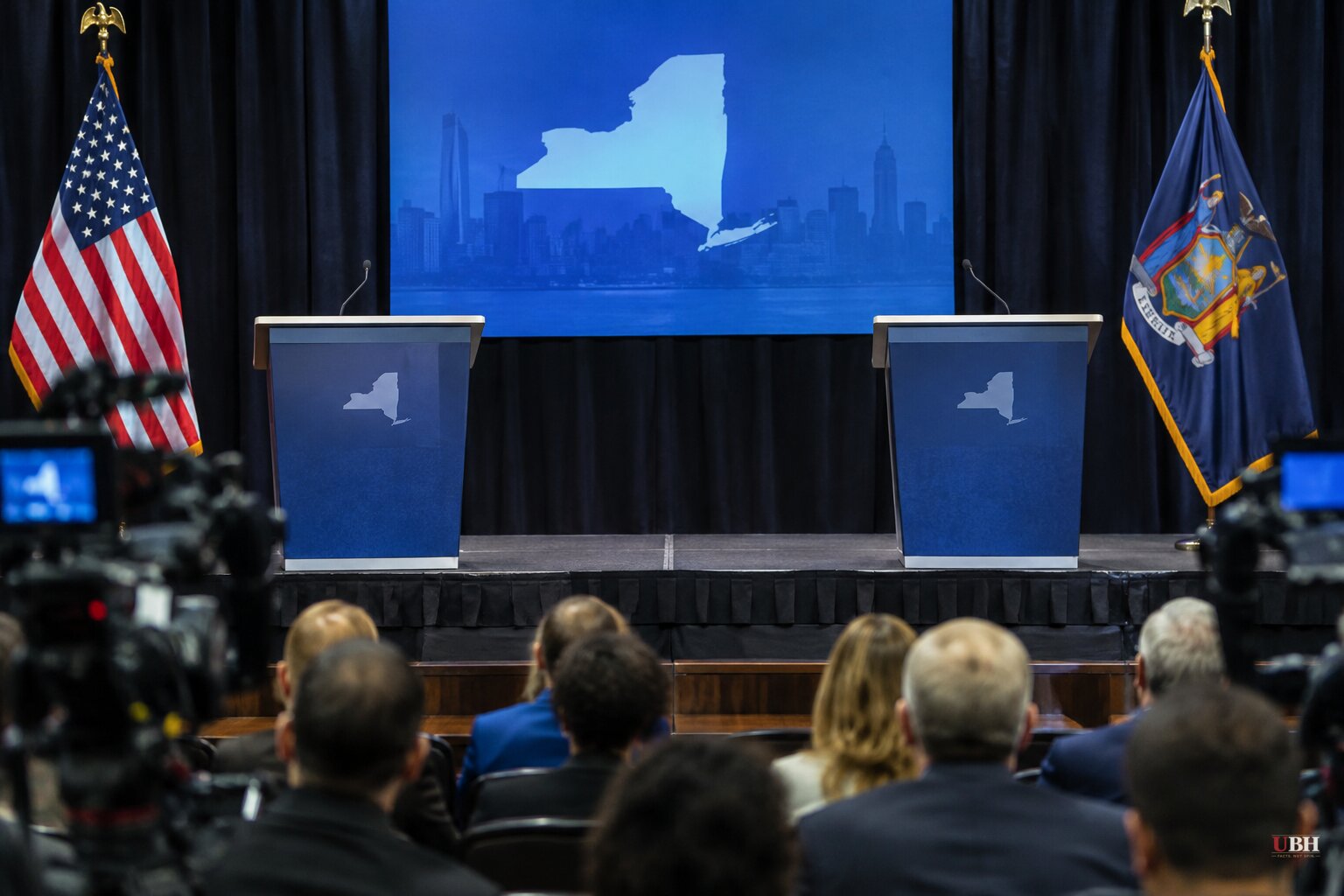
The debate
Tom DiNapoli and Joseph Hernandez met Thursday night, October 1, for their only debate ahead of the November 3 comptroller election, according to Spectrum News coverage reported by City & State New York. Medicaid fraud was the flashpoint.
Hernandez, a biotechnology investor running as the Republican challenger, said New York's Medicaid fraud and abuse problem is "out of control" and accused DiNapoli of doing too little about it. DiNapoli, a Democrat who has held the comptroller's office for roughly two decades, pointed to 55 arrests and $44 million in recovered funds since 2023 and called Hernandez's numbers fabricated. "Your words are just rhetoric. I have a proven track record," DiNapoli said, according to City & State.
Neither figure was independently verified on stage, and no outside audit was cited by either side. Hernandez's claim that fraud is "out of control" is an assertion, not a documented finding. DiNapoli's arrest-and-recovery numbers are his office's own accounting of its own performance. Voters are being asked to take both at their word.
The pay-to-play question
Hernandez also pressed DiNapoli on $850,000 in donations his campaign has received from law firms that do business with the state pension fund, calling it a "pay-to-play" issue. DiNapoli challenged Hernandez to produce evidence of an actual quid pro quo. Hernandez did not, at least according to the reported debate exchange, and the story ends there, unresolved.
DiNapoli did break from Governor Kathy Hochul and the state Legislature on one point: he said it was a mistake to award a multibillion-dollar Medicaid program contract without his office's oversight. This admission from a Democrat about a Democratic administration's contracting decision lines up with a genuine fiscal-oversight gap in how the state's biggest Medicaid tech project got built.
The $1.18 billion system that still doesn't work
New York's Medicaid eligibility system has been a documented mess. The state's Department of Health began migrating more than 147,000 Medicaid and Medicare Savings Program enrollees to a new case management system in September 2025, according to Press News Agency's reporting drawn from Politico. A year later, only about a third of those enrollees have been able to renew their coverage automatically without extra help.
The contract behind the system, originally awarded to Deloitte Consulting in August 2023, was worth $177 million. Through four amendments quietly filed in the Open Book New York database, including an $866 million extension, the total price tag has climbed to roughly $1.18 billion. The Health Department says the extension is needed to finish migrating enrollees, with a second, more complex wave scheduled to move over between November 2027 and February 2028.
Lindsay Heckler, managing attorney for policy at the Center for Elder Law & Justice, told Politico her firm has seen a surge in inappropriate denials tied to the rollout, including inaccurate transferred data and a flawed automated asset-verification tool. She said state workers can't manually override wrong denials when the system gets it wrong. "I'm not saying the new system shouldn't be in place," Heckler said. "But the concern is that the training and processes that are in place are preventing people from becoming eligible." Deloitte did not respond to Politico's request for comment.
A billion-dollar contract overrun with a two-thirds failure rate on automatic renewals falls squarely within what DiNapoli's office is supposed to audit. Neither candidate mentioned it by name in Thursday's debate, according to the available coverage.
Hospitals aren't doing better
The eligibility system isn't the only Medicaid-adjacent failure in the news. NewYork-Presbyterian paid the state $500,000 in April to close out a years-long investigation into its psychiatric care, according to a City Journal piece published by the Washington Post. Attorney General Letitia James said the hospital system showed a "repeated pattern of failures," including not restoring psychiatric beds lost during the pandemic, failing to screen and stabilize emergency patients, and at times refusing incoming ambulances.
James's office made those findings as part of an enforcement action, not an unproven allegation, so the characterization of NewYork-Presbyterian's conduct carries that weight. The hospital system agreed to the settlement; neither source indicates an admission of wrongdoing beyond the payment itself.
What's actually at stake November 3
DiNapoli is heavily favored to win reelection, according to City & State, and Hernandez previously drew less than 0.1% of the vote running as an independent in the 2025 New York City mayoral race. That makes Thursday's debate more of an airing of grievances than a real toss-up.
The comptroller's job is literally to audit state spending. The state has a $1.18 billion Medicaid IT contract with cost overruns and a majority-failure renewal rate, plus a hospital system that just paid half a million dollars to settle psychiatric-care failures. Whoever wins in November inherits both messes. Neither candidate laid out a specific plan Thursday for auditing the Deloitte contract going forward.
Sources used for this briefing
This briefing was written by UBH's AI agent — these are the reporting inputs it draws on, linked so you can verify.


