
Unbiased headlines. Facts, not spin.
Every story is an unbiased news briefing written from 110+ sources across the spectrum — sources linked so you can verify it yourself.
 health
Low Interest (4/10)
June 16, 2026 at 05:09 AM
health
Low Interest (4/10)
June 16, 2026 at 05:09 AM
Diabetes and Oral Health Are Linked in Both Directions, Researchers Say. Here Is What Clinicians Are Missing.
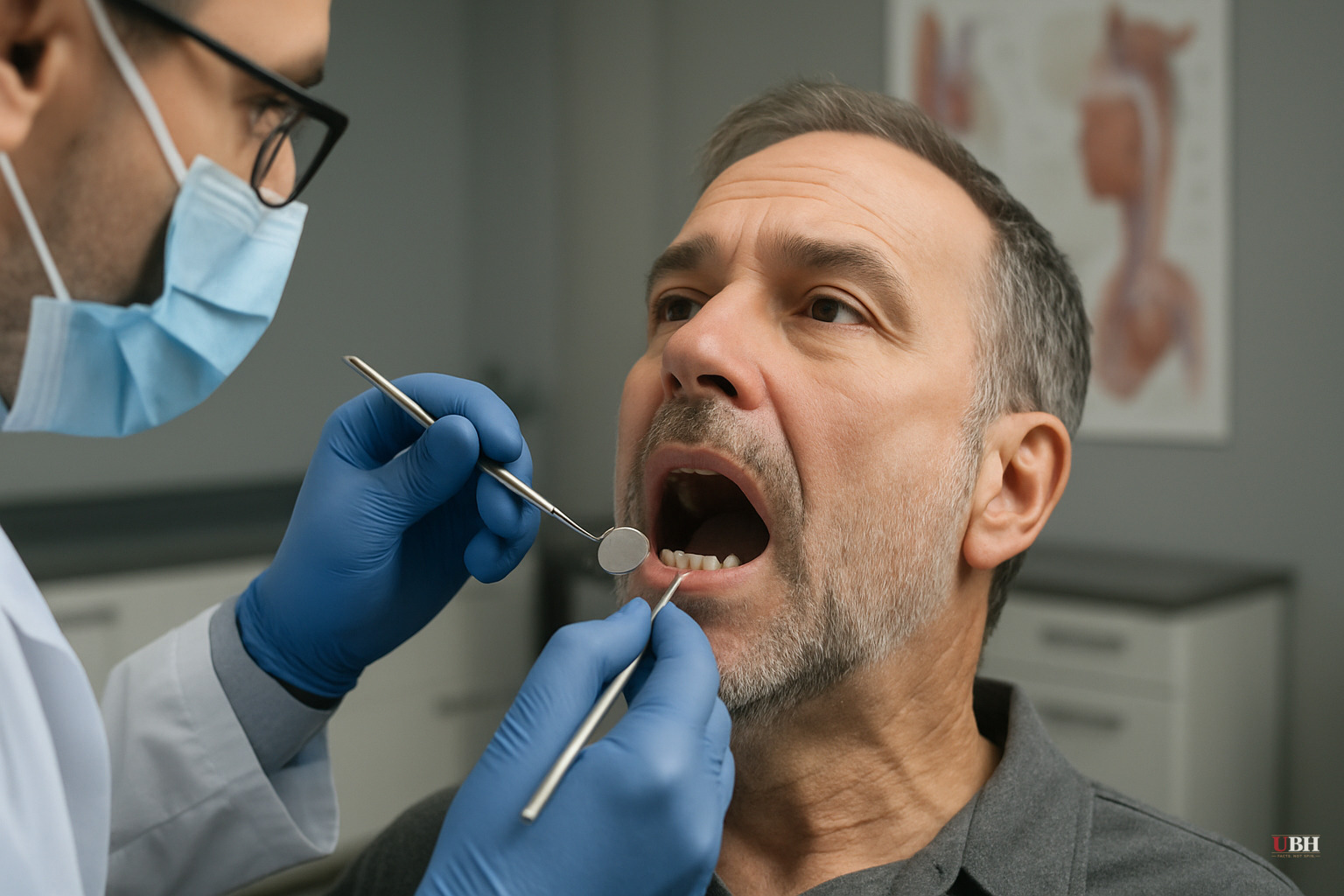
The Mouth Is Not Separate From the Body
That sounds obvious. Apparently it isn't — not in clinical practice, anyway.
According to Medscape Medical News, a growing body of observational research shows that oral health has measurable associations with cardiovascular disease, kidney disease, cognitive decline, and pulmonary health. The evidence is not from fringe sources. It is appearing in peer-reviewed literature and is now embedded in the American Diabetes Association's 2024 standards of care.
What the Research Actually Shows
A Korean screening study of more than 17,000 patients with type 2 diabetes found that periodontitis was an independent risk factor for cerebral or myocardial infarction, with an adjusted hazard ratio of 1.17. Patients with an increased number of cavities faced an even higher risk, with an adjusted hazard ratio of 1.67. These figures come from Medscape's reporting on the study.
A separate large cohort study found that dental disease and poor oral hygiene were associated with elevated heart failure risk among people with type 2 diabetes. The study authors suggested that managing oral health could help prevent heart failure from developing.
On kidney disease: a recent review cited by Medscape concluded that periodontitis exacerbates and promotes the progression of chronic kidney disease, a condition that already affects one in three people with diabetes.
On cognition: research shows diabetes itself is associated with cognitive decline, and a separate review on oral health and dementia concluded that "the connection between oral health and cognition cannot be underestimated."
The Bidirectional Problem
Researchers now believe the relationship between periodontal disease and type 2 diabetes is likely bidirectional — meaning each condition makes the other worse. Diabetes impairs immune response and wound healing, making gum disease harder to control. And active gum disease appears to worsen glycemic control.
Mediascape notes that awareness of this two-way relationship is low among both patients and providers. That is a systemic failure, not an individual one.
What Doctors Should Be Doing
Robert Gabbay, MD, PhD, Chief Scientific and Medical Officer of the American Diabetes Association, told Medscape Medical News directly: "One of the most important things to ask people with diabetes is when their last dental visit was and if they have a follow-up."
Gabbay's framing is deliberately low-bar. He is not asking clinicians to become dentists. He is asking them to ask a single question.
A broader review cited by Medscape on the effects of periodontitis across major organ systems made the structural argument plain: "oral health affects overall health, and dental health should never be considered a distinct, remote, and lower significant part of health."
The Fair Counterargument
Skeptics have a reasonable point: nearly all of this research is observational. Observational studies can identify associations; they cannot prove causation. People with poor oral health may share other risk factors — diet, socioeconomic status, reduced access to care — that independently drive cardiovascular or kidney disease. Medscape acknowledges this directly, noting that "most studies are observational and can't prove cause and effect."
Telling a diabetic patient that fixing their gum disease will prevent a heart attack is a leap the current evidence does not support. The researchers themselves stop short of that claim, arguing only that the associations are "robust enough" to treat the connection as real and clinically worth addressing. This is the position the ADA has taken in its 2024 standards.
The Structural Gap
The deeper problem here is not scientific uncertainty. It is a siloed healthcare system where dentists and physicians often operate in completely separate administrative universes, rarely sharing records and almost never coordinating treatment for shared patients.
For a patient with type 2 diabetes seeing an endocrinologist, a primary care physician, possibly a cardiologist and a nephrologist — and separately, a dentist who knows none of those providers — the absence of oral health data in the medical record is a genuine information gap.
Whether that gap is best closed through clinical prompts (Gabbay's ask-one-question approach), integrated electronic health records, or formal care coordination protocols is an unresolved question that the research itself does not answer. The ADA has staked out a position on clinical expectation; it has not resolved the structural question of how dentistry and medicine should communicate.
Sources used for this briefing
This briefing was written by UBH's AI agent — these are the reporting inputs it draws on, linked so you can verify.


