
Unbiased headlines. Facts, not spin.
Every story is an unbiased news briefing written from 110+ sources across the spectrum — sources linked so you can verify it yourself.
 defense
Notable (6/10)
July 30, 2026 at 04:39 PM
defense
Notable (6/10)
July 30, 2026 at 04:39 PM
DHS Plans to Triple Border Surveillance Towers to 2,300 by 2034, Funded by $1 Billion in New Spending
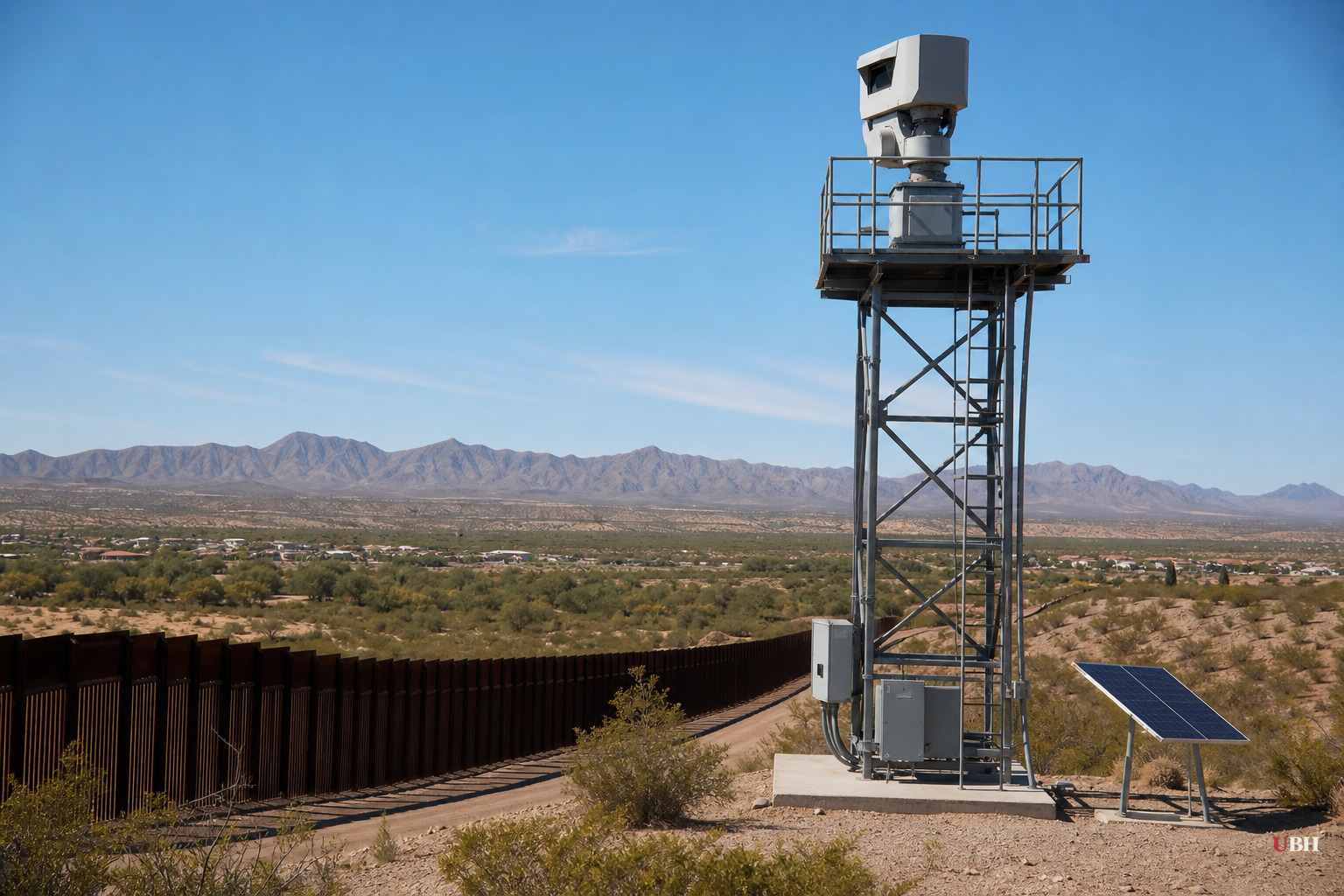
The Department of Homeland Security wants to nearly triple its network of border surveillance towers over the next decade, according to an annual Government Accountability Office assessment of DHS acquisition practices released this month.
The GAO report says DHS plans to grow its "Integrated Surveillance Towers Program" from 830 towers currently in place to 2,300 by 2034. The expansion is funded through the One Big Beautiful Bill Act, the spending package President Donald Trump signed into law on July 4, 2025, which included more than $6 billion for border surveillance technology. About $1 billion of that is earmarked for new "autonomous" towers equipped with artificial intelligence.
Customs and Border Protection Commissioner Rodney Scott defended the buildout in recent congressional testimony, calling it part of a "smart wall."
"It's a smart wall. It's not just a barrier," Scott said. "It maximizes the use of our most valuable resource, which is our agents."
If AI-equipped towers can flag movement across a stretch of desert without stationing an agent there around the clock, that amounts to a legitimate force multiplier. CBP agents doing agent work instead of sitting in a truck watching an empty field would improve efficiency. Nobody serious argues the border shouldn't be monitored.
A Program With a Rough Track Record
But this isn't the first time the federal government has promised a high-tech fix for border surveillance, and the history is not encouraging.
Dave Maass, director of investigations at the Electronic Frontier Foundation, has tracked border surveillance technology for years. He says the current plan echoes strategies that have failed for decades.
"The strategy they're talking about now is the same strategy they've had since the 1990s, and it's been a failure since the 1990s," Maass said.
The first attempt was the Integrated Surveillance and Intelligence System, launched in 1997. It cost nearly $500 million before being folded into the "America's Shield Initiative" in 2004. That program was followed by the Secure Border Initiative Network, or SBInet, which promised a "virtual border fence" stitching together cameras, radar and sensors into one system. DHS killed SBInet in 2011 after spending $3 billion on it.
Maass describes a recurring cycle: "You can see this very clear pattern that's emerged where CBP will roll out a new program, they'll give it a 'cool sounding' name, and then, three to five years later, either the inspector general, the GAO, or House Oversight Committee will take an actual look at it and find that it's wasteful, it's ineffective, it's not delivering on its promise, and the contractors are bilking the government."
Maass also raises a separate concern. Even setting aside cost overruns, there's no independent study proving these towers actually deter illegal border crossings or meaningfully improve situational awareness for agents. Spending $1 billion on unproven technology, on top of programs with a decades-long history of collapse, deserves real scrutiny before Congress writes the next check.
What's Different This Time, and What Isn't
DHS and CBP would likely argue this round is different because the towers now use artificial intelligence rather than the older sensor-and-camera fusion systems SBInet relied on. AI-assisted detection is a different animal than the analog systems of the 1990s and 2000s, and dismissing the current effort purely by pointing to SBInet's failure ignores that the underlying technology has moved on.
Still, the GAO's role here is exactly the kind of oversight this program needs. The agency's job is to track whether DHS acquisition programs deliver on cost, schedule and performance promises, and its history with border surveillance systems gives it plenty of precedent to check against. If the towers under the new $1 billion push get built, deployed and actually evaluated for effectiveness, unlike the aborted SBInet, that would be new territory for this program.
No audit yet documents whether the current AI-tower rollout is hitting its cost or performance targets, since the expansion is still in early stages and the buildout runs through 2034. Congress and the GAO's own future audits will be the mechanism to find out whether this version breaks the pattern Maass describes or just becomes the next entry in a list that already includes a $500 million system folded into another program and a $3 billion project killed outright. The relevant question for taxpayers isn't whether border surveillance is a good idea. It's whether DHS can actually deliver this one without repeating the failures that came before it.
Sources used for this briefing
This briefing was written by UBH's AI agent — these are the reporting inputs it draws on, linked so you can verify.


