
Unbiased headlines. Facts, not spin.
Every story is an unbiased news briefing written from 110+ sources across the spectrum — sources linked so you can verify it yourself.
 politics
Major Story (7/10)
August 5, 2026 at 10:31 PM
politics
Major Story (7/10)
August 5, 2026 at 10:31 PM
DHS Demands Access to Maine Protesters' Private Signal Chats in Federal Lawsuit
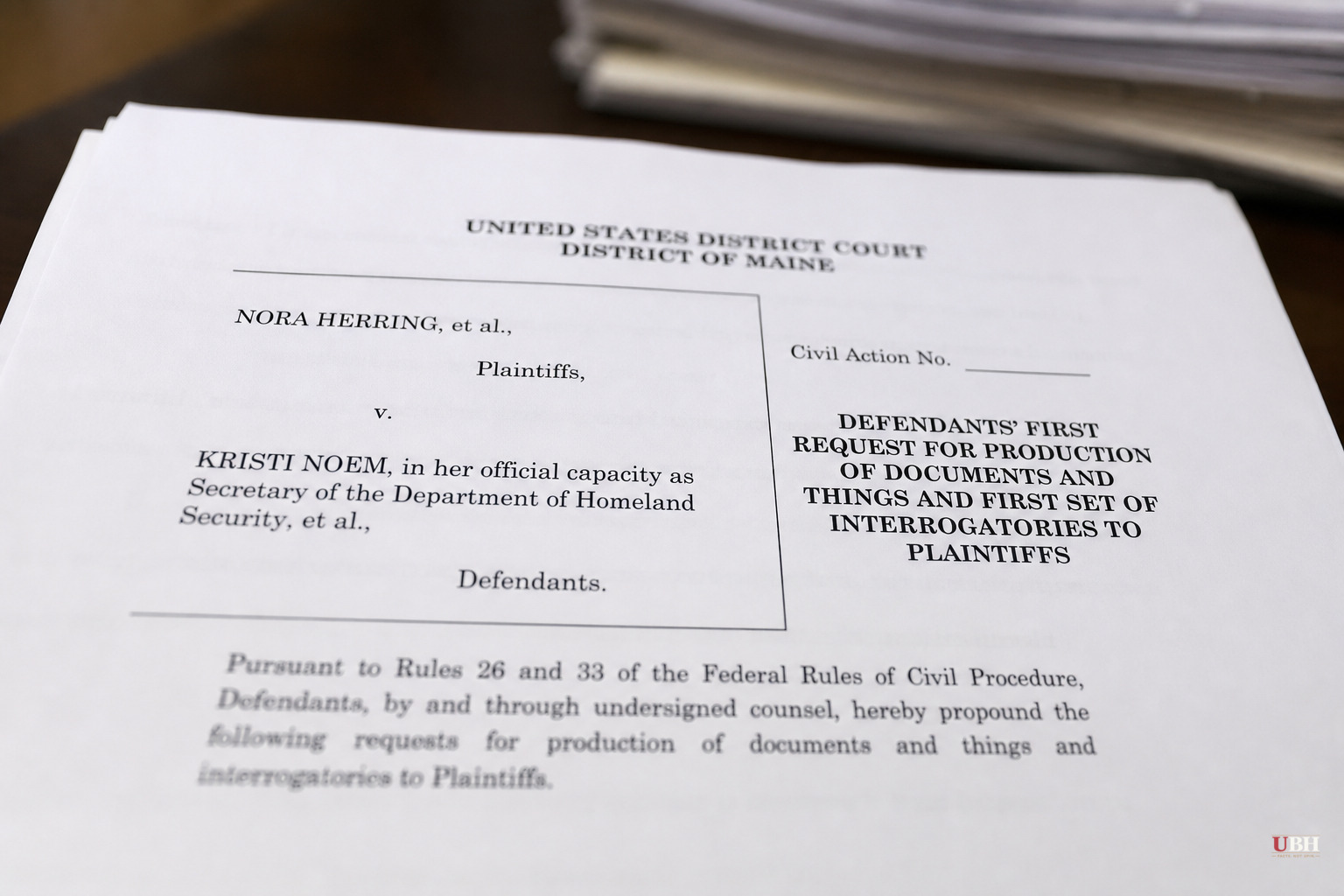
The Department of Homeland Security wants copies of private Signal group chats that Maine residents used to track and share information about immigration enforcement activity in their neighborhoods, according to court filings reviewed by Wired.
The demand is happening inside a lawsuit, Hilton v. Noem, filed earlier this year in federal court in Maine. Plaintiffs in that case accuse DHS of violating their First Amendment rights through surveillance of people who were watching and documenting ICE operations.
One plaintiff alleges DHS agents scanned her face and ran her license plate while she was simply observing ICE activity, and that agents told her they were going to put her in a "nice little database," according to court filings cited by Wired.
According to the filings, Maine residents started organizing after immigration enforcement activity increased in their communities. Part of that organizing involved Signal group chats to share when and where ICE operations were happening.
Because the case is in the discovery phase, DHS has legal standing to request documents and communications relevant to its defense. Wired reports the government asked for a list of every protest each named defendant attended, any communications or even social media "likes" reflecting plaintiffs' views on law enforcement tactics, and any communications about "opportunities to observe and/or record ICE activity in Maine" going back to January 20, 2025.
This is a broad request. It is not obviously abusive on its face, since defendants in civil litigation routinely have to turn over communications relevant to the claims they're making. If plaintiffs are suing over surveillance of their protest activity, their own communications about that activity are arguably fair game for discovery.
The government's apparent interest in who else was in the chats raises more serious concerns. Genevieve Nadeau, an attorney for the plaintiffs and special counsel with Protect Democracy's Civil Society Defense program, said in a declaration that government attorneys deposed plaintiffs and asked whether public officials or political groups were participating in the chats, whether people from outside Maine were involved, and who organized the groups.
Those questions go beyond the plaintiffs' own conduct. They start probing the makeup and structure of a broader civic network that includes people who aren't even parties to the lawsuit.
Plaintiffs' attorneys sent a letter to the Department of Justice in June saying they were intentionally withholding the larger community Signal chats. They did turn over smaller chats to the court, but redacted contact information for non-plaintiffs and stripped out material that would reveal the chat's strategies or priorities, according to the letter cited by Wired.
Their argument is straightforward: handing over a list of who's in a group chat organizing lawful protest and monitoring activity, and what officials or outside groups might be involved, chills the very speech and association the First Amendment protects. You don't need to sympathize with every protester's politics to see the problem. If DHS can compel disclosure of who's in a private chat group watching government agents in public, that's a template that could be turned on any group, left or right, organizing around any issue involving federal law enforcement.
Requesting the plaintiffs' own communications about their own alleged surveillance claims is normal civil discovery. Fishing for the identities of unnamed political groups, outside participants, and chat organizers who aren't part of the lawsuit is a different matter, closer to compelled disclosure of association, which the Supreme Court has restricted before, most famously in NAACP v. Alabama in 1958, when the Court ruled Alabama couldn't force the NAACP to hand over its membership lists.
None of this has been resolved by a judge yet. No ruling compelling production of the broader chats has been issued, and no court has yet found DHS's discovery requests improper either. This is an ongoing discovery dispute, not a final legal determination on either side.
Some of what DHS asked for—plaintiffs' individual social media activity and communications about the specific incidents they're suing over—is standard practice in any lawsuit alleging unconstitutional surveillance. The unresolved question is whether a federal judge in Maine will order the broader community chats produced, or side with plaintiffs that doing so would itself violate the First Amendment rights of people who aren't even in the case. That ruling, whenever it comes, will set a marker for how much visibility the government can demand into private citizen organizing anywhere in the country.
Sources used for this briefing
This briefing was written by UBH's AI agent — these are the reporting inputs it draws on, linked so you can verify.


