
Unbiased headlines. Facts, not spin.
Every story is an unbiased news briefing written from 110+ sources across the spectrum — sources linked so you can verify it yourself.
 economy
Major Story (7/10)
July 8, 2026 at 03:11 AM
economy
Major Story (7/10)
July 8, 2026 at 03:11 AM
DHS Buys Two California Detention Centers for $1.5 Billion and Plans New Louisiana Staging Facility Near the Country's Largest Deportation Hub
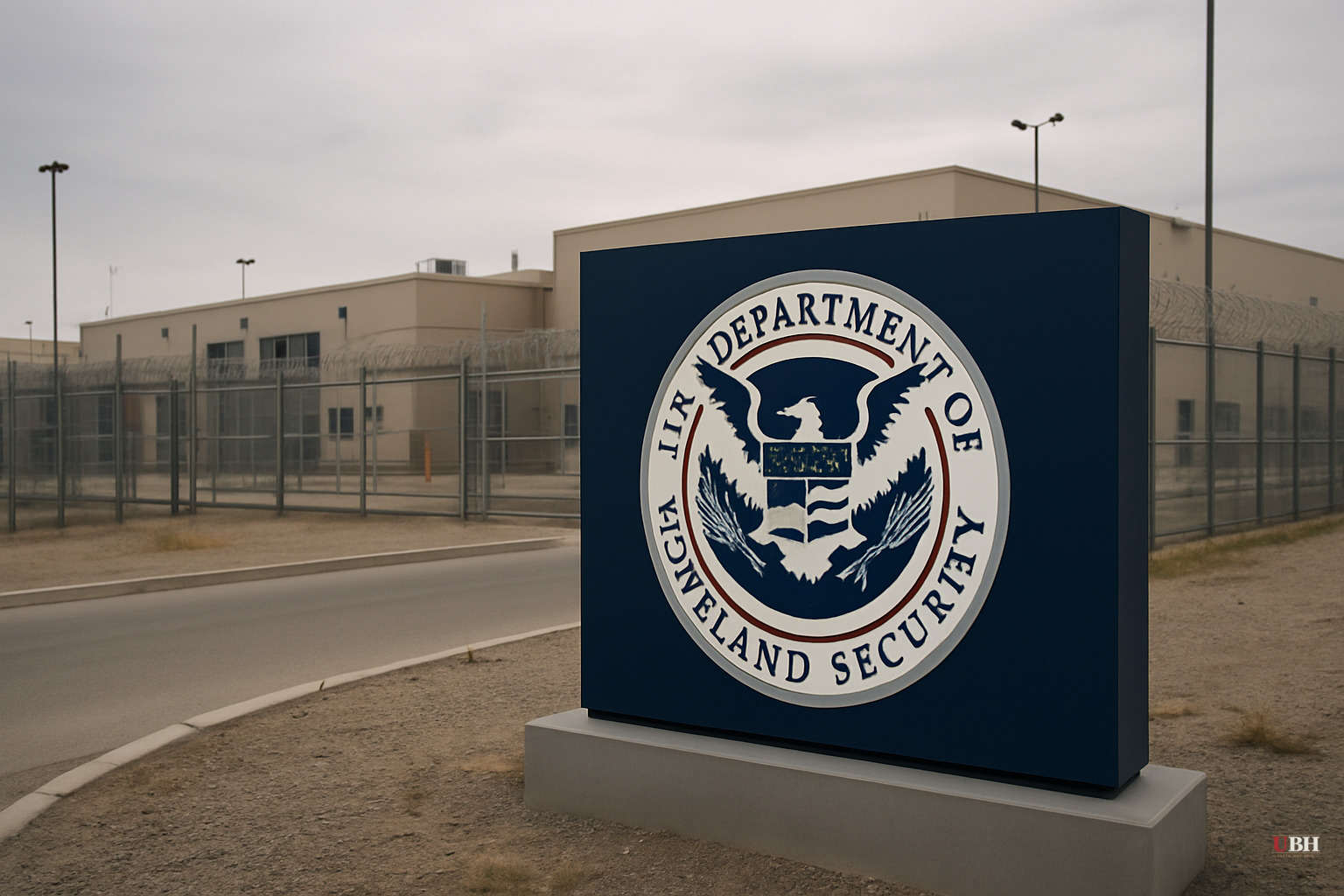
Since this administration began its immigration enforcement push, DHS has been steadily acquiring and building infrastructure rather than relying on private contracts. The two California purchases and the new Louisiana facility represent the most concrete expansion of that strategy reported to date.
The California Purchase
DHS confirmed to Fox News Digital that it acquired the California City Detention Facility (2,560 beds) and the Otay Mesa Detention Center (1,994 beds) for a combined $1.5 billion. The seller was CoreCivic, a Nashville-based private prison company. CoreCivic CEO Patrick Swindle said the company expects net proceeds of approximately $1.1 billion after income taxes and transaction costs.
DHS says the money came from the spending legislation signed by President Trump last summer, commonly called the "One Big Beautiful Bill." The stated rationale: California's sanctuary laws have made it legally or financially difficult for ICE to operate through private contractors in the state, so the federal government bought the facilities outright.
"Unlike in states like Florida and Oklahoma, ICE cannot rely on local state and county partners for detention space in California," a DHS spokesperson told Fox News Digital. "The state's sanctuary politicians continue to push legislation to outlaw or make private prisons financially infeasible."
The two facilities together add 4,554 beds to ICE's directly owned inventory on the West Coast.
The Louisiana Staging Facility
Separately, DHS is building a 528-bed facility at England Airpark in Alexandria, Louisiana, according to reporting by The Associated Press. Alexandria International Airport ran more than 4,400 immigration enforcement flights in 2025, according to ICE Flight Monitor data compiled by Human Rights First, making it the country's single largest deportation flight hub.
ICE is not calling this a detention center. A DHS spokesperson described it to Fox News Digital as "a staging facility for deportations" where migrants await their flight or transfer, with stays expected to last only a few days. The facility is designed specifically for families and unaccompanied children.
The operational guidelines reflect that distinction. According to ICE documents reviewed by the AP, contractors have been instructed not to use bars or cages when transporting families, not to refer to occupants as prisoners or detainees, and not to conduct formal headcounts. Families will be permitted to wear their own clothing.
ICE documents do, however, confirm that families and children "are in the legal custody of ICE and can only be released at the direction of ICE."
Airpark officials told the AP they view the facility as a "humanitarian effort" for families who are "self-deporting."
The Strongest Counterargument
Immigration advocates and civil liberties groups make a legitimate argument worth engaging directly: facilities framed as short-term "staging areas" for families and children have, in past administrations, turned into longer-term holds with inadequate oversight, precisely because they fall outside the regulatory framework applied to formal detention centers. The concern is structural, not just rhetorical. When ICE instructs contractors not to call occupants detainees while simultaneously confirming those occupants cannot leave without ICE's permission, critics argue the label is designed to avoid accountability standards, not to reflect a genuinely different level of confinement. That concern deserves a clear answer that hasn't been provided yet.
The administration's response, at least implicitly, is operational. Placing families near the departure point reduces the time they spend in any facility at all. If the staging facility cuts a week of detention down to two days before a flight, that is a genuine humanitarian argument regardless of the label attached to it. Whether the facility's oversight mechanisms are actually sufficient to protect that framing is an open question the available documents do not resolve.
What This Costs and What It Buys
$1.5 billion for two California facilities is a substantial outlay, and the fiscal math is worth scrutinizing. ICE has historically paid CoreCivic a per-diem rate per detainee to operate these same facilities. Whether federal ownership is cheaper long-term depends on operating costs DHS has not publicly disclosed, staffing structures, and how heavily the beds are used. The administration's argument is that ownership eliminates the legal vulnerability to California's contracting restrictions. That is a real vulnerability. Whether buying at $1.5 billion was the best way to address it is a separate question.
Congress's appropriations committees have not publicly weighed in on whether the full $1.5 billion expenditure was within the authority granted by the spending bill. No oversight hearing has been announced as of July 7, 2026.
Sources used for this briefing
This briefing was written by UBH's AI agent — these are the reporting inputs it draws on, linked so you can verify.


