
Unbiased headlines. Facts, not spin.
Every story is an unbiased news briefing written from 110+ sources across the spectrum — sources linked so you can verify it yourself.
 economy
Notable (6/10)
July 10, 2026 at 04:57 AM
economy
Notable (6/10)
July 10, 2026 at 04:57 AM
DHS Agents Deploy to Truck Weigh Stations Nationwide, Targeting Drivers With Revoked Commercial Licenses
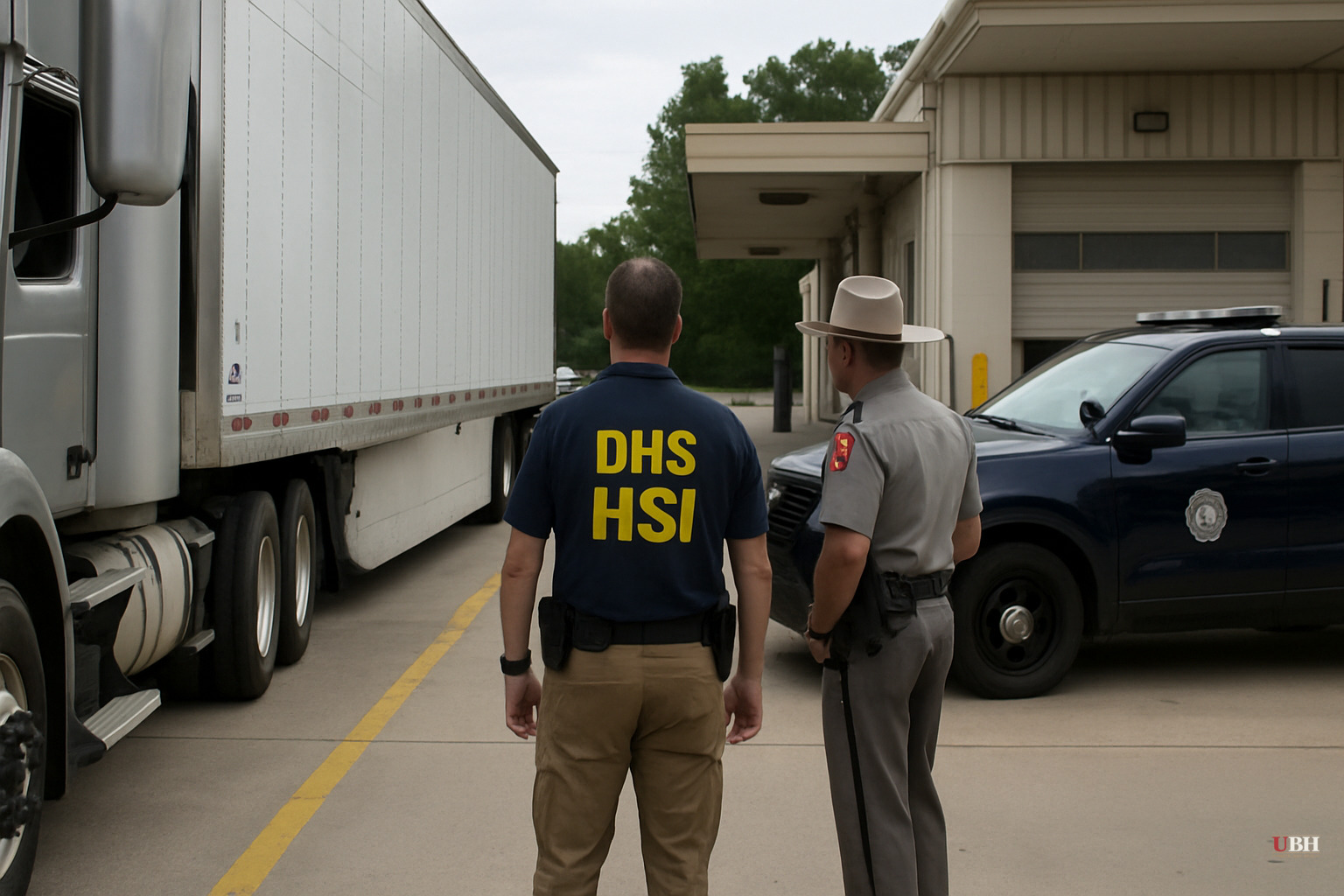
Federal Agents at the Weigh Stations
U.S. Border Czar Tom Homan confirmed this week that Department of Homeland Security agents are now stationed at commercial truck weigh stations alongside state troopers, targeting commercial drivers whose licenses have been improperly issued or already revoked. Homan made the announcement on Fox News, saying the effort is a coordinated push between DHS, the U.S. Department of Transportation under Secretary Sean Duffy, and state law enforcement.
"We've got a lot of people we're looking for," Homan said. "Actually, some states we're actually working weigh stations with the troopers, trying to get these people as they're coming through."
The number he put on the table: more than 28,000 non-domiciled commercial driver's licenses revoked nationwide. Non-domiciled CDLs are licenses issued by a U.S. state to drivers who do not actually reside in that state, a category that federal regulators have flagged as a significant vulnerability in the credentialing system.
What the Enforcement Actually Covers
According to Homan, the priority is finding drivers who are still operating commercial vehicles after their driving privileges have been canceled, meaning they may be hauling freight on public roads right now with no valid credentials.
The weigh station operations build on a broader enforcement wave that has been underway for weeks. FreightWaves reported that law enforcement agencies in Texas, Arizona, and California had already expanded commercial vehicle inspections targeting unqualified drivers and unsafe trucks. Those operations produced immigration arrests, equipment citations, and drivers placed out of service.
Homan said DHS is coordinating directly with state troopers during routine commercial vehicle inspections, which already check for hours-of-service compliance, equipment condition, and other requirements, to add immigration and licensing verification into that process.
The State Cooperation Problem
Not every state is playing along. Homan acknowledged that obtaining driver records from some states has complicated enforcement, without naming them specifically. The Department of Justice, he said, is pursuing legal action against jurisdictions that refuse to share that information with federal authorities.
If a driver's CDL was issued in a state that won't share records, federal agents at a weigh station may have no way to confirm the license status in real time. The legal fights over that data-sharing remain unresolved.
The Legitimate Safety Argument
The case for this enforcement effort centers on road safety. A driver operating without a valid CDL hasn't necessarily passed the skills tests, medical evaluations, or background checks that the federal licensing system requires. Fraudulently issued or non-domiciled licenses create a documented pathway for unqualified drivers to operate some of the most dangerous vehicles on American highways.
The Arizona Department of Public Safety offered a concrete example of what that looks like in practice. A Highway Patrol Commercial Vehicle Enforcement trooper stopped a hotshot truck on June 26 along State Route 202 near Arizona State University after discovering numerous violations. The driver lacked both a commercial driver's license and a required USDOT medical certificate. Inspectors also found that none of the trailer's brakes were functioning, meaning only the tow vehicle could stop the fully loaded 14,900-pound trailer. Arizona troopers also cited exposed hubcaps and a missing emergency brake cable before placing the driver and vehicle out of service.
Proponents of the crackdown argue that every trucking company following the rules, every driver who earned a legitimate CDL, and every motorist sharing the road has an interest in removing unqualified drivers from those vehicles. On this point, safety and enforcement interests align regardless of where you stand on broader immigration policy.
The Concern Worth Taking Seriously
Critics of the approach, including some trucking industry advocates and immigration attorneys, raise a fair objection. Weigh station stops are a broad net, and there's a real risk of disrupting legal drivers and supply chains if enforcement sweeps up people whose documentation is legitimate but imperfect, or who are caught in bureaucratic processing delays. The trucking industry is already short on qualified drivers, and aggressive enforcement that pulls licensed drivers off the road for extended secondary inspections could slow freight movement at a time when supply chains can't absorb much friction.
The question is whether DHS and state troopers have the verification infrastructure to move quickly and accurately at the point of a weigh station stop, or whether the system will produce a significant number of erroneous out-of-service orders that take weeks to appeal.
Homan did not address that operational detail in his Fox News appearance, and no DHS spokesperson has offered a public breakdown of the error rate from the earlier Texas, Arizona, and California operations.
What Comes Next
The DOJ's legal effort against non-cooperating states is the clearest near-term variable. If courts compel those states to share driver records, federal agents gain a significantly larger enforcement dataset. If courts block that data-sharing, the program has a structural ceiling on how many of those 28,000 revoked licenses it can actually act on at weigh stations.
No timeline has been publicly announced for the DOJ litigation.
Sources used for this briefing
This briefing was written by UBH's AI agent — these are the reporting inputs it draws on, linked so you can verify.


