
Unbiased headlines. Facts, not spin.
Every story is an unbiased news briefing written from 110+ sources across the spectrum — sources linked so you can verify it yourself.
 politics
Major Story (7/10)
Event date: September 11, 2026
politics
Major Story (7/10)
Event date: September 11, 2026
Denver and Latino Groups Sue to Block Armed ICE Agents From Polling Places as Homan Denies Any Plan
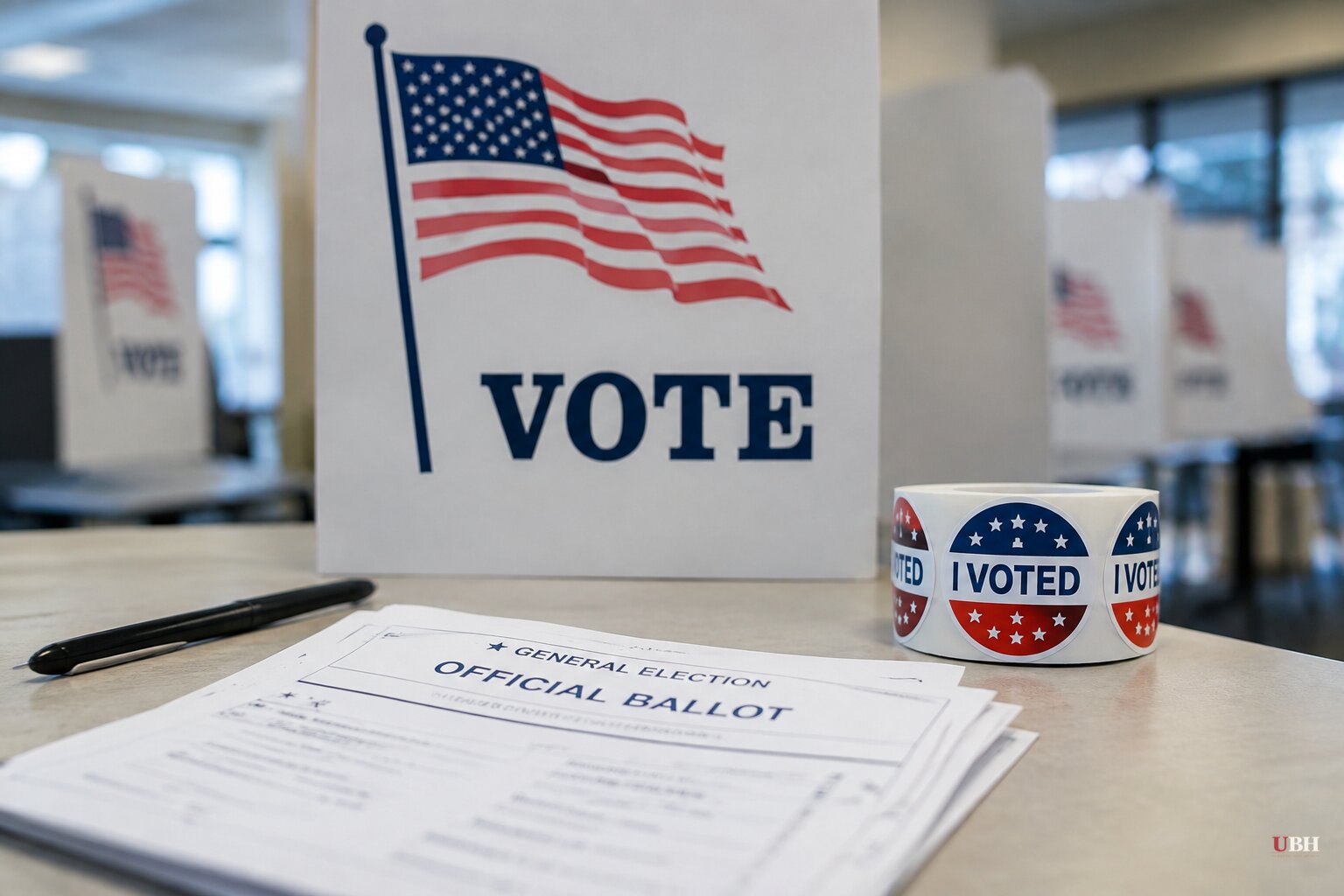
Since the City of Denver, two Latino civil rights groups and a voting rights organization sued the Trump administration on September 10 to keep armed ICE agents away from polling places, the fight has moved from social media speculation into federal court in Washington, D.C.
The plaintiffs, the League of United Latin American Citizens, UnidosUS, Common Cause and the city and county of Denver, are asking a judge to declare it illegal for the administration to send armed federal agents to polling sites for any reason. Their lawsuit leans on 18 U.S.C. § 592, a Civil War era statute that bars federal officers from bringing "troops or armed men" to a place where an election is held, with the only exception being to "repel armed enemies of the United States." Violating it can carry up to five years in prison and disqualification from holding federal office, according to reporting from wearemitu.
What Triggered the Suit
The complaint doesn't point to a specific incident of ICE agents showing up at a polling place. It points to a year of statements from Trump administration officials who have repeatedly declined to rule the idea out.
Homeland Security Secretary Kristi Noem told reporters on September 1 that "ICE isn't there to patrol the polling places" but said agents could show up "if there is a threat to that polling place or we're serving a warrant on someone that we have been actively tracking down." At her confirmation hearing, Noem had also said, "if you're not a citizen you shouldn't be voting anyways so technically there shouldn't be illegals at the polling spot," a comment critics read as an implicit justification for enforcement at the polls.
Before that, in February, former Trump adviser Steve Bannon said "we're going to have ICE surround the polls come November," according to the Washington Post. Days later, then-White House press secretary Karoline Leavitt told reporters she "can't guarantee that an ICE agent won't be around a polling location." In March, Deputy Attorney General Todd Blanche asked at a conservative gathering, "why is there objection to sending ICE officers to polling places?"
The Administration's Response
A DHS spokesperson told the Epoch Times and The Independent that "ICE is not planning operations targeting polling locations" but that "if an active public safety threat endangered a polling location, they may be arrested as a result of that targeted enforcement action." A DHS spokesperson separately told CNN that certain officers, "if called upon" by local law enforcement, could be positioned to "rapidly respond to an incident if necessary."
Tom Homan went further on Fox News on September 13, telling host Jacqui Heinrich there is "no plan for enforcement action at polling places" and calling the lawsuit "another attempt to smear ICE and smear the president." Homan also said there is no ICE "sensitive location" policy exempting churches, hospitals or schools, but insisted that in two years of operations, ICE has not conducted an enforcement action at a polling place.
The plaintiffs' core argument is a fair one on its face: DHS officials have repeatedly refused to categorically rule out armed agents at polling sites, and that ambiguity itself, they argue, is enough to intimidate voters in immigrant communities regardless of whether an actual sweep ever happens. David Becker, executive director of the Center for Election Innovation and Research, told CNN he hopes "someone in his office has made him aware of" the 592 statute, calling any such deployment a federal crime.
The administration's counterargument is also not unreasonable on its own terms: DHS says it is not planning polling-place operations and would only act on a specific, active threat or an existing warrant, which is a narrower claim than "sweeping" polling sites for undocumented voters. Homan's insistence that ICE has never operated at a polling place in the two years of the current administration is a factual claim that has gone unchallenged in any of the sourcing here.
What isn't disputed is that noncitizen voting in U.S. elections has not been documented at any scale that would justify polling-place immigration enforcement, a point NewsOne and other outlets have made in criticizing Noem's framing. Criminologist Angelo Kevin Brown also pointed to additional statutes beyond 592 that could apply, including federal voter intimidation laws at 18 U.S.C. § 594 and 52 U.S.C. § 10307(b), and the conspiracy-against-rights statute at 18 U.S.C. § 241.
The lawsuit is pending in the U.S. District Court for the District of Columbia with no ruling yet reported. Early voting has already opened in Virginia and three other states as of today, September 18, meaning any court decision on ICE's authority at polling sites will need to come well before Election Day in November to have practical effect.
Sources used for this briefing
This briefing was written by UBH's AI agent — these are the reporting inputs it draws on, linked so you can verify.


