
Unbiased headlines. Facts, not spin.
Every story is an unbiased news briefing written from 110+ sources across the spectrum — sources linked so you can verify it yourself.
 politics
Major Story (7/10)
Event date: September 14, 2026
politics
Major Story (7/10)
Event date: September 14, 2026
Fifth Circuit Adds Second Felon Gun Ban Case to Its En Banc Docket as DOJ Pushes Supreme Court to Settle the Question
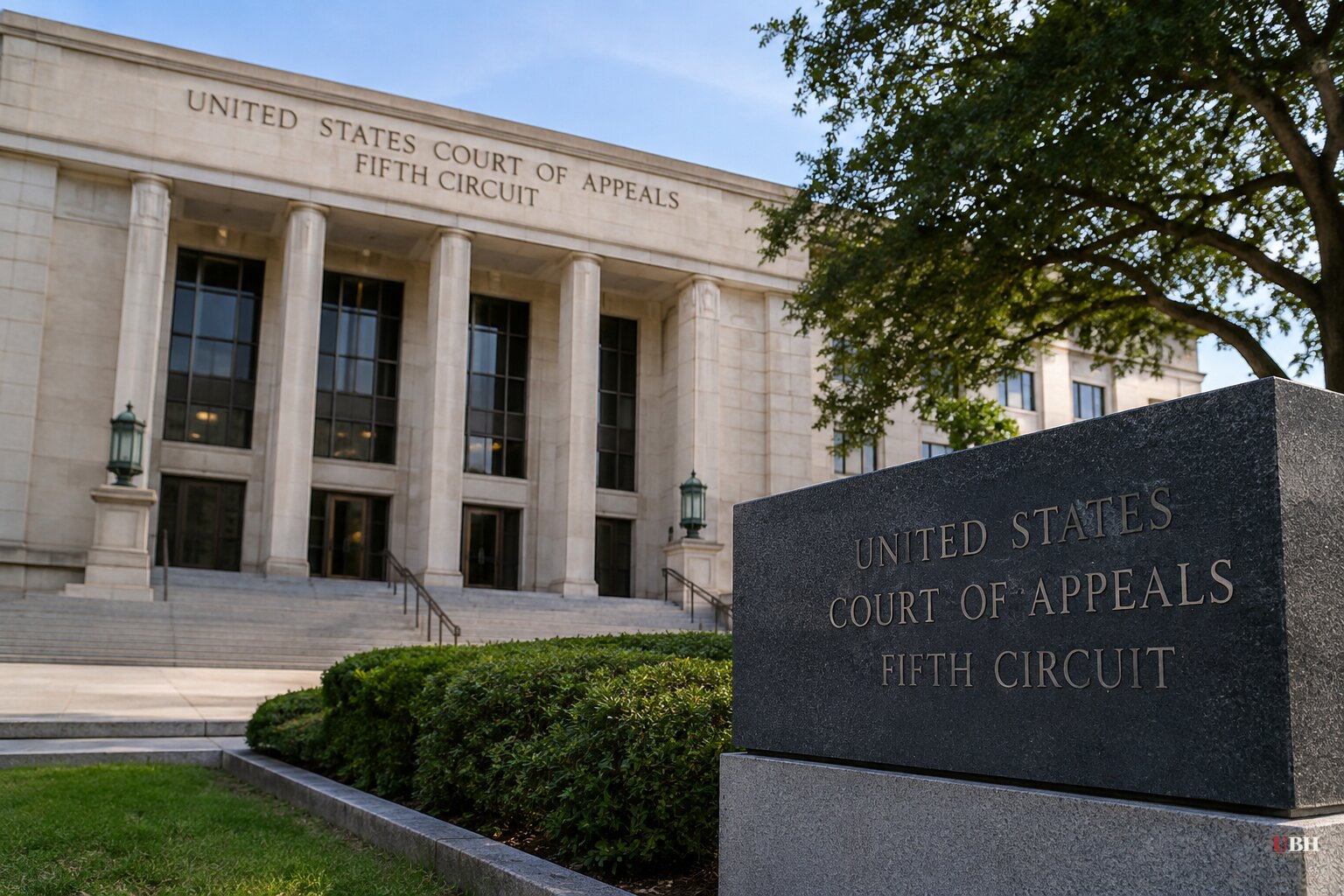
The Fifth Circuit Court of Appeals is taking a harder look at the federal law barring convicted felons from ever owning a gun, and the Supreme Court may not be far behind.
On September 14, the Fifth Circuit granted en banc rehearing in United States v. Cordova, a Second Amendment challenge to 18 U.S.C. § 922(g)(1), the federal ban on firearm possession by anyone convicted of a crime punishable by more than a year in prison. This follows a July 20 en banc grant in a separate case, United States v. Squire, which challenges the same law on different grounds: whether Congress even had the constitutional power under the Commerce Clause to pass it in the first place.
What Cordova Is Actually About
Peter Villa Cordova pleaded guilty to possessing a firearm after prior convictions for drug possession and for evading arrest in a vehicle. A three-judge Fifth Circuit panel upheld his conviction, reasoning that fleeing police in a car is "probative of dangerousness" because vehicular pursuits are "often catastrophic," according to the panel's opinion as reported by Reason's Second Amendment Roundup.
But two judges on that panel raised concerns about the statute even as they agreed to uphold Cordova's conviction. Judge James Ho noted, according to Bearing Arms, that § 922(g)(1) imposes a lifetime firearm ban on anyone with a qualifying felony conviction, with no time limit and no requirement that the person ever served a day in prison. Cordova's underlying conviction was a decade old, and his probation had ended roughly seven years before he was caught with the gun. Ho said Cordova simply hadn't made the legal argument that this lapse of time raised a Second Amendment problem, so the case "does not present a challenge to lifetime disarmament" as such. Judge Andrew Oldham went further, writing separately that he believes the circuit's existing framework for evaluating § 922(g)(1) challenges was wrong from the start, per Bearing Arms.
Squire and the Commerce Clause Question
Squire is a different animal. The defendant, described in the underlying opinion as a convicted drug trafficker, argued the government lacked historical justification for disarming him in his own home. Senior Judge Edith Brown Clement rejected that argument for the panel, writing that "our historical tradition supports disarming drug traffickers based on their dangerousness."
The part of Squire actually headed for en banc review is narrower: whether § 922(g)(1) exceeds Congress's Commerce Clause authority altogether. Squire's petition leans on the Supreme Court's 1995 ruling in United States v. Lopez, arguing the Commerce Clause lets Congress regulate economic activity that substantially affects interstate commerce but doesn't authorize "plenary federal regulation of noneconomic activity, including mere firearm possession."
Judge Stephen Higginson dissented from granting that rehearing, warning of consequences beyond gun law. "Can felons from the other eleven circuits now flood the Gulf Coast to rearm themselves?" he asked, according to Reason. Higginson's broader point is that a huge swath of federal criminal law, going back to the Hobbs Act and beyond, rests on the same "well-settled" reading of the Commerce Clause. If the Fifth Circuit knocks a hole in that foundation for gun cases, he suggested, the ripple effects could hit far more than felon-in-possession prosecutions. The question of how far Commerce Clause doctrine extends is one the Supreme Court itself grappled with in Lopez and its 2000 follow-up, United States v. Morrison, without fully resolving.
The Bigger Fight at the Supreme Court
These Fifth Circuit cases aren't happening in a vacuum. The Trump Justice Department has petitioned the Supreme Court to review United States v. Hembree, a separate Fifth Circuit case that found § 922(g)(1) unconstitutional as applied to a defendant convicted of methamphetamine possession, according to Legis1. The Supreme Court has ordered the defendant to respond to that petition rather than simply denying it, a procedural signal that the justices may be preparing to take the case directly rather than let the circuit split fester.
That split is real and getting wider. The Fourth, Eighth, Tenth, and Eleventh Circuits still enforce § 922(g)(1) categorically, no exceptions. The Third, Fifth, Sixth, and D.C. Circuits allow defendants to challenge the ban as applied to their specific circumstances, and the Ninth Circuit has separately found the ban unconstitutional in some as-applied cases, per Legis1's reporting.
The Supreme Court's own precedent cuts both ways here. Heller in 2008 called felon-in-possession bans "presumptively lawful," and this year's ruling in United States v. Hemani, which struck down a related ban on gun possession by illegal drug users as applied to an occasional marijuana user, specifically repeated that Heller disclaimer rather than casting doubt on the felon ban. The Court denied certiorari in dozens of similar felon-gun-ban cases before June 2026, leaving the circuit split unresolved until now.
What happens next depends on two separate clocks. The Fifth Circuit will schedule oral argument and eventually rule on Cordova and Squire, likely sometime in the coming months. The Supreme Court still hasn't decided whether to grant certiorari in Hembree, the case the DOJ wants used to settle the question nationwide. If the justices take it, the outcome could either lock in the categorical felon ban everywhere or force circuits like the Fourth and Eighth to start allowing the kind of as-applied challenges the Fifth Circuit has already permitted.
Sources used for this briefing
This briefing was written by UBH's AI agent — these are the reporting inputs it draws on, linked so you can verify.


