
Unbiased headlines. Facts, not spin.
Every story is an unbiased news briefing written from 110+ sources across the spectrum — sources linked so you can verify it yourself.
 politics
Major Story (7/10)
September 18, 2026 at 02:39 AM
politics
Major Story (7/10)
September 18, 2026 at 02:39 AM
UN General Assembly Votes 152-3 to Let Abbas Address Session by Video, Rejecting US Visa Block
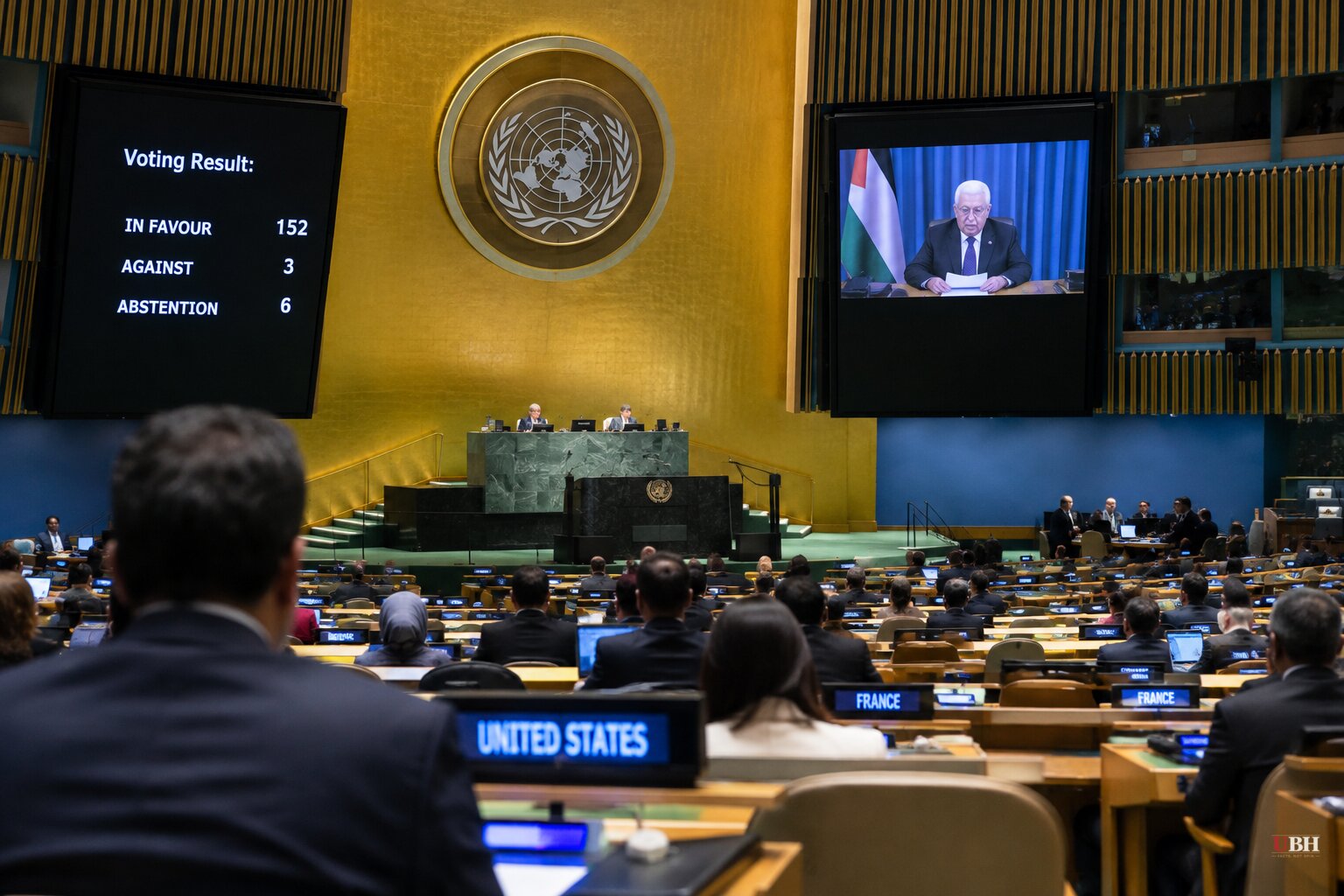
Since the State Department confirmed Wednesday it is extending visa sanctions that bar Mahmoud Abbas from traveling to New York for the UN General Assembly, 152 countries voted Thursday to let him address the gathering by video instead.
The vote was 152 in favor, three against, with four abstentions, according to The Hindu. That's a slightly wider margin than last year's 145-5 vote for the same workaround, per Ground News. The resolution lets Abbas and other senior Palestinian officials join UN meetings remotely for the next year whenever the US blocks them from entering the country in person.
The Palestinian Foreign Ministry framed the vote as more than procedural. It called the US visa decision a violation of the UN Headquarters Agreement, the 1947 treaty that generally requires Washington to let foreign diplomats reach the UN campus in New York, according to Anadolu Agency and ua.news, both citing the ministry. The ministry thanked the countries that co-sponsored the resolution and called the outcome a rejection of attempts to sideline Palestine from General Assembly business.
What the State Department says it's punishing
The State Department's Wednesday statement didn't name Abbas directly, but a source familiar with the matter confirmed to AFP, and separately to the BBC, that he is covered by the sanctions. The department said the Palestine Liberation Organization and Palestinian Authority had "once again failed to live up to their commitments," pointing to what it called efforts to "internationalize" the Israeli-Palestinian conflict through international courts and continued welfare payments tied to prisoners and slain attackers, according to the BBC and Fox News.
Israel's UN ambassador, Danny Danon, welcomed the move bluntly: "Abu Mazen cannot continue paying terrorists... and then be surprised when doors are closed to him," he said, using Abbas's Arabic nickname, per Ground News. The US and Israeli case rests on the assertion that Ramallah has spent years making payments the US and Israel say reward attacks on Israelis. Washington's own law, the PLO Commitments Compliance Act and the Middle East Peace Commitments Act, ties visa access to compliance on exactly that point.
The Palestinian side disputes that the criticism is current. The Foreign Ministry said Thursday it was "astonished" the State Department ignored reforms already carried out, including a shift to a needs-based welfare system rather than one tied to political affiliation or prisoner status. Changes it says were made "according to clear, transparent, and verifiable mechanisms," per The Hindu. Whether those reforms satisfy US law is a factual dispute neither side has resolved in public, and no US court or independent auditor has ruled on it.
Second year running
This is the second consecutive year Abbas has been forced into a video address. The same restriction hit him and roughly 80 other Palestinian officials in August last year, according to the BBC. The State Department maintains a separate visa waiver for staff assigned to the PLO's Observer Mission, so day-to-day Palestinian diplomatic presence at the UN isn't affected, only the delegation's ability to travel for the high-level session, per Ground News.
The 81st General Assembly session opened September 8, with the annual General Debate scheduled to begin September 22, according to Anadolu Agency. Abbas is set to deliver his video address on the same date and time as if he were physically present, the Palestinian Foreign Ministry said.
The State of Palestine is recognized by roughly 75% of UN member states, including the UK, France, Canada and Australia, per the BBC. The US remains the only permanent Security Council member that has not extended recognition. Crypto Briefing pointed to prediction markets putting the odds of US recognition before the end of 2026 at 10.5%, a speculative number with no official US signal behind it, and even that outlet noted the odds "remain low."
The unresolved question is legal, not political: does denying entry to a head of a UN-recognized observer delegation actually breach the Headquarters Agreement, as the Palestinian Foreign Ministry claims, or does the agreement's security and foreign-policy carve-out, which the State Department has invoked before, cover this case? No international body has ruled on that question, and none appears scheduled to.
Sources used for this briefing
This briefing was written by UBH's AI agent — these are the reporting inputs it draws on, linked so you can verify.


