
Unbiased headlines. Facts, not spin.
Every story is an unbiased news briefing written from 110+ sources across the spectrum — sources linked so you can verify it yourself.
 politics
Notable (6/10)
Event date: August 19, 2026
politics
Notable (6/10)
Event date: August 19, 2026
Russians Vote for Three Days in Duma Election With No Anti-War Party on the Ballot
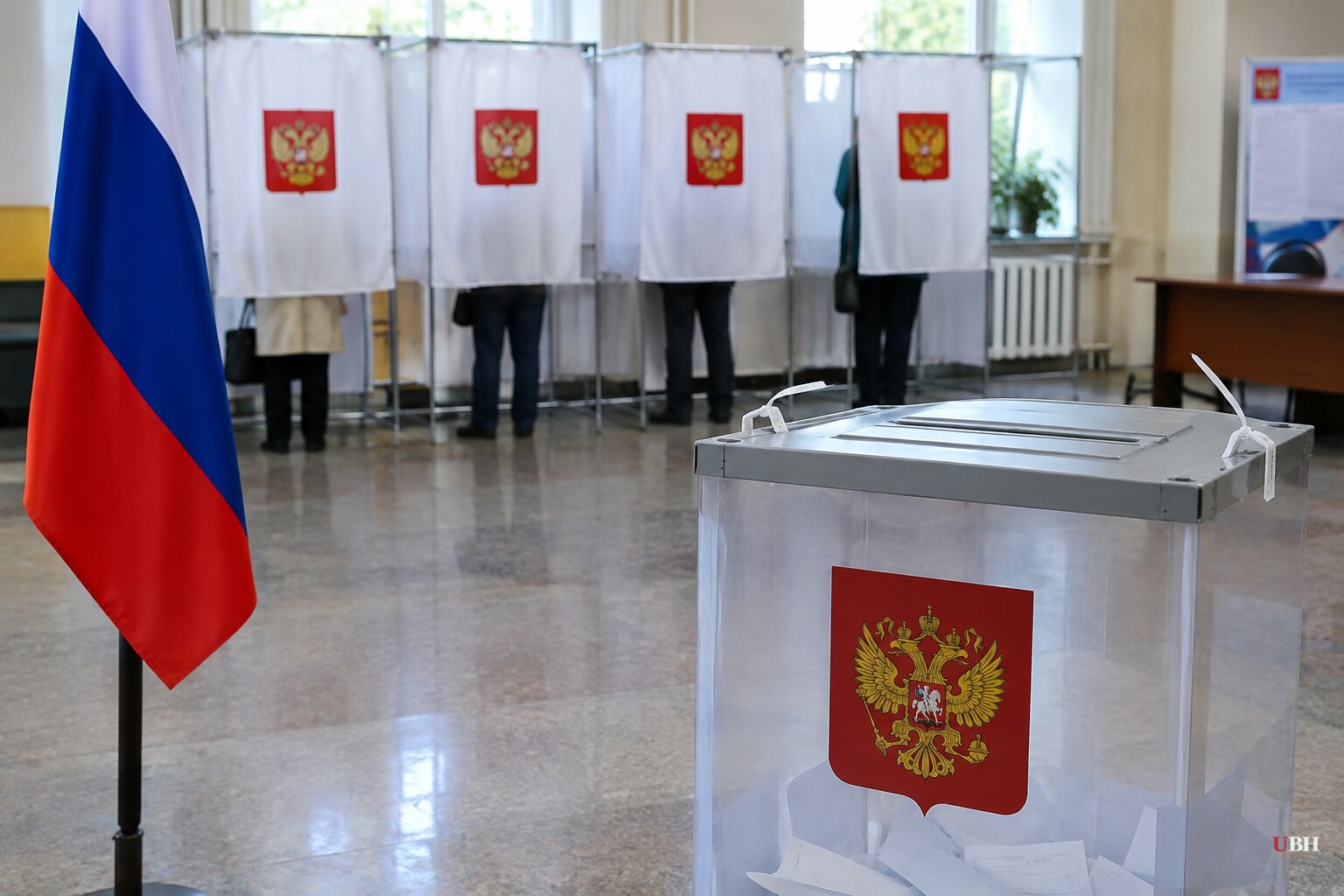
Polls opened Friday, September 18, across Russia's eleven time zones for a State Duma election that will run through Sunday, the first parliamentary vote since Vladimir Putin launched the full-scale invasion of Ukraine in February 2022. According to the Associated Press, 111 million eligible voters can cast ballots over the three-day window, with electronic voting available for the first time in a national parliamentary race. Authorities say the extended schedule is meant to boost turnout.
The result isn't in question. United Russia, Putin's party, currently holds 70% of the Duma's 450 seats, and is expected to keep that grip alongside a handful of parties, from the Communists to the far-right Liberal Democrats, that the Guardian describes as Russia's "systemic opposition": groups permitted to grumble at the margins but which vote with the Kremlin on anything that matters.
The one party that said no
Russia's Supreme Court removed Yabloko, the liberal party that had openly criticized the war, from the race last month. That leaves no registered national party willing to challenge the invasion. Some anti-war politicians have been imprisoned or have fled the country.
What's left is a campaign notable mostly for its lack of energy. Farida Rustamova, founder of the independent Vlast newsletter, told the Guardian that "in most elections, candidates compete for attention. In Russia this year, many are doing the opposite." Televised debates have aired to half-empty studios, producing viral clips of empty lecterns, a moment BBC Russia editor Steve Rosenberg cited in describing the vote to The Week. A person close to the Kremlin, speaking anonymously to the Guardian, said the leadership wants the race "low-key" and doesn't want "to discuss difficult issues."
The Kremlin's own case
Putin has framed the vote as a display of national unity rather than a competitive contest. "Your choice and resolve will once again demonstrate that millions of people stand behind our fighters, that we are a united people," he said in a pre-election address. Officials also point to the ballot's inclusion of communists, nationalists and self-described liberals as evidence of political diversity, even if, as The Week noted in summarizing Foreign Policy's reporting, "scope for disagreement is vanishingly small." For the first time, voting is also taking place in the four Ukrainian regions Russia annexed after 2022 and in Crimea, annexed in 2014, a move Kyiv has called illegal and warned could carry criminal liability for anyone organizing it.
The economy the Kremlin doesn't want to talk about
The backdrop is a summer of visible economic strain. Ukrainian drone strikes hit Russian oil refineries hard enough to trigger a fuel crisis that peaked in June, eased, then returned in August. Separate strikes hit warehouses belonging to the online retailers Wildberries and Ozon, wiping out merchandise for hundreds of thousands of individual sellers. Andrei Klepach, chief economist at the state-owned VEB.RF bank, told a public seminar that "we won't win the competition in this war of attrition," warning of possible internal turmoil.
Putin's approval, while still high, has slipped. The independent Levada Center put it at 76% in August, down from 87% in September 2025. The Economist, cited by The Week, argued that the public's "tacit consent is crumbling" even if the vote's outcome never was in doubt.
What comes after the votes are counted
The bigger question hanging over this election isn't who wins the Duma. It's what the Kremlin does once it's over. Many observers expect a second wave of compulsory military mobilization may follow the September 18-20 vote. Surveys from the Kyiv-based Institute for Conflict Studies and Analysis of Russia found that opposition to renewed mobilization has stayed near three-quarters of the population since early 2024, while active support for it has fallen from 24% in 2023 to just 11% in 2026. Opposition now runs high across every age group: 68% among older Russians, 72% among the middle-aged, and 80% among the young.
Those numbers reflect stated opinion, not a certainty about what the Kremlin will do. No mobilization announcement has been made as of this vote; Putin has twice dismissed suggestions in recent weeks that a new mobilization is imminent. But Britain's chief of the defence staff said on September 11 that Russian military casualties have reached 1.5 million, a toll that will weigh on whatever decision follows the ballot count expected Sunday night.
Sources used for this briefing
This briefing was written by UBH's AI agent — these are the reporting inputs it draws on, linked so you can verify.


